


Key Points and Summary – Despite being a technologically advanced stealth fighter, the F-35 program is plagued by five significant problems.
-Its astronomical cost (over $1.7 trillion lifetime) strains budgets and limits fleet size. Some have the figure closer to $2 trillion.
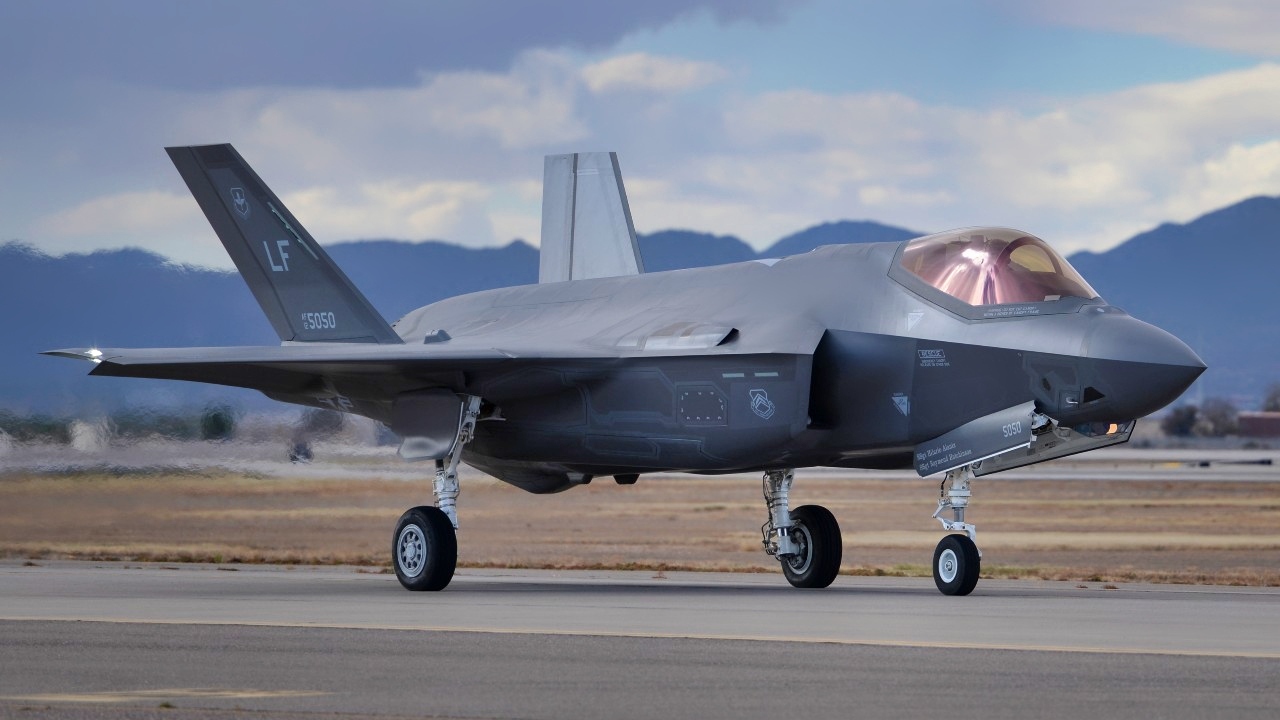
An F-35 taxis from the runway onto the flightline after successfully completing a sortie, Dec. 14, 2015, at Luke Air Force Base. The F-35 Lightning II is the most advanced fighter aircraft ever fielded, and is being adopted internationally by the United States and eight partner nations including Norway, Italy, and Australia. (U.S. Air Force photo by Airman 1st Class Ridge Shan)

A U.S. Air Force F-35A Lightning II aircraft with the Wisconsin Air National Guard’s 115th Fighter Wing ascends into the clouds during exercise Northern Lightning Aug. 9, 2024, at Volk Field. Wisconsin. The F-35 works in parallel with 4th generation fighters, demonstrating the strength of combined airpower in the face of strategic competition. (U.S. Air National Guard photo by Staff Sgt. Constantine Bambakidis)
-Persistent software issues, particularly with its logistics system (ALIS/ODIN), hinder readiness and capability.
-Design compromises made to accommodate three different service variants resulted in performance trade-offs, like reduced agility.
-The jet suffers from poor reliability and maintenance rates, often below 60%, due to parts shortages and complex systems.
-Finally, its focus on high-precision strikes and reliance on delicate technology raise questions about its effectiveness in a prolonged, high-intensity conflict.
The F-35 Is the Most Expensive Weapon Ever. Is It Worth It?
The F-35 Lightning II is one of the most technologically advanced fighter jets in operation worldwide.
The aircraft excels with its advanced stealth design, sophisticated avionics, and comprehensive sensor fusion.
Despite its acclaimed status, the F-35 has faced many criticisms throughout the years for its high costs, technical difficulties, and other issues that have hindered its operational readiness.
These are the top five most significant issues with the legendary F-35 Lightning II.
High Costs
The first and most glaring issue is the program’s astronomical cost.
The F-35 is the most expensive weapons system in history, with projected lifetime costs exceeding $1.7 trillion.
This figure includes not only the development and procurement of the aircraft but also its operations and maintenance over a 50-year lifespan.
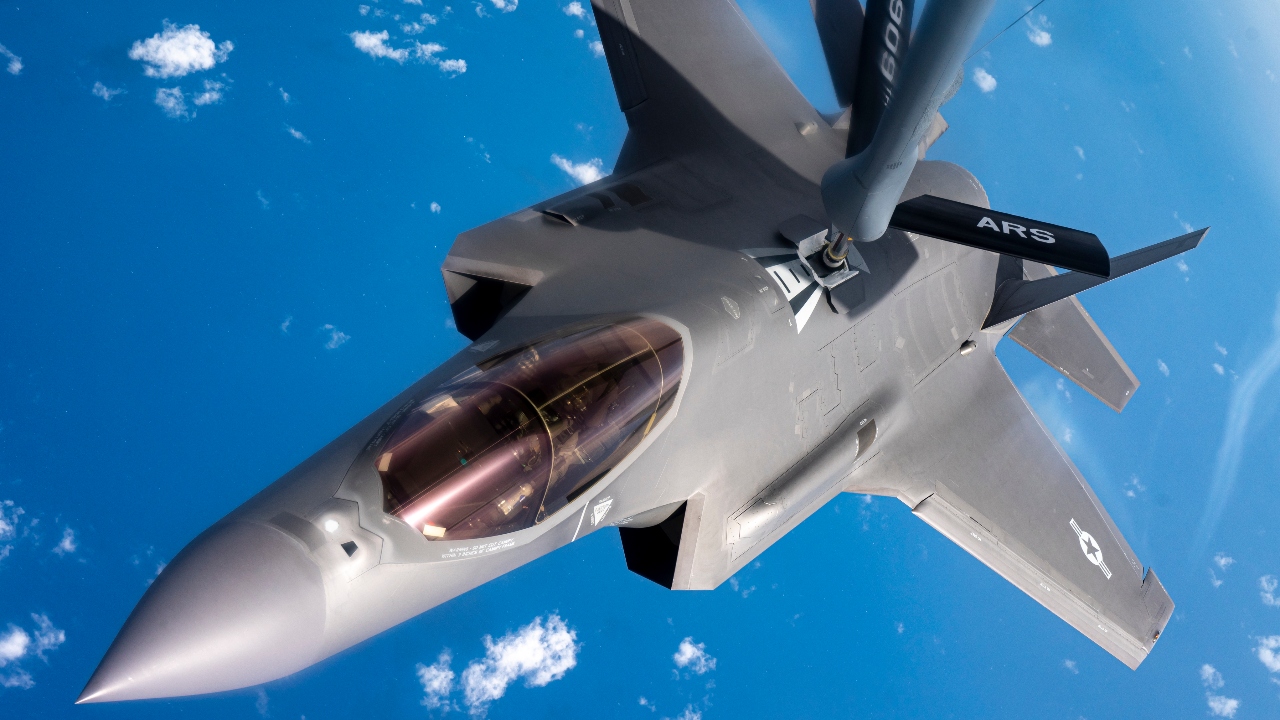
A U.S. Air Force F-35A Lightning II pilot assigned to the 421st Fisgter Squadron, Hill Air Force Base, Utah, receives fuel from a U.S. Air Force KC-135 Stratotanker aircraft assigned to the 506th Expeditionary Air Refueling Squadron, Andersen Air Force Base, Guam, over the Pacific Ocean, while conducting Agile Combat Employment (ACE) rehearsals, June 28, 2022. ACE shifts operations from centralized physical infrastructures to a network of smaller, dispersed locations that can complicate adversary planning and provide more options for joint force commanders. (U.S. Air Force photo by Master Sgt. Nicholas Priest)

U.S. Air Force Maj. Melanie “Mach” Kluesner, pilot of the F-35A Demonstration Team, performs aerial maneuvers at the Sun ‘n Fun Airshow in Lakeland, Florida, April 4, 2025. The demonstration team showcases the skill and precision U.S. Air Force pilots and aircraft are capable of. (U.S. Air Force photo by Senior Airman Nicholas Rupiper)
The initial development phase was marked by repeated cost overruns, driven by technical challenges and shifting requirements.
Although the unit cost of the aircraft has decreased over time, particularly for the F-35A variant, it remains high compared to legacy fighters.
More troubling is the cost of operating and maintaining the aircraft. The price per flight hour is significantly higher than that of older platforms, such as the F-16 or F/A-18, and sustainment costs continue to rise.
These financial burdens have led some countries to scale back their planned purchases and have fueled political backlash.
Critics argue that the program’s cost threatens to crowd out other defense priorities and undermine its long-term affordability.
Software Issues
The second major problem lies in the F-35’s software and systems integration. The aircraft is often described as a “flying computer,” relying heavily on software to manage mission systems, sensor fusion, and logistics.
However, the development of this software was fraught with setbacks and delays.
One of the most criticized components was the Autonomic Logistics Information System (ALIS), which was intended to streamline maintenance and logistics.
Instead, ALIS proved to be slow, unreliable, and overly complex, prompting its replacement with the Operational Data Integrated Network (ODIN), which is still under development.
Mission systems software has also faced persistent issues, necessitating frequent updates to address bugs and enhance performance.
These updates often lag behind schedule, affecting the aircraft’s operational readiness. Moreover, the F-35’s reliance on networked warfare introduces cybersecurity risks.
Ensuring secure communications and data integrity in contested environments is a constant challenge.
These software issues have delayed the aircraft’s full operational capability and have created frustration among pilots and maintenance crews alike.
Design Compromises
A third significant issue stems from the design compromises made to accommodate the diverse needs of multiple military branches.
The F-35 was developed in three variants: the F-35A for the Air Force, the F-35B for the Marine Corps with short takeoff and vertical landing (STOVL) capability, and the F-35C for the Navy, designed for carrier operations.
This “one-size-fits-all” approach led to complex engineering challenges and performance trade-offs. For example, the need to incorporate STOVL capability in the F-35B resulted in design constraints that affected all variants, including increased weight and reduced internal space.
While the aircraft excels in stealth and sensor fusion, it is less agile than some fourth-generation fighters in close-range dogfights.
Additionally, its range and payload are limited when operating in stealth mode, which necessitates that weapons be carried internally.
These compromises have led some critics to argue that the F-35 is a jack-of-all-trades but master of none.
It may be outperformed in specific mission profiles by cheaper, more specialized platforms, and its complexity has contributed to maintenance challenges and reduced reliability.
Maintenance Issues
The fourth major problem is the aircraft’s reliability and maintenance record. Despite its advanced design, the F-35 has struggled to achieve acceptable mission-capable rates.
Reports have shown that some variants have mission-capable rates hovering around 50 to 60 percent, far below the Pentagon’s goal of 80 percent.
A key contributor to this issue is the availability of spare parts. Supply chain disruptions and logistical inefficiencies have led to delays in repairs and reduced readiness.
Component failures have also been a recurring issue, affecting critical systems such as the power module, radar, and even the ejection seat.
On multiple occasions, maintenance issues have led to aircraft crashes, resulting in hundreds of millions of taxpayer dollars being wasted.
These reliability issues have raised concerns about the F-35’s readiness for sustained combat operations and have prompted calls for improvements in logistics and sustainment practices.
Platform Limitations
In a way, the F-35 represents the modern U.S. Military doctrine. It excels at quick, precision strike missions, but in a prolonged conflict, it could face some major issues.
The aircraft’s high cost and reliance on sophisticated software could limit its effectiveness in a prolonged military conflict, especially against adversaries with advanced air defense technology, such as China or Russia.

China J-20 Fighter Yellow. Image Credit: Creative Commons.
While its stealth capabilities are impressive, they are most effective against radar-guided threats and less so against infrared or visual detection.
Additionally, the sensitive nature of its technology has led to export restrictions and political tensions.
For example, Turkey was removed from the program due to concerns over its acquisition of Russian missile systems.
These political and strategic constraints have affected international partnerships and procurement plans.
Moreover, the reliance on the F-35 as a cornerstone of future airpower may limit flexibility in force structure and doctrine, potentially creating vulnerabilities in a rapidly evolving threat landscape.
About the Author: Isaac Seitz
Isaac Seitz, a Defense Columnist, graduated from Patrick Henry College’s Strategic Intelligence and National Security program. He has also studied Russian at Middlebury Language Schools and has worked as an intelligence Analyst in the private sector.
More Military
Montana-Class: The U.S. Navy’s Superbattleships That Never Sailed
The F-35 Stealth Fighter Feels Like a Black Hole of Trouble
Russia’s Admiral Nakhimov Kirov-Class Battlecruiser Has a Warning for the Russian Navy
China’s Yuan-Class AIP Stealth Submarine Has A Warning for the U.S. Navy
Mach 6 SR-72 Darkstar Could Soon Be the ‘Fastest Plane on Earth’


