


Key Points and Summary – The U.S. Navy’s aircraft carriers, the heart of American power, are being neutralized by China’s “carrier-killer” missiles. These weapons create a 1,000-mile “No-Go Zone,” but the carriers’ F-35C and Super Hornet jets only have a 600-mile range. This is an existential crisis. The F/A-XX, the Navy’s new sixth-generation fighter, is the solution—a long-range, stealthy predator designed to bridge this gap.

Boeing NGAD F/A-XX Fighter Rendering. Image Credit: Boeing.
-But as China races to build its own 6th-gen jets, the U.S. must build this “game-changer” affordably and quickly, or risk losing dominance of the seas forever.
The F/A-XX Fighter: The U.S. Navy Truly Needs this Fighter
For nearly a century, the American aircraft carrier has been the single most dominant weapon on Earth.
It is more than a warship; it is a 100,000-ton symbol of national will, a floating, sovereign piece of American territory that can move 600 miles a day, carrying an air force more powerful than that of most entire countries. From the carrier battles of the Second World War to the deserts of Iraq and the mountains of Afghanistan, the carrier strike group has been the king of the chessboard, the final arbiter in any global crisis.
But what if that king could be checkmated without ever being touched?
That is the existential crisis facing the United States Navy today. It is a crisis that is not about our ships, which are magnificent, or our pilots, who are the best in the world. It is a crisis of simple, brutal math.
A new generation of “carrier-killer” missiles, primarily from China, has created a “No-Go Zone” in the Western Pacific, a bubble of death stretching a thousand miles or more from the Chinese coast. These weapons, like the infamous DF-21D and DF-26, are designed to do one thing: kill our carriers.
To survive, our multi-billion-dollar ships must stay outside this bubble. But here is the fatal problem: the fists of the carrier, its F/A-18 Super Hornet and F-35C Lightning II fighters, have a combat range of only 500 or 600 miles.

F/A-XX Fighter from Boeing. Image Credit: Boeing.
You don’t need to be an admiral to do that math. If the ship has to stay 1,000 miles away, and its jets can only fly 600 miles, it cannot reach the fight. The king is neutralized. The most powerful weapon in our arsenal becomes a $13 billion floating fortress, rendered impotent by the tyranny of distance.
This is the nightmare scenario that keeps naval planners awake at night. And this is why the Navy’s version of the Next Generation Air Dominance (NGAD) program, the hunt for a sixth-generation fighter known as the F/A-XX, is not just another acquisition program.
It is, without exaggeration, a fight for the very soul and survival of American naval power.
With funding now being restored and a contract decision looming, the F/A-XX represents a desperate, high-stakes gamble to build a machine that can finally solve this catastrophic problem of range.
The Tyranny of Distance: A Self-Inflicted Wound
Let’s be clear: this crisis was a self-inflicted wound, born from two decades of tragic short-sightedness.
After the Cold War, the Navy made a series of logical, but ultimately flawed, decisions. It retired the legendary F-14 Tomcat, a long-range interceptor, and replaced it with the superb, but much shorter-legged, F/A-18 Super Hornet. The Super Hornet was a jack-of-all-trades, a brilliant and reliable workhorse for the low-threat wars we were fighting in Iraq and Afghanistan. In those conflicts, range didn’t matter. Our carriers could park 100 miles off the coast with impunity.
Then came the F-35C, a “fifth-generation” marvel. This jet is a flying supercomputer, a stealthy sensor node that can see everything and share that data with the entire fleet. But it, too, was designed with those same permissive environments in mind. Its combat radius is not a significant improvement over the Super Hornet. We had, in effect, built the world’s most advanced air wing, but had tethered it to its ship on a 600-mile leash.
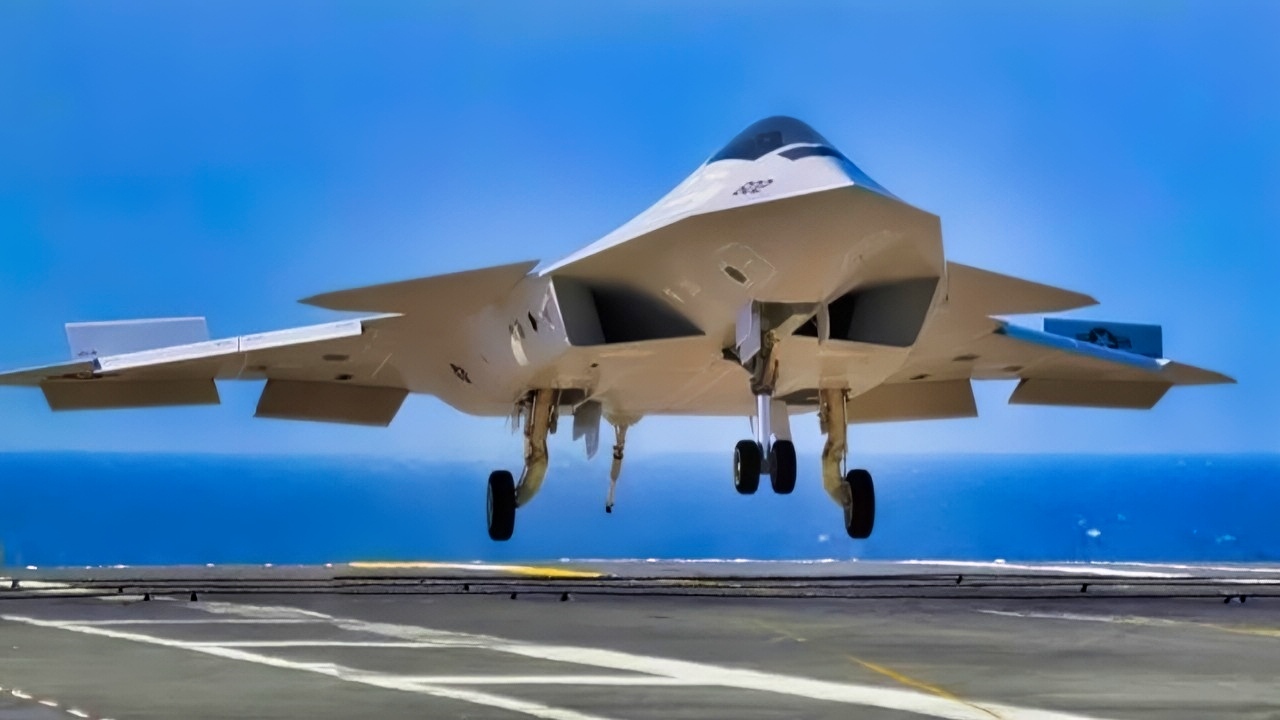
F/A-XX Fighter. Image Credit: Creative Commons.
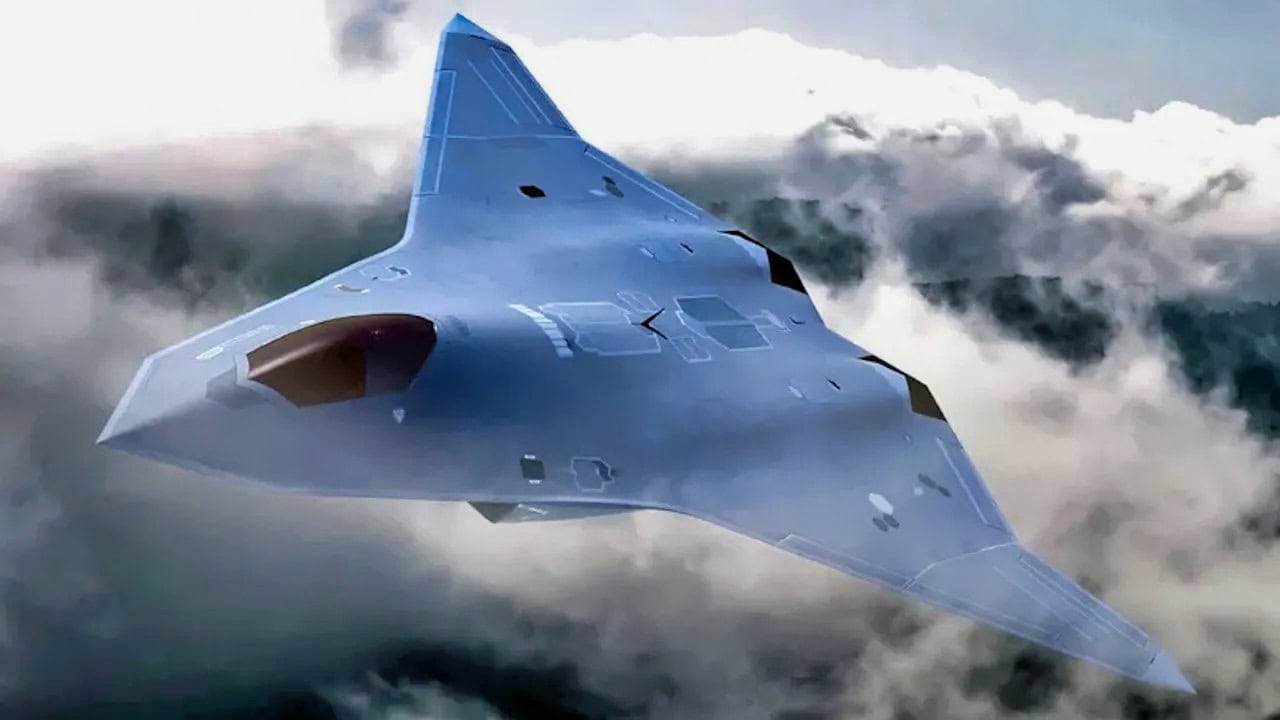
F/A-XX Fighter Mockup. Image Credit: Creative Commons.
While we were busy fighting in the desert, China was studying our way of war and designing weapons to break it. They weren’t building a fleet to match our own, ship for ship. That would be foolish. They were building an asymmetric, anti-access/area-denial (A2/AD) system. They were building the missiles to push our carriers back, and they were building their own stealth fighters, like the J-20 and J-35, to challenge our jets if they ever got close.
We are now faced with a brutal reality. Our only way to bridge this “range gap” is to rely on aerial tankers, like the new MQ-25 Stingray drone. But take it from me: you cannot build a winning war plan on a foundation of slow, non-stealthy, flying gas cans. These tankers will be the number one target for every J-20 in the Chinese air force. They are a fragile bridge, and in a real war, that bridge will be burned within the first 15 minutes.
A New Kind of Weapon: The Long-Range Predator
The Navy’s F/A-XX program, therefore, is not about building a “better F-35.” It is about building a completely different kind of weapon. The single, non-negotiable requirement that defines this aircraft is range.
This new sixth-generation fighter must be able to do what no jet in our current inventory can: launch from a carrier operating in the relative safety of the “second island chain”—1,000 miles or more from the fight—fly deep into the enemy’s missile-saturated kill-zone, execute its mission, and return to the ship. This demands a combat radius that is, at a minimum, double that of the F-35C.
To do this, it will have to be a large aircraft, packed with fuel. But it can’t just be a “bomb truck.” To survive inside the most sophisticated air defense network on Earth, it must be exponentially stealthier than even the F-35. It will need a level of all-aspect, broadband stealth that makes it invisible not just to high-frequency targeting radars, but to the low-frequency search radars that can currently spot fifth-generation jets.

F/A-XX U.S. Navy Fighter. Image Credit: Creative Commons.

F/A-XX U.S. Navy Fighter. Image Credit: Creative Commons.
And it won’t be fighting alone. The F/A-XX is being designed as the centerpiece of a “family of systems.” It will be the “quarterback” in the sky, a manned, thinking hub that commands a pack of semi-autonomous, drone wingmen called Collaborative Combat Aircraft (CCA). The F/A-XX pilot won’t be dogfighting. He or she will be a battle manager, sending drones forward to scout, to jam, and to launch their own weapons, overwhelming an adversary with a coordinated, multi-directional attack from machines that don’t have to worry about a human pilot’s survival.
This combination of extreme range, next-level stealth, and networked drone-swarming is what makes the F/A-XX a “game-changer.” It’s a machine that restores the carrier’s punch, allowing it to hold targets at risk from a safe distance, effectively breaking China’s A2/AD strategy.
The Dragon Isn’t Waiting
This all sounds wonderfully futuristic, but it is poisoned by a terrifying urgency. We are not operating in a vacuum. The Chinese are not waiting for us to figure this out.
As we debate budgets and requirements, China’s own sixth-generation fighter programs are running at a full sprint. Their concepts, which have been widely publicized, show a clear understanding of the same principles: long-range, high-end stealth, and autonomous wingmen. Fueled by a massive, state-directed budget and an industrial base that can move with shocking speed, Beijing is in a dead heat with the United States to field this new technology.
This is a race we cannot afford to lose. If China fields a long-range, carrier-based, sixth-generation fighter before we do, the strategic consequences would be catastrophic. It wouldn’t just be a technological embarrassment; it would be a permanent shift in the balance of power. A Chinese fleet equipped with such a weapon could not only “lock out” our own carriers but could push their power projection sphere deep into the Pacific, threatening our allies, our bases in Guam, and even Hawaii.
This is why the recent restoration of funding for the Navy’s NGAD program is so vital. The Navy had, in a moment of baffling, budget-driven panic, cut funding for the F/A-XX just last year, a move of such strategic malpractice that it staggered the defense community. That cut has now, thankfully, been reversed. The race is back on, but we have already lost precious time.
The Ghosts That Haunt the Program
Even with the money turned back on (or, rather, it looks like it will be), the F/A-XX is haunted by two ghosts that have killed a-thousand good ideas before it: cost and time.
The F-22 Raptor, the Air Force’s fifth-generation marvel, was so breathtakingly expensive that its production was infamously canceled, leaving us with a tiny, “boutique” fleet of 186 jets—not enough to fight a real war. The F-35, which was sold on a promise of “affordability,” became the most expensive weapons program in history, plagued for two decades by cost overruns and technical failures.
The Navy cannot afford a $300-million-per-plane fighter. It is a simple, hard fact. If the contractors—likely a head-to-head competition between Boeing and Lockheed Martin—cannot control the price, this program is doomed to the same fate as the F-22.
We will get a handful of exquisite, priceless jets, but not the fleet we need to actually win a war. The F/A-XX must be designed for mass production from day one.
And then there is time. The F-35 took 20 years to go from a concept to a truly combat-ready, reliable machine. We do not have 20 years. China is operating on a timeline of this decade. The Navy and its chosen partner must leverage the new tools of digital engineering and advanced manufacturing to do what has never been done: deliver a revolutionary, sixth-generation aircraft to the fleet in under 10 years.
This is the only way. The F/A-XX is not just a new jet. It is the platform that will decide whether the American aircraft carrier remains the most feared weapon on the planet or becomes a 100,000-ton steel coffin, a relic of a bygone era. The stakes could not be higher.
The clock is ticking.
About the Author: Harry J. Kazianis
Harry J. Kazianis (@Grecianformula) is Editor-In-Chief and President of National Security Journal. He was the former Senior Director of National Security Affairs at the Center for the National Interest (CFTNI), a foreign policy think tank founded by Richard Nixon based in Washington, DC. Harry has over a decade of experience in think tanks and national security publishing. His ideas have been published in the NY Times, The Washington Post, The Wall Street Journal, CNN, and many other outlets worldwide. He has held positions at CSIS, the Heritage Foundation, the University of Nottingham, and several other institutions related to national security research and studies. He is the former Executive Editor of the National Interest and the Diplomat. He holds a Master’s degree focusing on international affairs from Harvard University.
More Military
The Mach 3 SR-71 Blackbird Spy Plane ‘Broke All the Rules’ Thanks to Titanium
SR-72: The Air Force’s New Hypersonic Bomber?
Russia’s Admiral Kuznetsov Aircraft Carrier Is Now ‘Non-Operational’
New Army M1E3 Tank vs. Russia’s T-14 Armata: Who Wins Summed Up in 2 Words


