


Key Points and Summary – As Admiral Kuznetsov fades into irrelevance, Russia’s already weak surface fleet raises a hard question: does Moscow even need a navy?
-While Russia cannot rival the U.S. in global aircraft carrier power, it still has serious regional ambitions in the Arctic and the Black Sea.

Akula-Class Submarine from Russian Navy. Image Credit: Creative Commons.
-There, carriers and other surface combatants would be critical to protecting new bases, icebreakers, and coastal positions—and to truly threaten NATO.
-Instead, Russia relies on impressive submarines but lacks the sea-based airpower to back them up. Budget woes, broken shipyards, and Ukraine’s war make a serious Russian blue-water navy a distant prospect.
The Russian Navy Summed Up in 3 Words: Rusting, Shrinking, Stuck
As Russia’s sole, troubled carrier meets its fate and seems to disintegrate into a mist of non-existence, some might be inclined to raise the question of whether the country even wants or needs a Navy. Russia’s Navy has been challenged for many years, to put it mildly. The Russian Navy may not have a pressing strategic need to project global maritime power.
Unless Russia wanted to project a global maritime presence as a counterbalance to US global power projection, there are not really too many compelling reasons why Russia would need a carrier.
Part of this is likely because, even if Russia wanted to compete with the US in terms of global maritime power, it would not be in a position to do so anytime in the coming decades.
The sheer size of Russia’s land army, armored vehicles, and fighter jets—though now reduced due to Russia’s attack on Ukraine—is undoubtedly sufficient to present significant threats to Eastern Europe.
And yet, in order to achieve influence and pursue its ambitions beyond the European continent, Russia will need a far more formidable Naval presence.
Arctic and Black Sea
While Russia may not have the ambition to operate as a massive global power with a forward presence across the globe similar to the US Navy, the country does have clear ambitions in the Arctic and Black Sea.
Russia borders the famous and often-discussed Northern Sea Route.
The route offers direct access to the Arctic, and the country has been steadily increasing its Arctic presence and influence in recent years.
Russia is known to operate a large number of icebreakers, but it has only one carrier, which is currently in dry dock, undergoing repair, and is therefore unavailable.
Would Russia need more aircraft carriers if its leaders wish to capture more territory and influence in the rapidly changing Arctic?

Lada-Class Submarine. Image Credit: Creative Commons.
The answer would seem to be yes. The ability to project power and maintain a forward presence in waters near the Arctic would prove critical to maintaining influence or presenting a threat there.
In recent years, for instance, Russia has increased its presence in various locations throughout the Arctic by adding more bases, equipment, and personnel.
However, supporting these assets with projected power from the sea is not possible for Russia.
This circumstance appears to limit the ability to truly hold enemies at risk in defense of its Arctic assets. A small number of aircraft carriers could be key to accomplishing this.
Challenge NATO from the Black Sea
Russia also has regional ambitions in the Black Sea, which is surrounded by the coastal areas of NATO members, including Bulgaria, Romania, and Turkey.
Ukraine and Russia itself border the Black Sea, so the ability to launch air strikes and fire cruise missiles from that area would prove critical in any engagement.
Ukrainian forces, for instance, have already had success in destroying Russian ships in the Black Sea on numerous occasions.
If Russia gains the ability to launch sea-based airstrikes, the situation along the coast and in Odessa might be pretty different.
No Navy for Russia?
Overall, Russia’s Navy is not only smaller but also, according to many observers, is believed to be limited in its ability to attack ocean and land targets from surface ships.
Should Russia have budget flexibility and industrial capacity, it seems there are several key areas where its posture might greatly benefit from the presence of more aircraft carriers.
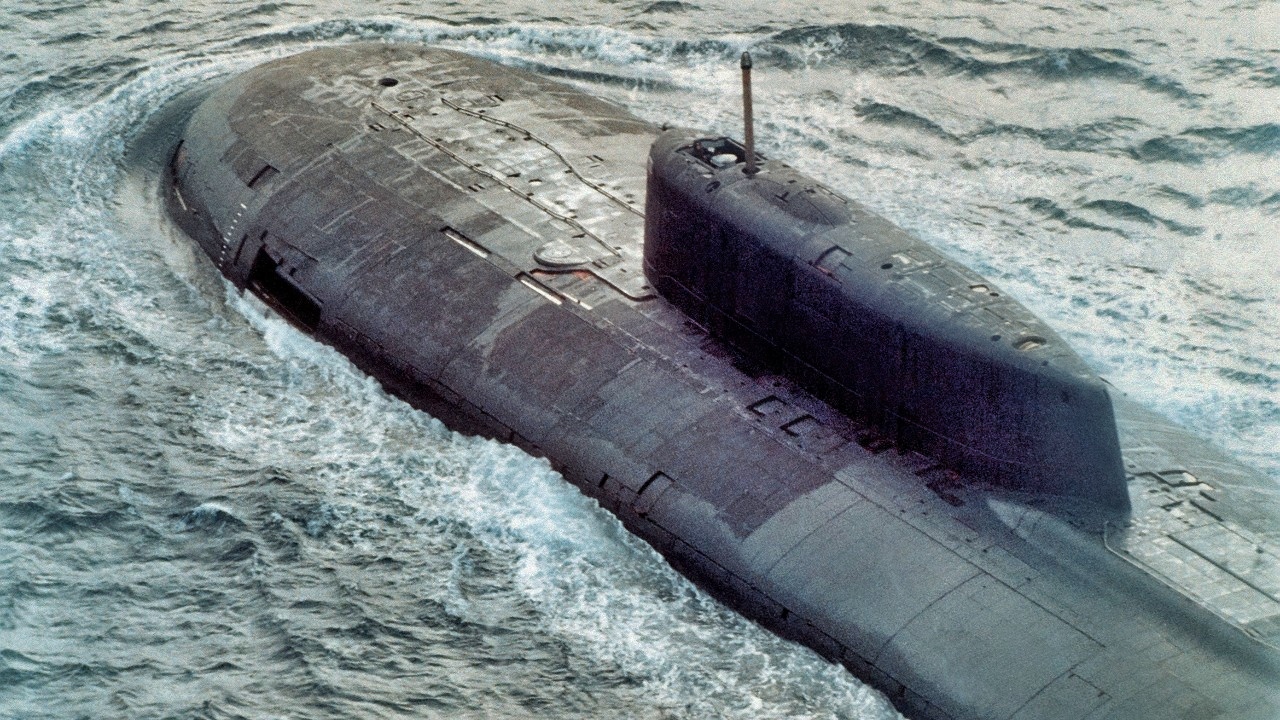
An elevated port side view of the forward section of a Soviet Oscar Class nuclear-powered attack submarine. (Soviet Military Power, 1986) Image Credit: Creative Commons.
Russia’s submarines, by contrast, are known to be both extremely advanced and threatening to US and NATO naval forces.
However, the country’s inability to mount and project any real kind of surface Naval warfighting power will place massive limitations on the types of missions it can accomplish.
About the Author: Kris Osborn, President of Warrior Maven
Kris Osborn is the President of Warrior Maven – Center for Military Modernization. Osborn previously served at the Pentagon as a Highly Qualified Expert with the Office of the Assistant Secretary of the Army—Acquisition, Logistics & Technology. Osborn has also worked as an anchor and on-air military specialist at national TV networks. He has appeared as a guest military expert on Fox News, MSNBC, The Military Channel, and The History Channel. He also has a Masters Degree in Comparative Literature from Columbia University.
More Military
The Essex-Class Aircraft Carriers Have An Embarrassing Message for the U.S. Navy
‘New’ Mach 4 MiG-41 6th Generation Stealth Fighter Has Warning for U.S. Air Force
Boeing’s F-47 NGAD 6th Generation Stealth Fighter Is No ‘Mission Impossible’


