

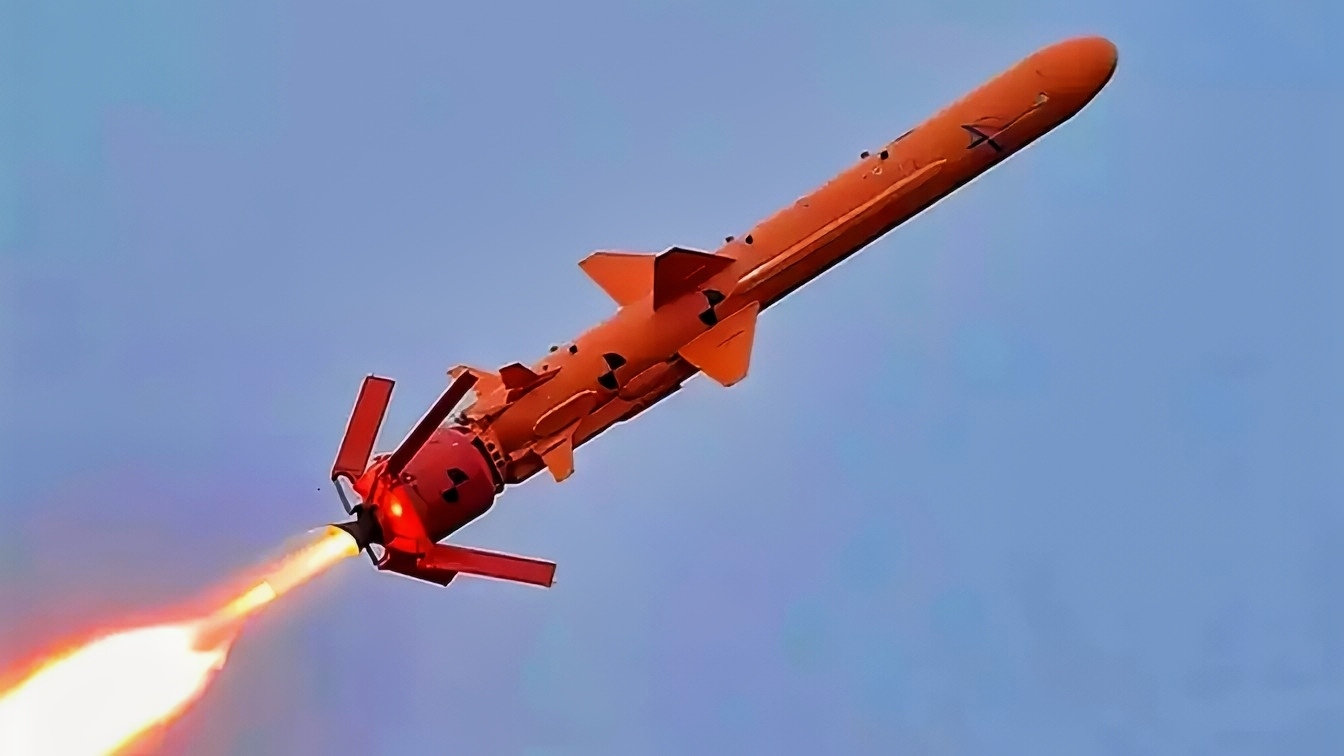
On Sunday, Ukrainian President Volodymyr Zelensky posted a video to social media, stating that Russia had launched “one of the largest Russian ballistic missile attacks to date.”
“Kyiv and the Kyiv region were the Russians’ primary targets. They had been preparing this attack for several days, stockpiling missiles,” the Ukrainian leader said in the post.
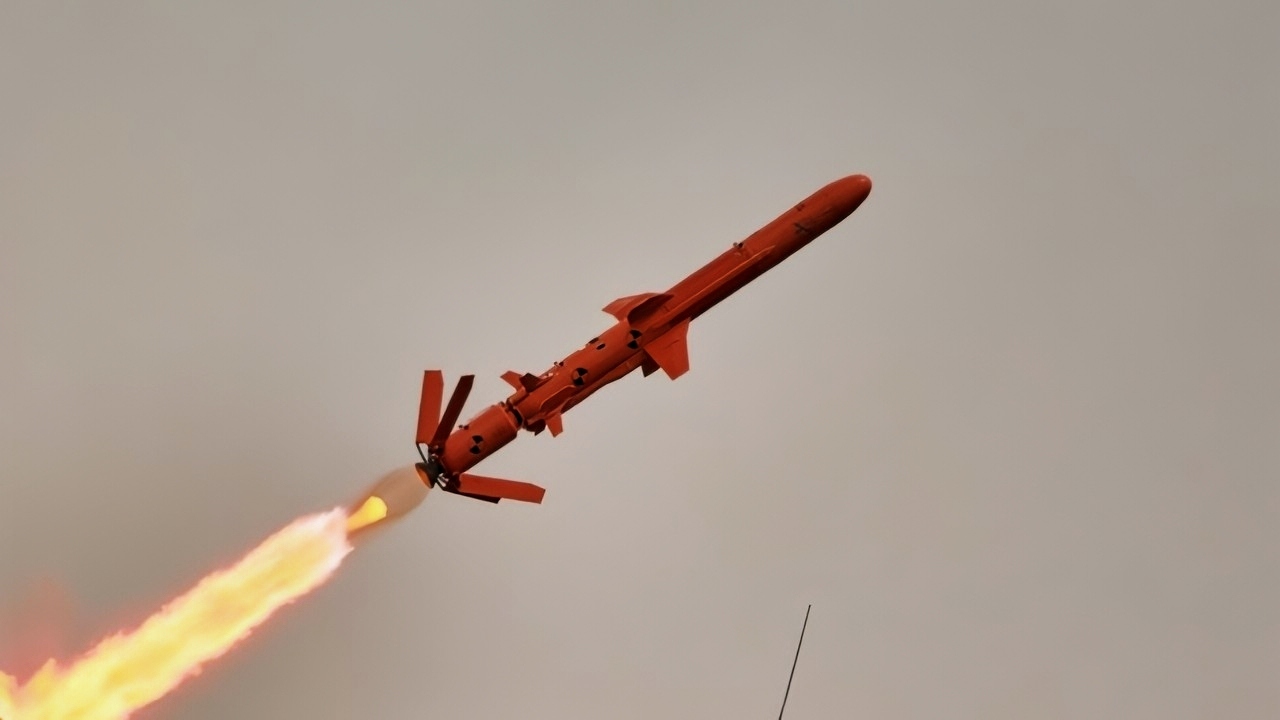
Neptune Missile from Ukraine Creative Commons Image
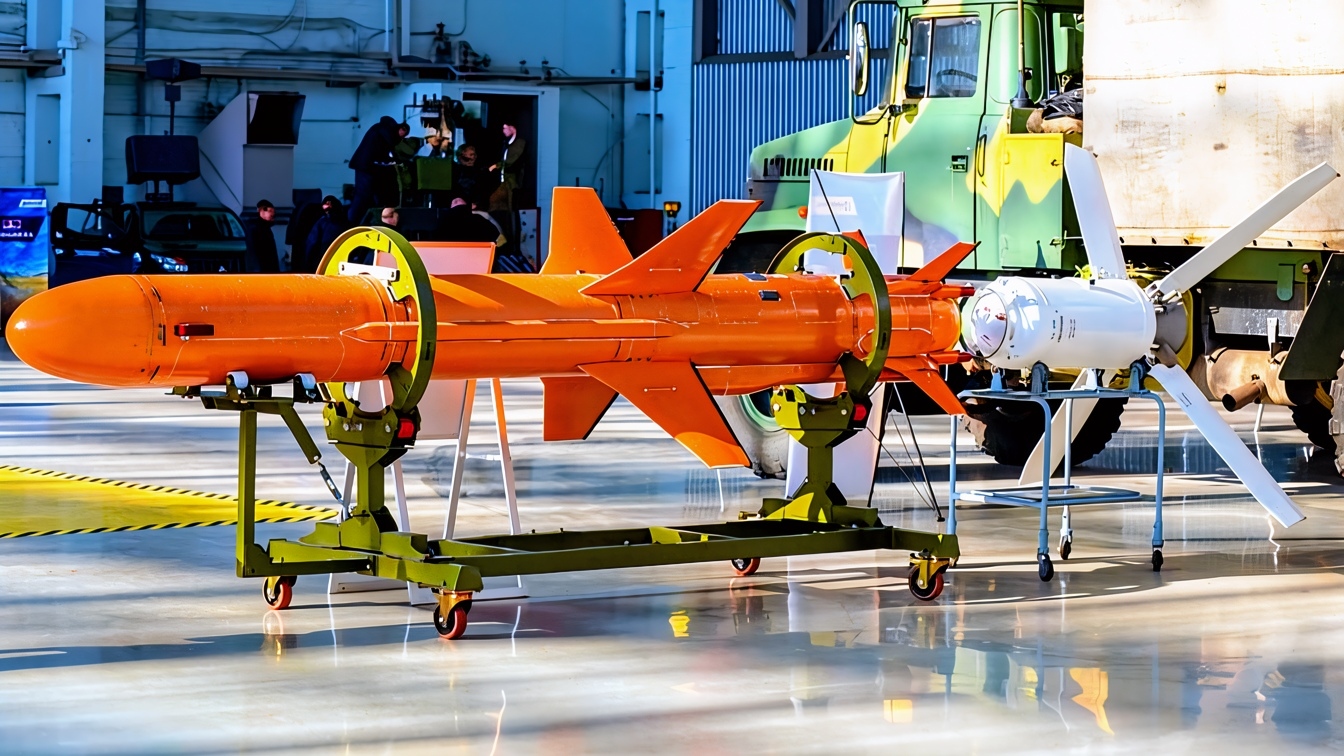
Neptune Cruise Missile Ukraine Government Photo
“The threat, of course, remains even now, and this must be taken into account. Russia is placing its wagers on ballistic missiles, and it is because of them that Putin still believes in his war.”
He went on to call for Ukraine’s allies, in Europe and the United States, to deliver “air defense missiles.”
Later in the weekend, Ukraine pulled off successful strikes in both the Moscow area and the Black Sea.
As reported by the Kyiv Independent on Monday morning, Ukrainian forces “struck an oil depot and logistics facilities in Russia’s Moscow Oblast, as well as six Russian vessels in the Black Sea.”
“We Are Responding, Justly”
Zelensky posted about the strikes on social media.
“The Moscow region. Our long-range sanctions have produced results against logistics facilities and an oil depot,” the Ukrainian leader said over a video that depicted the explosion in the Moscow region.
“Thank you to the warriors of the Unmanned Systems Forces, our intelligence services, the Missile Forces and Artillery, and the Special Operations Forces.
The targets were more than 400 kilometers from our border. Two shadow fleet tankers and four cargo ships were also struck in the Black Sea.”
The Ukrainian President characterized the strikes as a just response to Russia’s strikes on Ukraine.
“This war must be brought to an end, and that is only possible by increasing the pressure on the sole cause of this war – Russia,” Zelensky added.
Exile Nova had published extensive videos of the attacks on its Telegram channel.
Online Retailers’ Warehouses Are Struck
Also, this weekend, Ukrainian drones struck a pair of warehouses owned by Wildberries, a Russian online retailer. Per the BBC, the strikes killed eight people and injured 62 others.
One was in Tambov, southeast of Moscow, while the other was in Elektrostal, in the Moscow region. Wildberries is described by the BBC as “the Russian equivalent of Amazon.”
And like Amazon, at least according to Ukraine’s leader, the retailer has a role in its home nation’s defense.
Zelensky, per the BBC, described those facilities as “major logistics facilities,” which the Russians use to “supply sanctioned components for drone production and navigation equipment.”
“The primary rationale for striking Wildberries’ warehouses is to disrupt Russian logistics and the supply of dual-use goods, critical electronics, sanctioned goods and the like to the Russian army and Russian arms manufacturers,” Serhii Kuzan, chairman of the Ukrainian Security and Cooperation Center, told the BBC of the strikes.
But the rationale goes beyond the weapons, Kuzan added.
“The collateral damage from such strikes could also have a serious impact on the Russian economy, as well as a psychological effect on Russian society and, likely, on continued support for the war.”
Zelensky Urged to Remove Top General
Meanwhile, the New York Times reported Monday that Zelensky is facing pressure to remove Ukraine’s top military commander, General Oleksandr Syrskyi. The president is meeting with his top security officials on Monday.
This follows last week’s removal of Defense Minister Mykhailo Fedorov.
“For only the second time since Russia’s full-scale invasion in 2022, thousands of people have joined mass demonstrations to pressure Mr. Zelensky to change course and reaffirm Mr. Fedorov’s vision of warfare as increasingly dominated by drones and robots,” the Times reported.
“The first large protests, last summer, were over Mr. Zelensky’s push against anti-corruption agencies.”
The demonstrations follow what has been a stretch of successes that Ukraine has found with drone strikes, sometimes far into Russian territory. But the concern is that Syrskyi represents an older and more traditional way of war.
“Decisions regarding the army will be worked out,” Zelensky said in a statement on Saturday.
“While soldiers acknowledged General Syrskyi’s intelligence and expertise, they expressed frustration that he continued to operate using outdated methods and appeared to reward loyalty more than proven combat effectiveness,” the Times said of the current debate.
About the Author: Stephen Silver
Stephen Silver is an award-winning journalist, essayist, and film critic, and contributor to the Philadelphia Inquirer, the Jewish Telegraphic Agency, Broad Street Review, and Splice Today. The co-founder of the Philadelphia Film Critics Circle, Stephen lives in suburban Philadelphia with his wife and two sons. For over a decade, Stephen has authored thousands of articles that focus on politics, national security, technology, and the economy. Follow him on X (formerly Twitter) at @StephenSilver, and subscribe to his Substack newsletter.


