
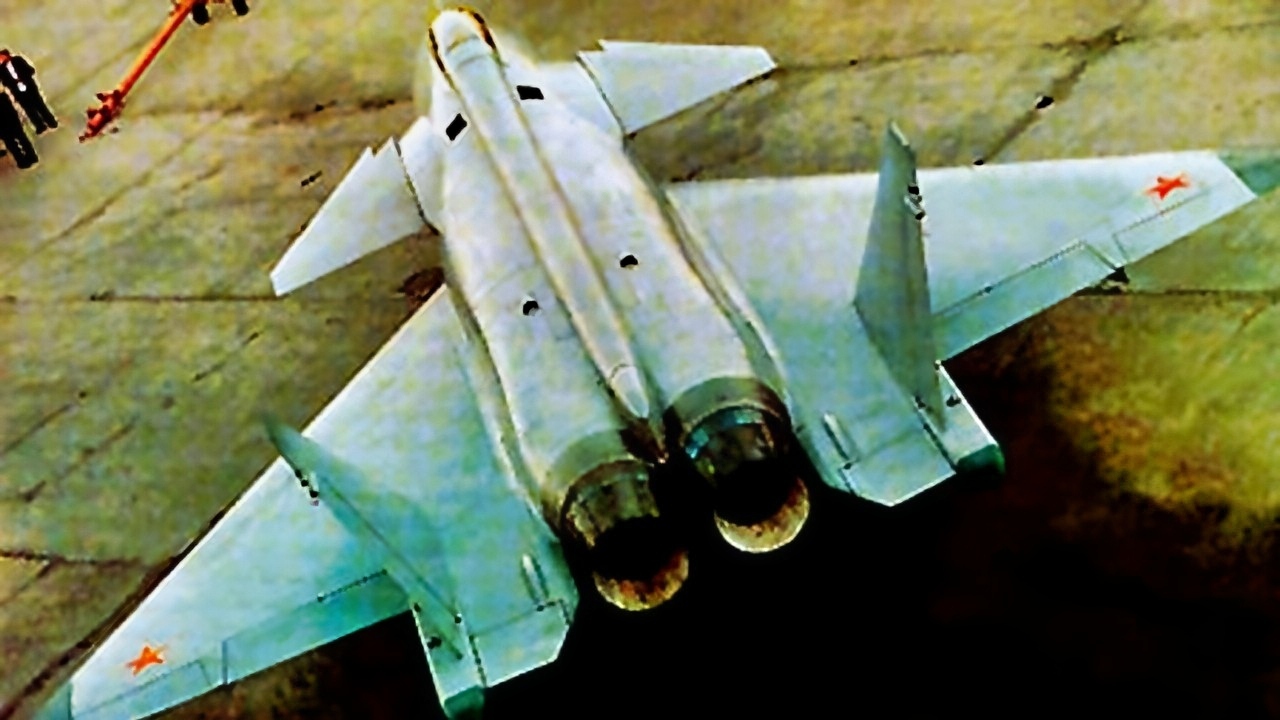
Summary and Key Points: Russia’s MiG 1.44 stealth fighter prototype flew for the first time on February 29, 2000 from the Gromov Flight Research Institute at Zhukovsky near Moscow — and effectively disappeared after just two test flights totaling less than 40 minutes.
-Test pilot Vladimir Gorboonov took the aircraft to roughly 1,000 meters and 600 kilometers per hour on the 18-minute maiden flight.
-A second flight in April 2000 lasted roughly 22 minutes. The MiG 1.44 was developed under the Soviet MFI Multifunctional Frontline Fighter program as Moscow’s answer to the U.S. F-22 Raptor and F-117 stealth fighter.
-The Soviet Union collapsed before the aircraft could be funded. Sukhoi’s PAK FA — later the Su-57 — won the next-generation competition.
The MiG 1.44 Fighter Failure Is One for the History Books
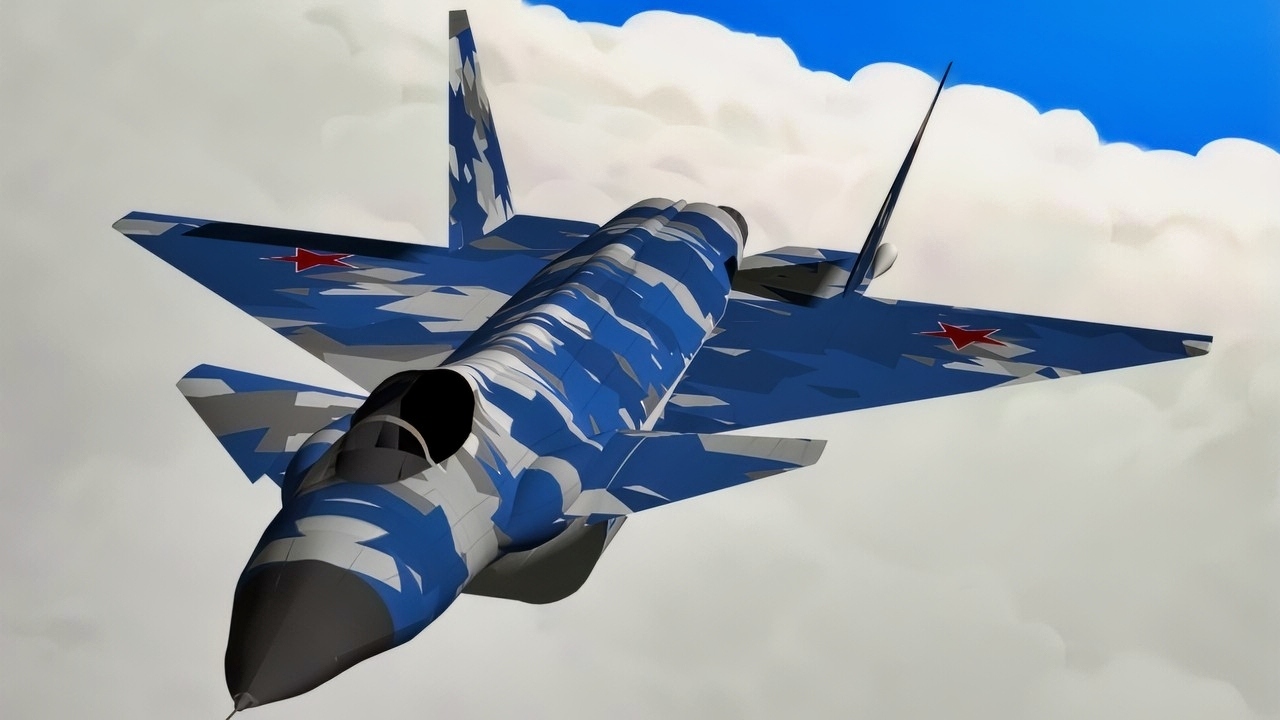
MiG 1.44 Russian Fighter. Image Credit: Creative Commons.
Russia’s United Aircraft Corporation this week confirmed the first flight of a new two-seat version of the Su-57 stealth fighter as Moscow continues trying to expand and refine its limited fifth-generation fighter fleet amid growing competition from the United States and China. The aircraft, reportedly designated the Su-57D, is intended to support both export sales and future manned-unmanned teaming operations.
But long before the Su-57 existed, Russia had another fifth-generation fighter program intended to challenge the American F-22 Raptor. That aircraft was the MiG 1.44, a futuristic Soviet-era stealth fighter prototype that first flew on February 29, 2000, before effectively disappearing forever after just two brief test flights totaling less than 40 minutes in the air.
The MiG-1.44 became one of the clearest symbols of Russia’s post-Soviet military collapse: an aircraft designed to preserve Soviet aerospace parity with the United States, but which instead exposed how badly Russia’s defense industry had deteriorated after the Cold War ended.
The Soviet Union’s Answer to the F-22
The MiG 1.44 was the product of a Soviet program known as MFI, short for “Multifunctional Frontline Fighter,” which began during the late Cold War as Moscow attempted to respond to America’s rapidly advancing stealth aircraft programs. Soviet planners had become alarmed by U.S. aerospace developments during the 1980s, including the F-117 stealth fighter and the Advanced Tactical Fighter competition that would later produce the F-22 Raptor.
The Soviets set out requirements for an aircraft capable of supercruise and stealth, extreme maneuverability, advanced avionics integration, and multirole combat operations.

MiG 1.44 Fighter. Image Credit: Creative Commons.
The Mikoyan design bureau, which is better known globally as MiG, ultimately became the lead developer for the project – and the aircraft it ultimately produced looked radically different from Soviet fighters of old.
The MiG 1.44 featured large canards, a delta-wing design, twin engines, and an airframe intended to eventually accommodate internal weapons bays, while emphasizing high maneuverability and sustained supersonic flight. Even today, the aircraft still appears unusually futuristic for a design largely completed during the late 1980s.
At the time, Soviet military planners saw next-generation air superiority as essential for countering NATO air power in Europe, and the MiG 1.44 was intended not only to replace older Soviet aircraft but to ensure the USSR could continue competing technologically with the United States in future wars.
The Soviet Union Collapses
Then, the Soviet Union collapsed.
When the USSR formally dissolved in 1991, it triggered an economic crisis across Russia that lasted through the 1990s. It hurt defense budgets and military procurement plans, and major aerospace companies struggled just to survive. Programs across the Russian military were delayed, downsized, and, in many instances, abandoned outright.

USAF Maj. Samuel “RaZZ” Larson, F-22 Raptor Aerial Demonstration Team pilot and commander, performs at the 75th Annual Toronto Air Show. The F-22 Raptor Demo Team performed alongside the RCAF CF-18 Demo Team, RCAF Snowbirds, and RAF Red Arrows.
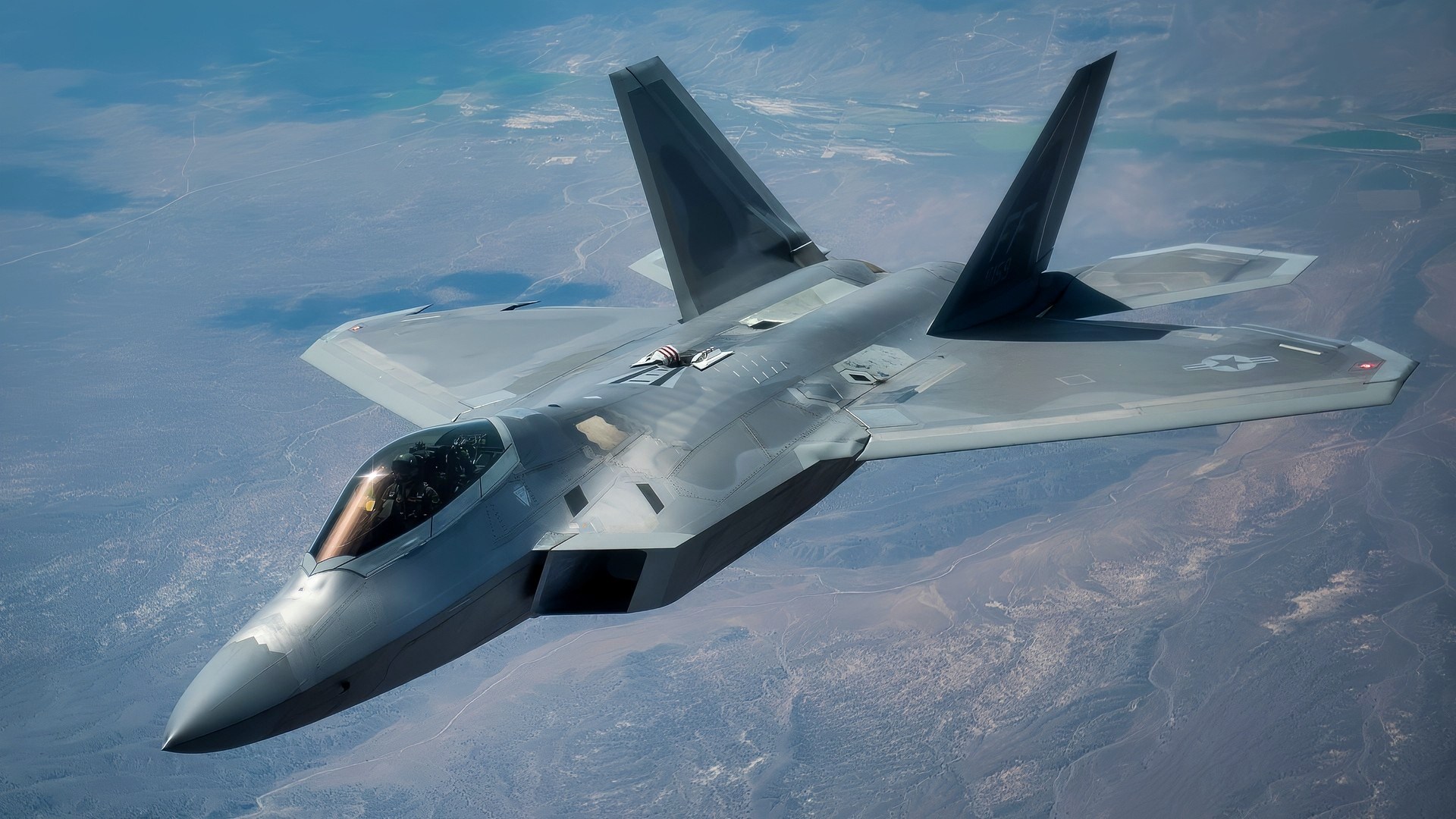
An F-22 Raptor from Langely Air Force Base, V.a. flies by after receiving fuel from a KC-135 Stratotanker from McConnell Air Force Base, Kans., July 27, 2016 during exercise Red Flag, hosted by Nellis Air Force Base, Nev. Red Flag 16-3 is aimed at teaching service members how to integrate air, space and cyberspace elements. (U.S. Air Force photo/Tech. Sgt. David Salanitri)
The MiG 1.44 was trapped in the chaos. It had originally been expected to fly years earlier, but funding shortages repeatedly halted its development. The prototype itself was largely completed by the mid-1990s, but it remained grounded as Russia lacked the money and industrial stability necessary to continue serious testing. When the aircraft was finally publicly unveiled in 1999, Russia was already falling behind the United States in stealth fighter development.
By that point, the F-22 program was significantly further advanced, and American aerospace firms had maintained far more stable funding throughout the post-Cold War period.
And at the same time, MiG itself was beginning to lose influence inside Russia’s defense sector. Sukhoi was becoming Moscow’s preferred fighter manufacturer thanks to export success with the Su-27 family.
An 18-Minute Flight
After years of delays and speculation, the MiG 1.44 finally made its maiden flight on February 29, 2000, from the Gromov Flight Research Institute at Zhukovsky near Moscow. The aircraft was flown by test pilot Vladimir Gorboonov, and the flight lasted approximately 18 minutes.
During the test, the aircraft climbed to roughly 1,000 meters and reached speeds of approximately 600 kilometers per hour while completing two circuits around the airfield before landing safely. Russian media celebrated the event as proof that Moscow could still compete technologically with the West despite the disastrous economic conditions of the 1990s.
And the timing was politically notable, too, because Vladimir Putin had only recently become acting president, following Boris Yeltsin’s resignation. Russia was actively trying to project an image of national recovery and military revival, and this was the very beginning of its national reconstruction.
A second test flight followed in April 2000 and lasted roughly 22 minutes.
Engineers reportedly identified technical problems afterward, and no further flights were ever publicly recorded. The aircraft never entered serial production, never became operational, and existed only as a demonstrator.
Why It Was Killed
The MiG-1.44 never succeeded for several reasons. First, the aircraft was extremely expensive – though the exact cost is hard to determine because the project was developed during a time when much of the funding data for programs like it was never released.
This was also a time when the Russian economy was weak, and stealth technologies were still immature – even in the United States.
Military planners saw the project as impractical for mass production.
So, instead, Russia launched a new next-generation fighter competition that ultimately selected Sukhoi’s PAK FA design – the aircraft that later became the Su-57.
About the Author: Jack Buckby
Jack Buckby is a British researcher and analyst specializing in defense and national security, based in New York. His work focuses on military capability, procurement, and strategic competition, producing and editing analysis for policy and defense audiences. He brings extensive editorial experience, with a career output spanning over 1,000 articles at 19FortyFive and National Security Journal, and has previously authored books and papers on extremism and deradicalization.


