

Summary and Key Points: Almost every conversation about the Iran War points the same way — toward Tehran, the Strait of Hormuz, the warships in the Gulf. Dr. Andrew Latham thinks the real story is unfolding where nobody’s looking: inside China’s oil storage tanks. For years, Beijing quietly stockpiled crude on a massive scale, for reasons that seemed unremarkable at the time. Now those reserves are why China — alone among the great powers — isn’t scrambling. But stockpiles only buy time; they don’t remove pressure.
The Iran War Comes for China
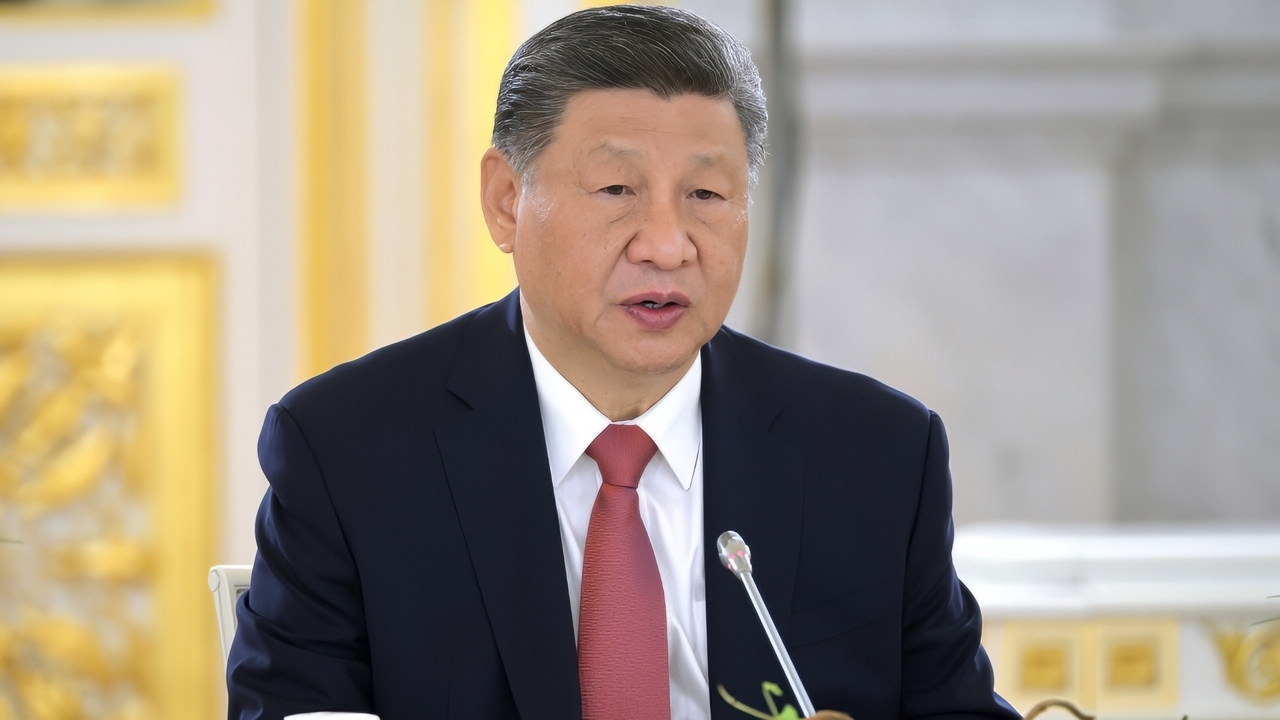
China’s Xi Jinping. Image Credit: Creative Commons.
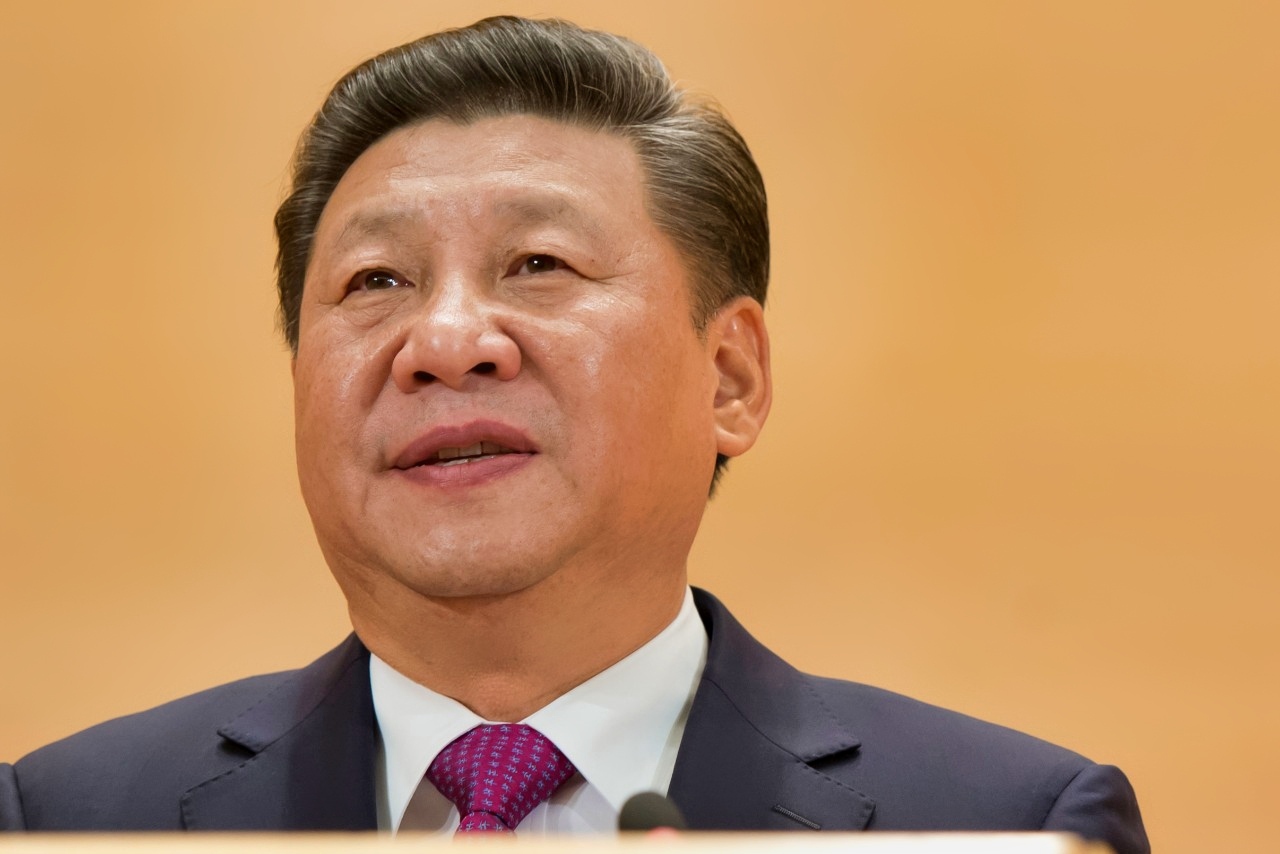
Xi Jinping President of the People’s Republic of China speak’s at a United Nations Office at Geneva. 18 january 2017. UN Photo / Jean-Marc Ferré
The future of the Iran war may depend less on what happens in Tehran than on what happens in Beijing.
That sounds counterintuitive. Most commentary on the conflict focuses on military operations, the Strait of Hormuz, American deployments in the Gulf, or the possibility of direct escalation between Iran and Israel. Yet one of the most important strategic variables in this conflict may be China’s oil stockpiles. Beijing spent years accumulating reserves that are now proving unusually valuable in a more dangerous world. The longer the war drags on, the harder it becomes to ignore.
Recent reports indicate that Chinese crude imports have fallen to their lowest level in roughly a decade. Beijing is compensating by tapping inventories accumulated over many years. That stockpile was never just an economic asset. It was a form of strategic insurance.
China accumulated enormous oil inventories over many years. Whatever the original reasons, those reserves are giving Beijing room to maneuver amid an unusual period of disruption. A country that imports millions of barrels of oil every day benefits from having such a cushion.
For the moment, that preparation appears to be paying off. China has avoided a frantic scramble for replacement supplies. It has not had to bid aggressively against other major importers. That has mattered more than many people realize. By relying on stored reserves rather than rushing back into global markets, China has helped prevent an already serious energy shock from becoming substantially worse.
For now, Beijing can live with that.
Why China Has Time
The less comfortable reality is that stockpiles are not a permanent solution. They buy time. They do not remove pressure.
Every barrel withdrawn from storage narrows Beijing’s room for maneuver. Months of conflict have a way of concentrating attention. At some point, the issue ceases to be whether China can absorb the disruption. Chinese leaders will start asking how much longer they want to keep doing so.
There is a tendency in Western discussions of China to assume that Beijing thinks in decades while everyone else thinks in election cycles. There is some truth to that caricature. Even long-term strategies run into constraints. Energy security is one of them.
The Hidden Clock
For much of the past two decades, China has pursued what might best be described as a strategy of multi-alignment in a multipolar world. The war in Iran is beginning to put stress on that approach. It has cultivated close relations with Iran. It has deepened economic ties with Saudi Arabia and other Gulf states. It has expanded its influence across the developing world while preserving extensive commercial connections with Europe and the United States.
The approach has worked remarkably well.
So far, China has managed to avoid many of the difficult choices that shaped international politics during the Cold War. Rather than joining rigid blocs, Beijing positioned itself as a power capable of maintaining relationships across competing geopolitical camps.
Wars have a way of exposing the limits of strategies that look perfectly workable in peacetime.
Beijing gains a great deal from its relationship with Iran. Iranian oil has helped support Chinese energy security. Tehran’s opposition to American primacy aligns with Beijing’s broader interest in a more multipolar international order.
At the same time, stable energy markets matter to Beijing. So do predictable shipping routes and continued economic growth. A prolonged regional conflict in the Gulf runs counter to all of those interests.
Those interests do not always pull in the same direction.
Beijing can probably absorb a disruption that lasts weeks.
Months are harder.
If oil markets remain volatile for months, if shipping disruptions persist, if Chinese stockpiles continue declining, Beijing may eventually confront a choice it has spent years trying to avoid. Supporting Iran and preserving regional stability could become competing objectives.
A Problem for Multi-Alignment
No one should expect China to line up behind Washington.
Nor is Beijing likely to walk away from Tehran.
States rarely pivot that abruptly.
What it does suggest is that Chinese incentives may gradually shift as the economic costs of the conflict accumulate. Behind closed doors, Beijing could become increasingly interested in reducing tensions, restoring market stability, and preventing a wider regional war. Not because Chinese leaders have discovered a new commitment to international harmony. Their own interests may simply begin pointing that way.
That pressure would likely be felt first in private conversations with Tehran rather than in public declarations from Beijing.
There is nothing especially unusual about this.
Countries support partners when the relationship serves their interests. When circumstances change, they often start recalculating. The history of international politics is filled with examples of states reassessing relationships once strategic costs begin to rise.
For now, Beijing retains considerable flexibility. Its stockpiles have given it breathing room. They have allowed Chinese leaders to avoid difficult choices that might already confront other major importers.
But that flexibility is not unlimited.
Beijing Starts Doing the Math
Most wars are shaped by forces far from the battlefield. Financial systems matter. Industrial capacity matters too. So do energy supplies. The war in Iran may prove no different.
While analysts focus on missile strikes, naval patrols, and diplomatic statements, another contest is unfolding quietly inside China’s storage facilities. Beijing spent years preparing for a world marked by rivalry, fragmentation, and geopolitical risk. That preparation has bought time. It has not bought immunity.
If this war continues for months, pressure will keep building inside the very country that has worked hardest to avoid choosing sides. If that pressure reaches a certain point, the strongest push for ending the conflict may come from a capital that most observers are not watching closely enough.
It may come from Beijing first.
About the Author: Dr. Andrew Latham
Andrew Latham is a professor of international relations and political theory at Macalester College in Saint Paul, MN. You can follow him on X: @aakatham.


dozy don
June 5, 2026 at 7:51 am
Many people, especially top influential western media outlets like CNN, guardian, BBC, like to connect china with the iran war when churning out news articles, but fact is, china has Nothing to do with the iran War.
So, who is/are directly linked to iran war. AIPAC, netanyahu, congress, state dept and advisers.
But now, congress wants trump to shuft focus from iran to russia/ ukro-russo conflict.
So, What happens now.
What’s happening now, is trump has been painted into a tight corner. Zelenskyy, the ukros’ nazi leader, has revealed or exposed a cleverly sneakily written letter to the world about his ‘fervent pursuit for peace’ in ukraine.
His pursuit for peace is totally bogus. It’s a trap, a deadly rat trap, for both trump and putin.
Recall, in jan 2026, zelenskyy vowed never to exchange land for peace. (friday jan 30 2026.) That was before the iran war.
You want donbass, come fight for it, stated the nazi leader. But now, trump is bottled up over iran, and zelenskyy’s giving the MESSAGE he’s seeing peace.
So, so, so, iran war will end when trump has the presence of mind, to see who’s setting a trap for him.
Yesterday, it was AIPAC & netanyahu, tomorrow, it’s gonna be zelenskyy and congress.
But Does trump has the hidden third eye. Unlikely.