


Summary and Key Points: For two decades, Vladimir Putin has named one red line above all others: Ukraine inside NATO. He has been consistent, and on this narrow point, he may even get his way — Kyiv may never fly the alliance’s flag. But that, the argument goes, is exactly the wrong thing for the West to fight over. Because Ukraine doesn’t need a treaty signature to be safe.
Arm Ukraine Into A Powerhouse: How The West Can Hand Putin His Worst Nightmare Without The NATO Flag

T-14 Armata. Image Credit: Russian State Media.

T-14 Armata Tank. Image Credit: Creative Commons.
When the guns finally fall silent in Ukraine, the hardest question will not be where the lines are drawn. It will be what comes next for Kyiv’s security, and that question runs straight into the demand Vladimir Putin has made more consistently than any other.
For two decades, he has cast Ukrainian membership in NATO as an intolerable threat, and he has been explicit that the alliance’s expansion to Russia’s doorstep is the grievance he claims justifies everything that followed. That gives the West a genuine dilemma, but also an opening that Putin himself has handed it.
Ukraine may never get the NATO flag. It can get nearly everything that the flag represents, and in doing so, the West can build the very thing Moscow fears most.
Putin’s Red Line On NATO Membership
Take Putin at his word, because on this point he has been remarkably consistent. As far back as the 2008 Bucharest summit, he warned American officials that no Russian leader could stand by while Ukraine moved toward NATO membership, calling it a hostile act.
In the run-up to the 2022 invasion, Moscow formally demanded that NATO permanently bar Ukraine and roll back its deployments in Eastern Europe, with Putin warning of military-technical measures if the West refused, and naming both NATO membership for Ukraine and the deployment of alliance weapons on Ukrainian soil as red lines.

CINCU, Romania – U.S. Army Soldiers of 1st Battalion, 66th Armored Regiment, 3rd Armored Brigade Combat Team, 4th Infantry Division, setup their M1 Abram Tanks during Getica Saber 17, July 10, 2017. Getica Saber 17 is a U.S.-led fire support coordination exercise and combined arms live fire exercise that incorporates six allied and partner nations with more than 4,000 Soldiers. Getica Saber 17 runs concurrent with Saber Guardian 17, a U.S. Army Europe-led, multinational exercise that spans across Bulgaria, Hungary and Romania with more than 25,000 service members from 22 allied and partner nations. Image Credit: US Military.

A U.S. Army M1 Abrams, assigned to 4th Battalion, 6th Infantry Regiment, 3rd Armored Brigade Combat Team, 1st Armored Division, fully emerges from the tank firing point to engage the simulated enemy at Novo Selo Training Area, Bulgaria, March 5, 2025. 1st Armored Division, a rotational force supporting V Corps, conducts training with engineers and tank operators in the European Theatre to maintain readiness and instill fundamental Soldier skills that are vital in maintaining lethality. (U.S. Army photo by Spc. Kyle Kimble)
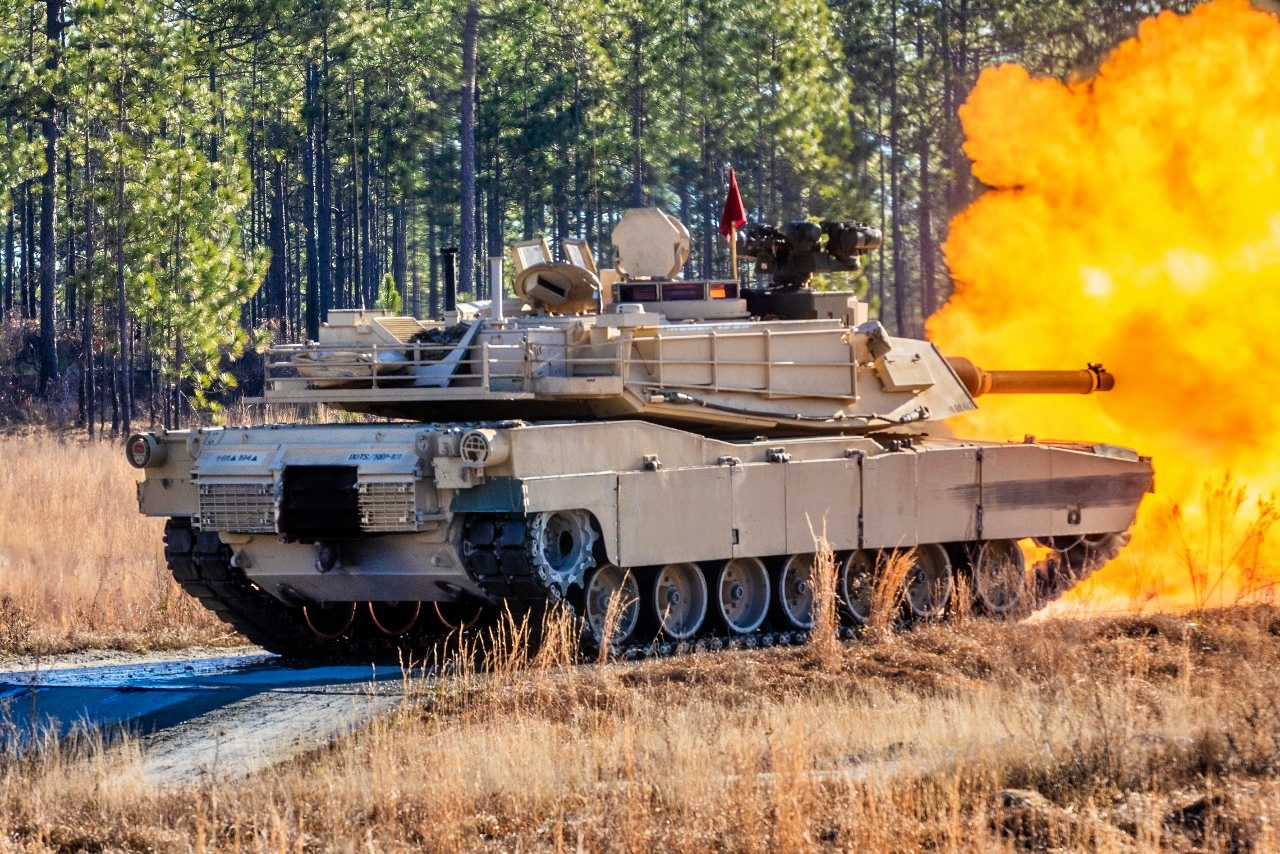
Soldiers from Echo Company, 1st Battalion, 81st Armor Regiment, 194th Armored Brigade, conduct gunnery training with the M1 Abrams tank, Jan. 14, 2025, at Brooks Range, on Fort Benning, Georgia. (U.S. Army photo by Joey Rhodes II)
The honest reading is that formal accession is the one outcome most likely to keep this war alive or restart it. Extending a membership invitation as part of a settlement would hand Putin exactly the casus belli he has spent years constructing, and it would force the alliance to choose between an Article 5 commitment it may not be willing to honor with force and the humiliation of admitting it bluffed. That is a bad trade. But the conclusion that follows is not that Ukraine must be left exposed. It is time for the West to stop fixating on the symbol and deliver the substance.
The Substance Without The Symbol
The diplomatic track has already drifted toward this answer. American and European negotiators have circled the idea of Article 5-style protections for Ukraine provided by the United States and Europe outside formal NATO accession, with EU membership folded in as part of the security package.
The logic is straightforward. Ukraine does not need a treaty signature to be safe. It needs to be too strong and too costly to attack, and it needs Western capitals bound tightly enough to its defense that Moscow cannot gamble on a second war.
That points to a security model built on capability rather than paperwork. Analysts have described the goal as turning Ukraine into a kind of armored porcupine, a country whose defensive strength and asymmetric capabilities make any renewed invasion a catastrophe for the attacker.
The path to that runs through hardware, integration, and guarantees that bite, not through a ceremony in Brussels that triggers the very escalation everyone wants to avoid.
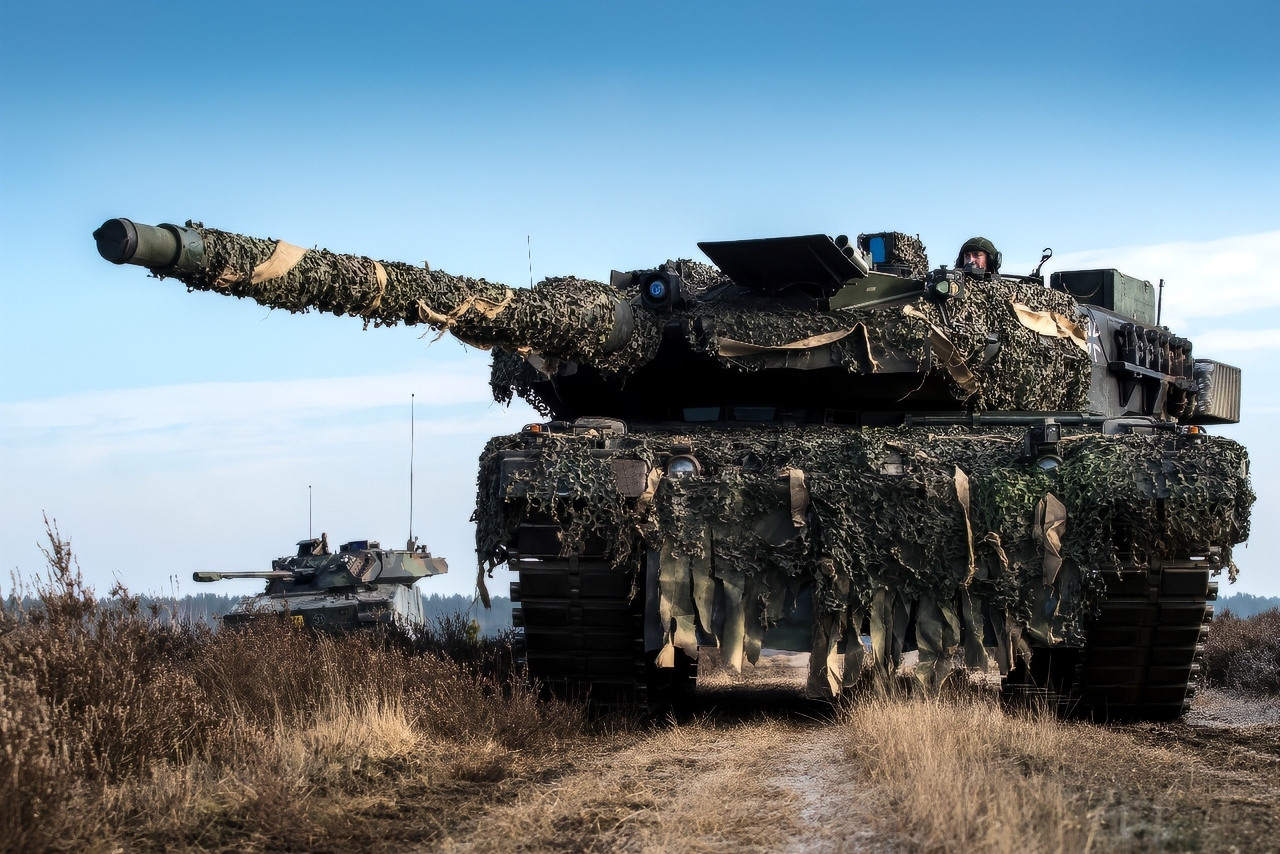
German Leopard 2 Tank. Image Credit: Creative Commons.
F-16s, Gripens, And Modern Armor
The weapons are the foundation, and the transfers are already underway. American F-16s have arrived in Ukraine and have flown in combat, and Sweden has moved to send its Gripen fighters, while Western Leopard 2 and Abrams tanks have been in the fight for years.
A postwar Ukraine should receive these not as emergency trickles but as the core of a rebuilt, Western-standard military: modern fourth- and fourth-plus-generation airpower, layered air defense, long-range strike, armor, and the drones at which Ukraine has already become the world’s most innovative practitioner.
The point is not a single wonder weapon. It is a wholesale conversion of Ukraine’s armed forces onto Western platforms, ammunition, and doctrine, sustained by long-term production commitments rather than year-to-year political fights over aid packages.
A Ukraine flying Gripens and F-16s, fielding Western armor, and manufacturing its own drones at scale is a country no rational Russian general wants to invade again.
Intelligence, Training, And EU Membership
Hardware is only the visible layer. The deeper integration is the part Moscow cannot easily counter. Ukraine has spent years plugged into Western intelligence sharing, and continuing that flow gives Kyiv the ability to see a Russian buildup coming and to strike with precision. NATO-standard training, already transforming Ukrainian forces, would continue turning the country’s enormous combat experience, now the hardest-won in Europe, into a professional military that interoperates with the alliance in everything but name.

A Canadian Army Leopard 2A4M tank fires a round while taking part in the Canadian Army Trophy tank competition at Ādaži in Latvia. The Canadian Army Trophy tank competition, held in May 2024, allowed participating nations to show off their gunnery skills while building camaraderie. Image Credit: Creative Commons.
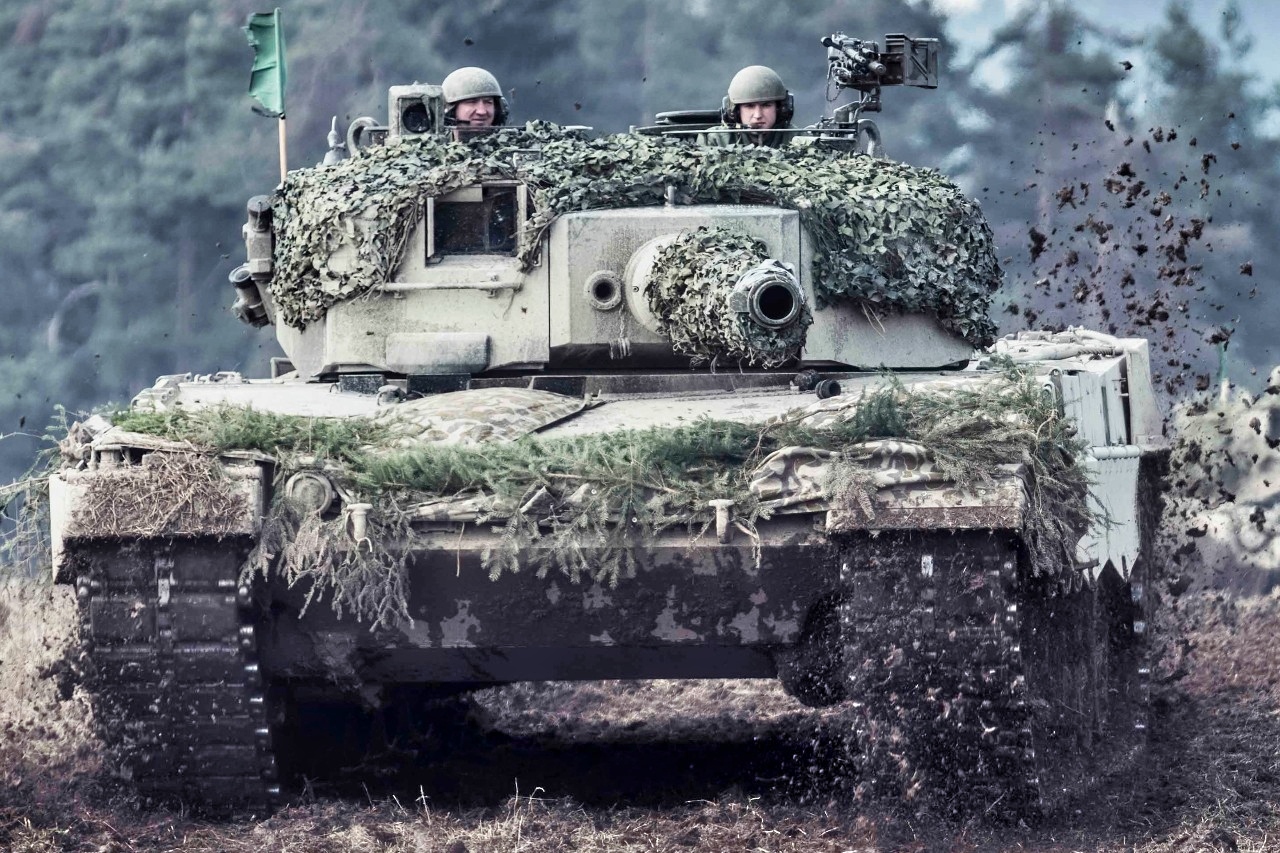
Leopard 2. Image Credit: Creative Commons.

Leopard 2. Image Credit: Creative Commons.
Then there is the European Union. Brussels and Washington have treated EU accession as part of the security guarantee itself, and for good reason. Membership would bind Ukraine into the economic, legal, and political fabric of the West, anchor its reconstruction, and make its Western orientation effectively irreversible.
A country inside the EU, armed to the teeth, trained by NATO, and fed Western intelligence, is, for every practical purpose, part of the Western bloc.
The Nightmare Putin Built
If Russia could go back in time, I would argue they never would have launched this war, as they created the very thing they feared. Putin launched his invasion to prevent Ukraine from drifting into the Western orbit. What he has produced instead is a Ukraine more tightly bound to the West than it ever was before 2022, with a battle-hardened military forged by the hardest fighting Europe has seen in generations, converting to NATO equipment, on a track to EU membership, and protected by Western commitments. He may succeed in keeping the NATO flag off Kyiv’s government buildings. He will have failed at everything that flag was supposed to symbolize.
Really, No NATO?
The honest counterargument deserves a hearing. Guarantees short of a treaty are, by definition, less ironclad than Article 5, and a heavily armed Ukraine outside the alliance could still be attacked without automatically pulling NATO into the war. Skeptics will warn that Moscow may treat the substance as provocation no less than the symbol, and that Western publics may tire of the open-ended cost. Those are real risks, and a serious strategy has to make the guarantees credible enough and the arming deep enough that the gap between membership and its substitute shrinks to nothing.
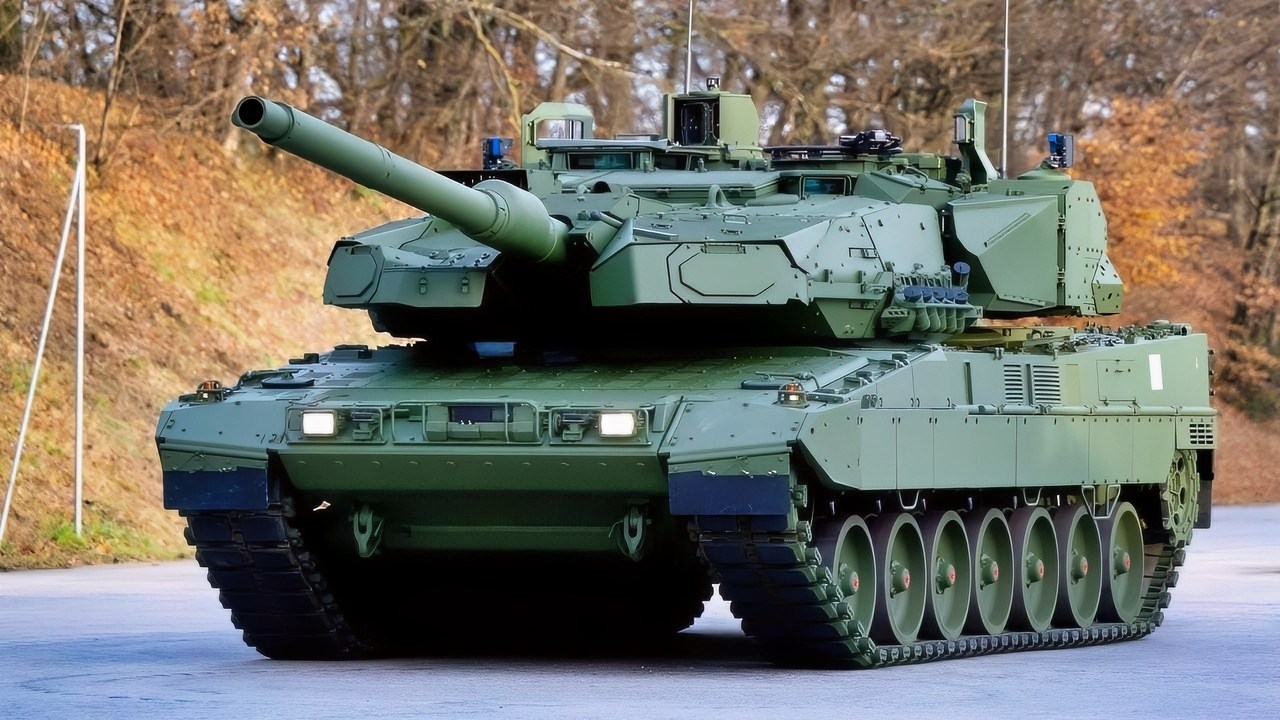
Leopard 2A8 Tank New. Image Credit: Creative Commons.
But the alternative, leaving Ukraine weak in deference to Russian sensitivities, simply guarantees a third war on Moscow’s timetable. The smarter play accepts that Putin will never bless any version of a Western Ukraine and stops seeking his permission. Deny him the symbol he uses to justify aggression, and hand Kyiv everything else: the jets, the armor, the intelligence, the training, the EU seat, and the binding promise that the coalition which armed Ukraine through this war will not stand aside in the next one.
Putin set out to keep Ukraine out of the West. The way this war should end is with Ukraine more Western, more armed, and more dangerous to invade than he ever imagined possible. And Russia has been weakened more than it ever dreamed.
About the Author: Harry J. Kazianis
Harry J. Kazianis (@Grecianformula) was the former Senior Director of National Security Affairs at the Center for the National Interest (CFTNI), a foreign policy think tank founded by Richard Nixon based in Washington, DC. Harry has over a decade of experience in think tanks and national security publishing. His ideas have been published in the NY Times, The Washington Post, The Wall Street Journal, CNN, and many other outlets worldwide. He has held positions at CSIS, the Heritage Foundation, the University of Nottingham, and several other institutions related to national security research and studies. He is the former Executive Editor of the National Interest and the Diplomat. He holds a Master’s degree focusing on international affairs from Harvard University.


Truth-can't-be-hidden
June 7, 2026 at 12:38 pm
Putin wanted ukraine to stay the HELL out of NATO. Reason is ukraine border is only several hundred km away from moscow. Small distance for fast moving armor like M1 or Leopard 2 or stryker.
But, but, but, biden and stoltenberg jeered and barked loudly at putin.
In the meantime, in the meantime while fascist bigshots were barking and hollering huge insults, and western media adding their own as well at putin, What were the nazis or banderovtsy doing.
WHAT THE HELL WERE THEY DOING.
Exactly what the bloody hell were they indulging in.
The ukro nazis, or ww2-leftover banderovtsy, were, with the great help of western intelligence agencies like the very bloodthirsty CIA, engaging in a ww1-style trench warfare against the ethnic russian people in donbass.
Long long wind-winding story short,the CIA and other mideast-experienced advisers were helping the nazis to build and extend a vast tunnel and trench network in eastern ukraine and taking potshots at the rebellious russkies.
That, in military dictionary-speak, is called ‘attrition warfare’ .
That evil bloodshed visited on the russian people in donbass via attrition warfare, truly pushed putin into doing his SMO in 2022. (SMO = special military operation.)
Now, may people be a bit more objective about the conflict, and Thus be less biased. Please.
A Lebedeff
June 7, 2026 at 6:17 pm
The question is a different one. Being part of NATO means that NATO can station troops on its borders and establish military bases.
Just imagine — Russia facing, say 17 NATO military bases with nuclear weapons directly at its border.
Russia has every right to consider that as being an existential threat.
Remember the Cuban missile crisis. The US considered that having a hostile power with nuclear weapons on Cuba, 90 miles away, as a threat it would not tolerate.
Russia, if Ukraine became a NATO member, would consider the threat as even greater.
Let’s also consider the USA’s “Monroe Doctrine” that states the position that the US is entitled to a “sphere of influence” covering Central and South America. Any interference by European powers in that sphere of influence would not be tolerated.
NATO bases on Russia’s border are much more of a threat.