

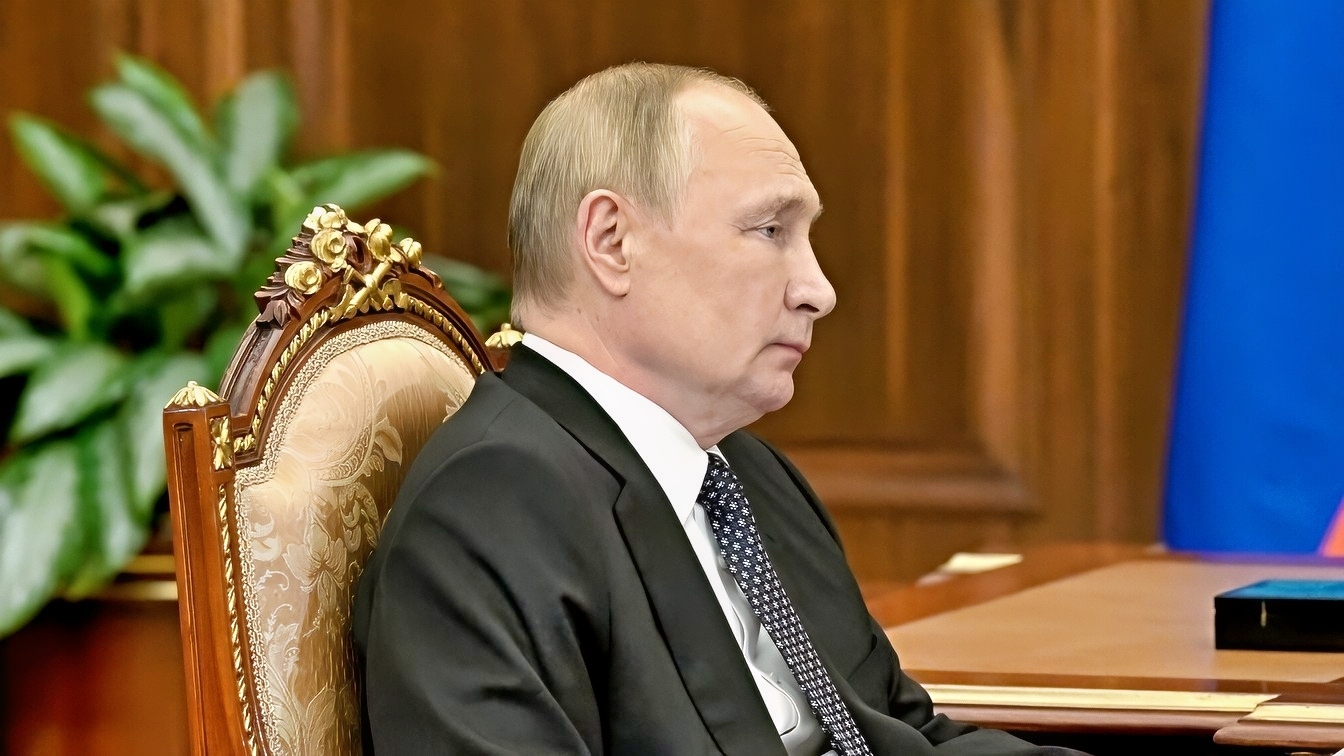
Manila, Philippines – On 17 June, the leaders of the G7 nations (France, the United States, the United Kingdom, Germany, Japan, Italy, Canada, and the EU) will gather in Évian. They will be joined by President Volodymyr Zelenskyy, whose participation will be perhaps the single greatest point of interest at the entire event.
One year ago, no one would have predicted that the situation in Europe and the war in Ukraine would be as it is today. The participants will confront a strategic landscape profoundly different from a year ago.
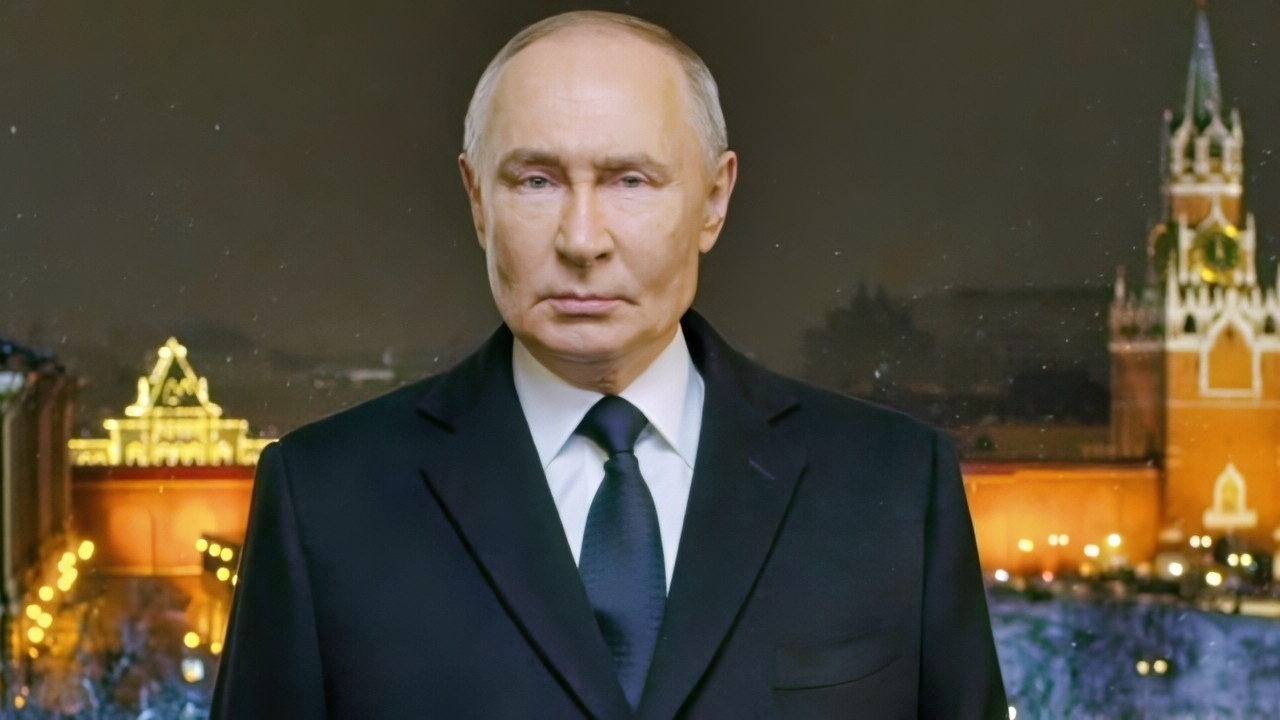
Putin Is Speaking Image from the Russian Federation Government, End of 2024
Back then, the “experts” had concluded that the Ukraine war was destined forever to be a frozen, deadlocked war of attrition. In such a conflict, we were all told, Russia had the distinct advantage. The refrains of “Russia just has more people to throw into the frontlines” and “Ukraine does not have enough soldiers” alternated as the overall explanation as to why time was not on Ukraine’s side.
As they leaned back in their chairs, secure in their own wisdom, I was also told by sober and judicious observers – all of whom were convinced they knew more than the guy who lived in Ukraine for decades – that “the war will end at the negotiating table and not in Ukraine’s favor.”
I was also told that there would never be any war crimes trials for the Russians who have murdered thousands of civilians in Ukraine and have kidnapped tens of thousands of Ukrainian children.
It might interest the know-it-all who told me in January 2025, “that’s not going to happen,” that as of today, the new Special Tribunal for the Crime of Aggression against Ukraine is formally becoming a reality.
At a meeting in Chisinau, Moldova, last month, ministers from 36 states plus the European Union agreed to support the entity.
What Does the Tide Turning Mean
The assumptions in 2025 were that Ukraine could never win, that if it survived the war at all, it would be a broken, dismembered entity left prostrate and helpless before Vladimir Putin’s Russia. This goes along with the other assumption that there would be no day of reckoning for the former KGB Lt. Col. and his henchmen.
Today, all of these projections for the future and others have been effectively debunked by the Ukrainian military’s seemingly endless capacity for innovation – using technology to compensate for its disparity with Russia in manpower and resources.
None other than NATO Secretary General Mark Rutte has confirmed that Kyiv is now gaining ground on the front lines rather than losing it. It reflects the many ills that Vladimir Putin’s military suffers from.

A Dutch soldier shoots from a machine gun during Exercise Scorpion Strike, held by NATO forces in Lithuania on Feb. 21, 2018.
Dutch forces, along with those of six other NATO Allies, make up the enhanced Forward Presence battlegroup in Lithuania. Together with battlegroups in Poland, Latvia and Estonia, they demonstrate NATO’s commitment to collective defence. Image Credit: NATO Flickr.
Russia’s military lacks the command effectiveness, small-unit discipline, ability to support its troops with adequate supply networks, a modern-day organizational structure, the freedom to maneuver and act on initiative at the front line, and a host of other ills that have made it continually less effective against Ukraine’s prosecution of the war.
The Washington, DC-based think tank, the Institute for the Study of War, concludes in its most recent assessments that the tide may be turning against the Kremlin on the battlefield in more ways than one.
War is the Continuation of Politics
Today, Ukrainian President Volodymyr Zelenskiy provided a summary of the war in a 25-minute face-to-face interview with The Guardian. Ukraine’s position, he states, is in the most promising state since 2023: “We can’t say Russia is losing this war. But we can say they are losing the initiative each day, day by day,” he said.
Zelenskiy also noted that frontlines may be somewhat stalemated, but at the same time, Russia is losing more than 30,000 soldiers a month. The detailed statistics, he says, are that each month 23,000 to 24,000 are killed outright, and the remainder are “heavily” wounded.
“Totally, this is a very big number. It means that they are not winning the war,” he explained. He also delved into how Russia’s political standing on the world stage is deteriorating at a pace and to a degree equal to or greater than that of its military on the battlefield.

A Swedish Air Force JAS 39 Gripen participating in NATO exercise Ramstein Flag 24 flies over the west coast of Greece, Oct. 4, 2024. Over 130 fighter and enabler aircraft from Greece, Canada, France, Hungary, Italy, Poland, Portugal, Romania, Spain, Sweden, the United Kingdom, and the United States are training side by side to improve tactics and foster more robust integration, demonstrating NATO’s resolve, commitment, and ability to deter potential adversaries and defend the Alliance. (U.S. Air Force photo by Tech. Sgt. Emili Koonce)
“They are losing influence in different countries, including in Azerbaijan. They are isolated inside Europe and from the United States also. So, they are alone,” he told the UK daily.
Zelensky also gave an assessment of his meeting last month with Vladimir Putin’s envoy, the Russian oligarch Roman Abramovich.
“I think there are different people around Putin. Half of them want to continue this war. Half want to stop. And I think that people who are from business, they understand that the economy is in terrible situation in Russia. It’s very close to collapse,” he said.
In reference to Ukraine’s increasing number of long-range strikes, he reflected, “Victory in this war is when Russian society recognizes that the war is awful, that the war is a tragedy not for someone, somewhere, but for themselves. And I think this is the [direction of] momentum.”
He also notably told Putin’s back channel interlocutor, “I said to [Abramovich] about Donbas, and it was the key message. I said we will not leave and we will not go out from our territory,” Zelensky said. “No, we will not give you a victory in such a way. And you will not get it.”
As an 8 June assessment from the Center for European Policy Analysis (CEPA) concludes:
“No one truly knows how and when the war will end. Putin may escalate, as he has in the past. He may negotiate from a position of weakness but survive politically. He may be removed. Russia may escalate or fracture. Each scenario produces different pressures, different interlocutors, and different timelines.”
“But a framework agreed in advance is more valuable precisely because the ending is uncertain. The G7 summit should not, therefore, be another meeting about sustaining the war; it is when the West should start asking itself what should happen afterward.”
About the Author: Reuben F. Johnson
Reuben F. Johnson has thirty-six years of experience analyzing and reporting on foreign weapons systems, defense technologies, and international arms export policy. Johnson is the Director of Research at the Casimir Pulaski Foundation. He is also a survivor of the Russian invasion of Ukraine in February 2022. He worked for years in the American defense industry as a foreign technology analyst and later as a consultant for the U.S. Department of Defense, the Departments of the Navy and Air Force, and the governments of the United Kingdom and Australia. In 2022-2023, he won two awards in a row for his defense reporting. He holds a bachelor’s degree from DePauw University and a master’s degree from Miami University in Ohio, specializing in Soviet and Russian studies. He lives in Warsaw.


