

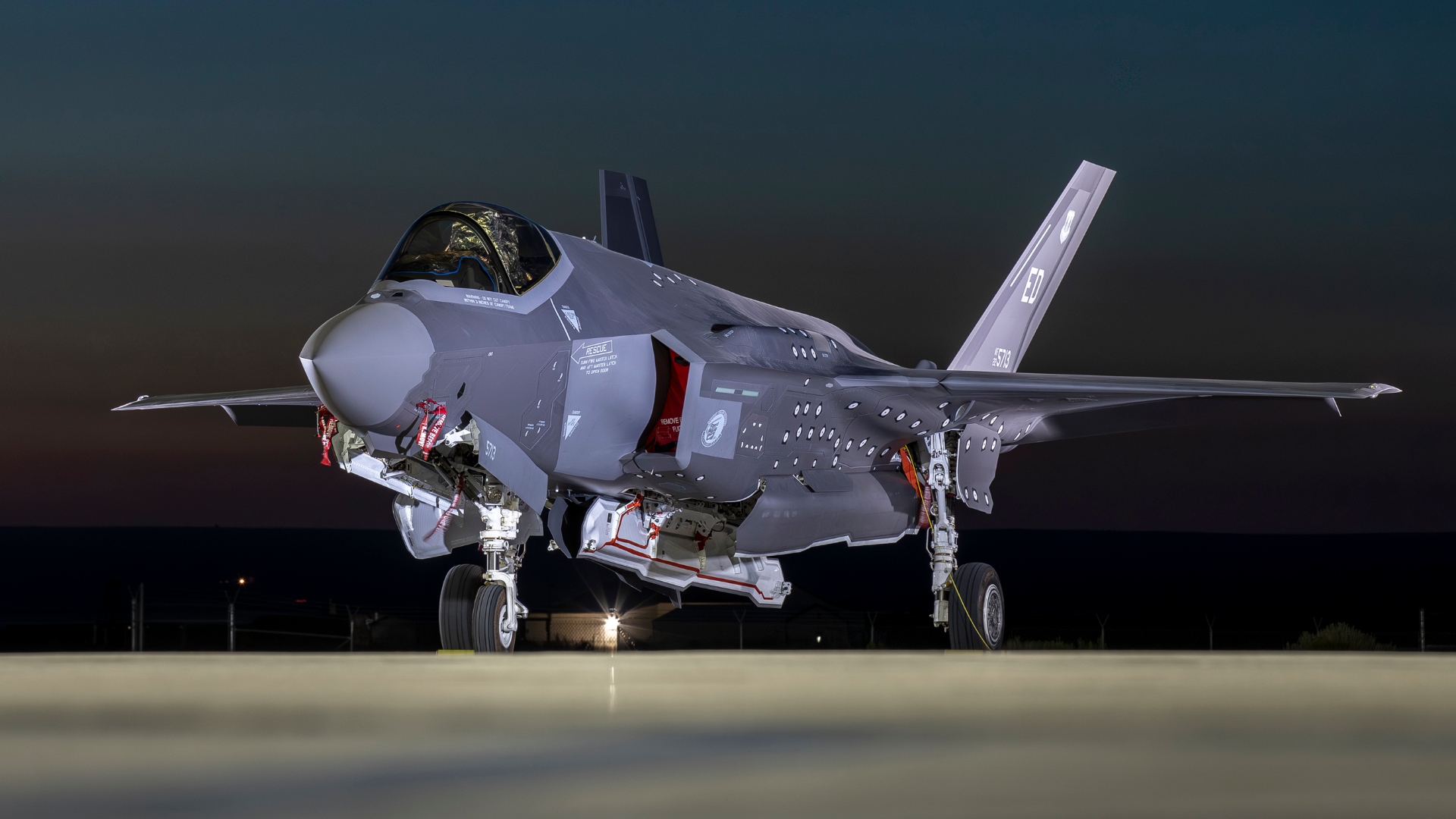
Key Points and Summary – Europe might be souring on the F-35. Spain and Portugal are pivoting toward Eurofighter/FCAS or caution, and Switzerland’s deal faces political headwinds.
-Poland’s planned 32-jet buy is delayed pending a long-term plan—even as two F-35A “Husarz” are delivered.
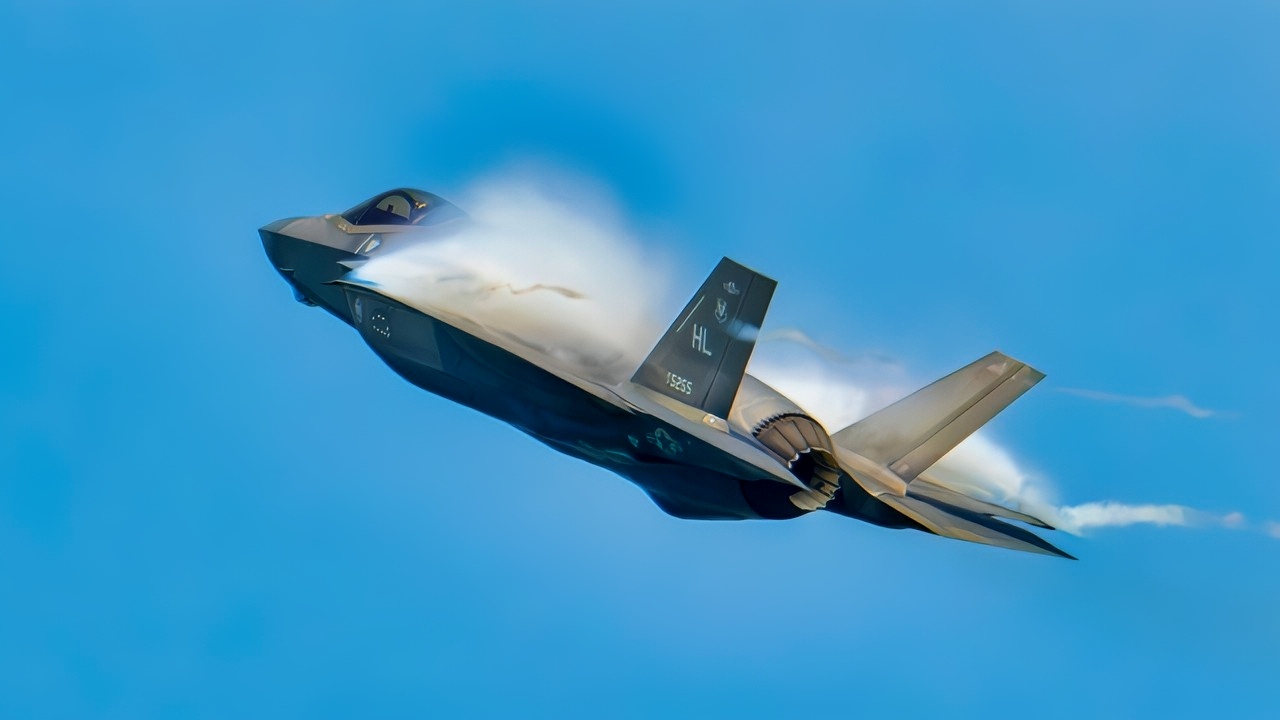
U.S. Air Force Maj. Melanie “Mach” Kluesner performs aerial maneuvers during a demonstration at the Oshkosh AirVenture Airshow in Wisconsin, on July 25, 2025. The demonstration highlights the team’s mission to showcase the precision, agility, and combat-relevant capabilities of the F‑35A Lightning II and the professionalism of its Airmen. (U.S. Air Force photo by Senior Airman Nicholas Rupiper)
Beyond Trump-era frictions, concerns include lifecycle cost, reliability, and dependence on U.S. software/control.
-Yet the picture isn’t collapse: the UK, Italy (Air Force & Navy), Norway, Denmark, and the Netherlands field operational F-35 fleets, with recent real-world interceptions underscoring capability.
-Verdict: turbulence and recalibration, not a European “breakup,” as fifth-gen demand and interoperability still weigh heavily.
Is Europe “Breaking” Up with the F-35 Stealth Fighter?
America’s military relations with Europe under President Donald John Trump’s second Administration have been anything but status quo.
On the one hand, Mr. Trump scored a huge victory when he secured an agreement from all the NATO nations—with the exception of recalcitrant Spain (more on them shortly)—to accede to his longstanding demand to boost their share of defense spending to 5 percent of GDP.
On the other hand, the combination of Mr. Trump’s policies and personality has yielded a not-so-rich harvest (metaphorically speaking) for the foreign military sales (FMS) prospects for America’s flagship fighter jet program, the Lockheed Martin Skunk Works F-35 Lightning II 5th Generation stealth fighter.
Several European nations, NATO and non-NATO members alike (eternally neutral Switzerland falls under that latter category) have either recently reneged on plans to purchase the F-35 or are seriously considering doing so. So, this begs the question: is Europe “breaking up” with the American stealth fighter?
The F-35’s European “Divorcees”
Besides the aforementioned non-NATO Switzerland, the countries that are either considering dropping the F-35 or are seriously considering doing so are NATO’s Iberian Peninsula members, Portugal and Spain (see, we told you you’d see that name again).
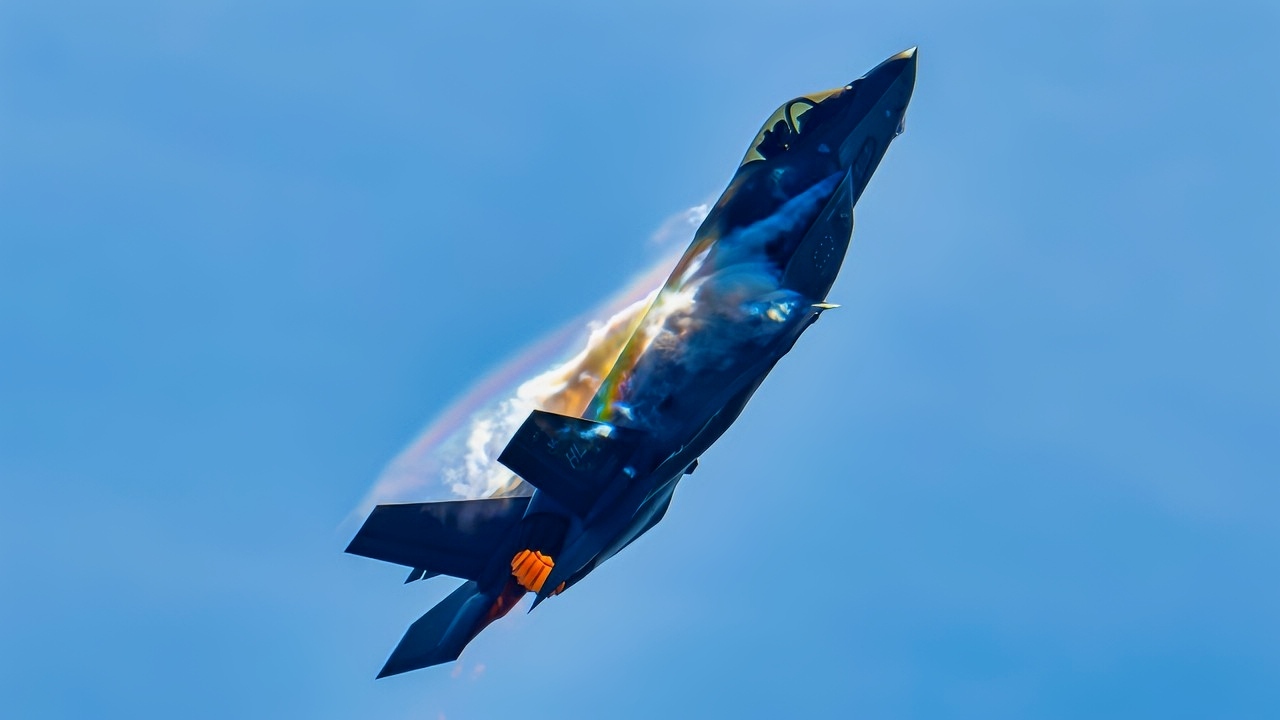
U.S. Air Force Maj. Melanie “Mach” Kluesner, F-35A Demonstration Team pilot, performs aerial maneuvers during the Abbotsford International Airshow in British Columbia, Canada, Aug. 9, 2025. The team travels worldwide to demonstrate the capabilities and precision of the U.S.’s most advanced fifth-generation fighter. (U.S. Air Force photo by Senior Airman Nicholas Rupiper)
-Spain has instead decided to expand its fleet of Eurofighter Typhoons and to double down on the Future Combat Air System (FCAS), a Franco-German-Spanish program designed to deliver a 6th Generation fighter in the coming decades.
–Portugal made the no-go decision on the F-35 back in March; in the words of Portuguese Defence Minister Nuno Melo at the time, “The recent position of the United States in the context of NATO must make us think about the best options, because the predictability of our allies is a greater asset to take into account.”
-As for Switzerland’s cancellation of the F-35, that decision hasn’t been finalized…at least not yet anyway. As DefenseMirror.com explained last month, “Switzerland’s *alleged* withdrawal comes amid U.S. tariffs targeting Swiss exports…The 2021 F-35 order for 36 jets, valued at 7.3 billion Swiss francs ($9.1 billion), has since faced intense parliamentary scrutiny…President Karin Keller-Sutter raised the issue during emergency talks in Washington, while U.S. Secretary of State Marco Rubio said both sides reaffirmed their defense ties.” [emphasis added]
F-35 Polish Program Postponement
Meanwhile, shifting over to the Eastern Europe side of the map, Warsaw isn’t “breaking with” or “divorcing” the F-35…but you could say that it’s not ready to “consummate the marriage” yet (so to speak). In other words, Poland’s pending procurement of 32 F-35 airframes is still on the books; however, as Maj. Gen. Cezary Wisniewski, deputy general commander of the Polish Armed Forces, told Breaking Defense earlier this month that procurement has been placed on hold until a new, long-term capability plan has been approved.
The good general said that the 15-year plan was due to be sorted in “a matter of months,” but added that if the buy of more warbirds “happens a year from now, five years from now, or ten years from now, I cannot say.”
However, it should be remembered in the meantime that the Polish Air Force (Siły Powietrzne) has, in fact, already taken delivery of two F-35As. The Poles have officially redubbed the fighter as the “Husarz” in honor of its legendary elite cavalry troops.
You Can’t Blame It All On Trump
In fairness to President Trump, the European rejectors and fence-sitters also have technical and logistical concerns about the F-35 that transcend individual political personalities, such as reliability (including the undying “kill switch” rumors [no pun intended]), exorbitant cost (a lifetime cost of $2 trillion USD, equivalent to 1.6795 trillion Euros at the current exchange rate), and the general principle of strategic autonomy.
As Wiley Stickney of Bolt Flight elaborates about the latter concern: “At its core, this debate is about control versus dependence. By buying into the F-35, nations secure access to one of the most advanced fifth-generation fighters in existence. Yet they also surrender autonomy over upgrades, maintenance, and operational data to Washington. As alliances shift and trade disputes grow more bitter, the cost of dependence is no longer seen as acceptable.” [original emphasis].
It’s Not All Gloom & Doom on the European Front
However, things need to be kept in perspective, lest either (A) the F-35’s advocates start hitting the panic button and/or (B) the plane’s detractors start laughing too loudly. Notwithstanding all these uncertain and outright unfortunate developments, to paraphrase Mark Twain, rumors of the death of the F-35 in Europe have been greatly exaggerated. At last count, there are, besides Poland, five European nations whose militaries are actively using the Lightning II, namely:
-The Royal Danish Air Force (RDAF; Flyvevåbnet); 17 F-35As delivered thus far, with 10 more on the way
-The Italian Air Force and Italian Naval Aviation (Aeronautica Militare [AM] and Aviazione Navale); 24 F-35As and eight F-35Bs delivered to the former and six F-35Bs delivered to the latter thus far
-The Royal Netherlands Air Force (RNLAF; Koninklijke Luchtmacht [KLu]); 42 F-35As delivered thus far
-The Royal Norwegian Air Force (RNoAF; Luftforsvaret); 52 F-35As delivered thus far
-The United Kingdom’s Royal Air Force (RAF) and Royal Navy Fleet Air Arm; 41 F-35Bs delivered thus far
The RNLAF example is particularly noteworthy, as Dutch-owned F-35s recently teamed up with Polish-owned F-16 Fighting Falcons to shoot down multiple Russian drones that had violated Polish airspace earlier this month.
Given this real-world demonstration of the Lightning II’s efficacy in real-world combat in European skies, it’s highly doubtful we’ll be seeing the demise of the F-35 within that continent anytime soon.
About the Author: Christian D. Orr, Defense Expert
Christian D. Orr is a Senior Defense Editor. He is a former Air Force Security Forces officer, Federal law enforcement officer, and private military contractor (with assignments worked in Iraq, the United Arab Emirates, Kosovo, Japan, Germany, and the Pentagon). Chris holds a B.A. in International Relations from the University of Southern California (USC) and an M.A. in Intelligence Studies (concentration in Terrorism Studies) from American Military University (AMU). He is also the author of the newly published book “Five Decades of a Fabulous Firearm: Celebrating the 50th Anniversary of the Beretta 92 Pistol Series.”
More Military
The U.S. Army’s Big Strategic Long Range Cannon (1,150 Mile Range) Mistake Still Stings
The F-4 Phantom II Has a Message for the U.S. Military
The Iowa-Class Battleships Have a Message for the U.S. Navy
Russia’s Kirov-Class Battlecruisers Have a Message for the U.S. Navy
Russia’s PAK DA Stealth Bomber Has a Message for the U.S. Air Force


