

After four months of war, Washington and Tehran have agreed to a 60-day framework designed to halt the fighting and reopen maritime commerce through the Strait of Hormuz.
The deal offered immediate relief—financial markets welcomed the announcement, shipping companies gained some clarity, and regional tensions cooled—but the agreement contains structural flaws and should accordingly be viewed as an interim framework rather than a permanent settlement.
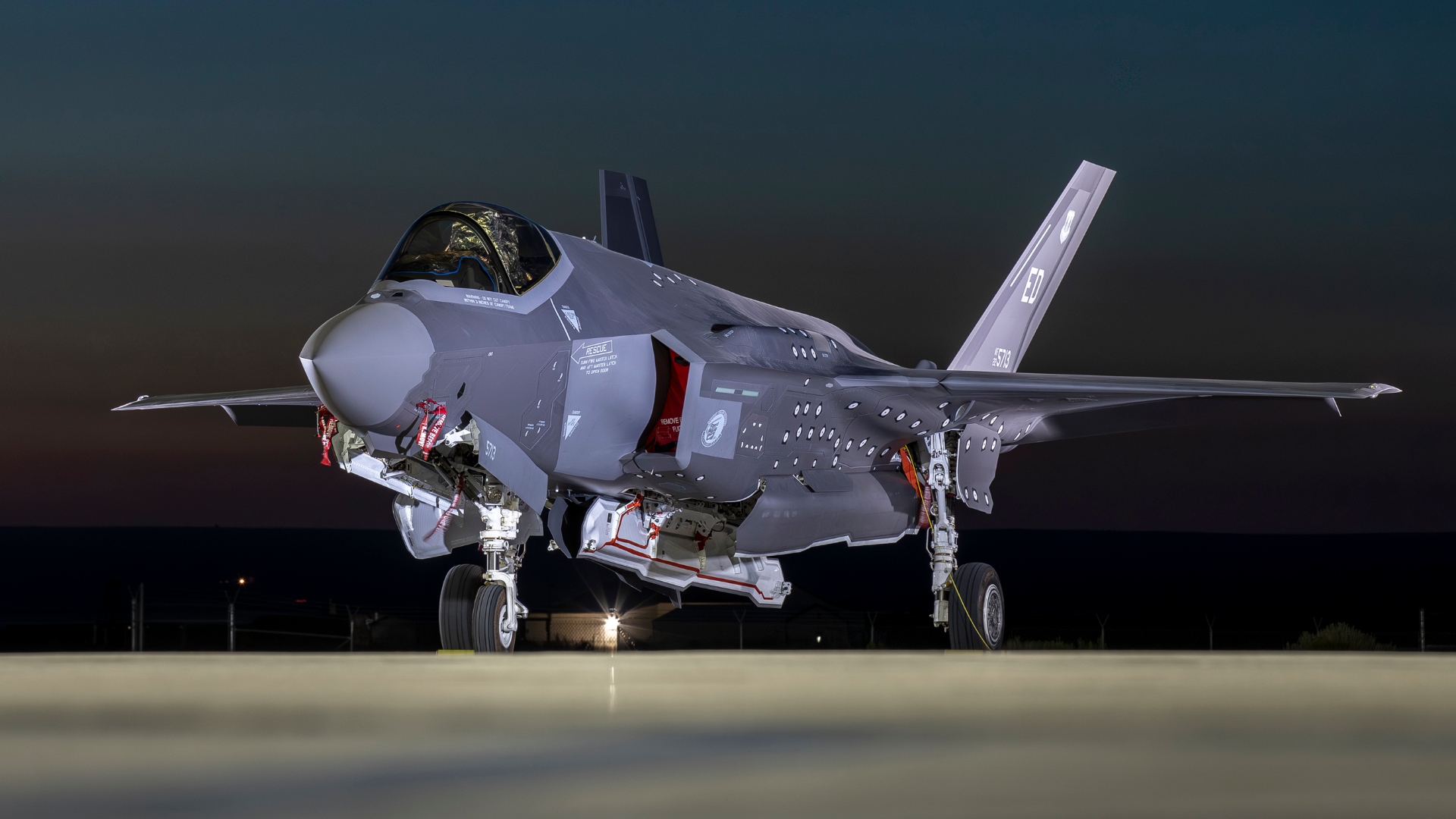
The 461st FLTS, F-35 Integrated Test Force, at Edwards Air Force Base in California received a newly instrumented F-35A aircraft. The unique airframe will boost flight and mission sciences testing for the warfighter at a critical time during developmental test. “This new aircraft arrives at a crucial time, supporting intensive testing of TR-3 software upgrades and next-generation weapons integration.” says Lt. Col. Daniel Prudhomme, F-35 ITF director. “As the world’s only F-35A capable of evaluating both mission systems and flight sciences, this new asset is key for rapidly fielding advanced capabilities to the warfighter.” (Courtesy photo)
Iran War Pause? Both Sides Wanted a Deal
The structural flaws in the deal are being overlooked, at least temporarily, because both sides needed a deal.
Through four months of on-and-off war, Washington had consumed significant quantities of high-end munitions while carrier strike groups and naval assets remained tied down in the Gulf.
Policymakers wanted the US to shift its focus back to China and the Indo-Pacific, while the general public was growing increasingly war-fatigued and just wanted Epic Fury to end.
Energy prices and shipping disruptions further increased pressure on Washington to end the conflict. Tehran, meanwhile, also wanted a deal, with oil exports suffering and economic pressure intensifying.
Hitting pause would allow Tehran to begin rebuilding infrastructure damaged during the war. So while neither side achieved all of its objectives, both used the deal’s framework to gain some breathing room.
What the Deal Does
The immediate provisions of the deal: suspend active hostilities, reopen shipping traffic, create a negotiation window, and establish follow-on talks.
But the deal features some glaring omissions, failing to permanently resolve maritime governance, proxy activity regulation, Israel-Iran tensions, and nuclear enrichment disputes. Many of the hardest questions were deferred rather than settled.
Four Structural Flaws of Iran Deal
The biggest structural flaw is a conflicting interpretation of Hormuz governance.
The American interpretation holds that the strait will be permanently free to navigate, with no transit charges. Iran, meanwhile, holds that the strait will initially be free to transit, but future maritime service fees remain possible. The disagreement is important, far beyond semantics, because it concerns who ultimately governs commercial access through one of the world’s most important energy chokepoints.
The second structural flaw is that the deal does not address Israel. The deal is simply bilateral—between the US and Iran. But the region obviously is more complicated. Israel is not bound by the deal’s framework, leaving potential flashpoints between Israel and Lebanon, Syria, and Iranian facilities. If Israel launches a major operation, it could trigger an Iranian retaliation, potentially leading to a diplomatic regression between the US and Iran.

Merkava Tank Israel. Image Credit: Creative Commons.
The third flaw is proxy control. The framework assumes centralized control, but the Middle East is more complicated. Major Iranian proxies may comply with the deal—but smaller actors, such as Iraqi militias, local Houthi factions, and splinter organizations, may not.
The risk here is that a small-scale drone strike or rocket attack could trigger a larger response, again eroding diplomatic relations between the US and Iran.
And of course, flaw number four is the lingering nuclear question. Iran’s nuclear program was largely deferred to later negotiations because resolving the nuclear issue immediately likely would have prevented any deal from being signed now. But this deferral carries risks; future negotiations must still address enrichment levels, inspections, verification, and sanctions.
Those are thorny issues that remain unresolved.
Still Intact?
Despite numerous structural flaws, the deal remains intact—because both sides have an incentive to make the framework stick. Washington wants lower energy prices, reduced military commitments in the Middle East, and strategic flexibility. Tehran is ready for economic and infrastructure recovery, the resumption of exports, and general stability.
This creates an unusual situation in which the framework may actually survive not because it applies seamlessly, but because neither side wants it to fail. Flaws or not, the deal does have strengths, like lowering tension immediately.
Still, many of the underlying disputes remain unresolved. The deal may best be viewed as a mechanism for de-escalation rather than a comprehensive peace settlement.
Whether the pause becomes a lasting settlement or just an intermission between cycles of violence will depend on addressing the deal’s broader structural flaws.
About the Author: Harrison Kass
Harrison Kass is a writer and attorney focused on national security, technology, and political culture. His work has appeared in City Journal, The Hill, Quillette, The Spectator, and The Cipher Brief. He holds a JD from the University of Oregon and a master’s in Global & Joint Program Studies from NYU. More at harrisonkass.com.


