


The precarious ceasefire between Iran, Israel, and the United States nearly broke down last night, as Iran launched a ballistic missile attack against Israel in response to Israeli strikes in Lebanon.
Israel replied with its own strikes against an Iranian petrochemical plant at Mahshahr, along with associated military targets. The Houthis joined the fray by launching their own missile strike against Israel.

Four B-1B Lancers assigned to the 9th Expeditionary Bomb Squadron, deployed from Dyess Air Force Base, Texas, arrive Feb. 6, 2017, at Andersen AFB, Guam. The 9th EBS is taking over U.S. Pacific Command’s continuous bomber presence operations from the 34th EBS, assigned to Ellsworth AFB, S.D. The B-1B’s speed and superior handling characteristics allow it to seamlessly integrate in mixed force packages. While deployed at Guam the B-1Bs will continue conducting flight operations where international law permit. (U.S. Air Force photo/Tech. Sgt. Richard P. Ebensberger)
President Trump implored both sides to stop firing; whether because of his pleas or not, the ceasefire largely seemed to have resumed by mid-morning.
This fracas represented only the latest challenge to a ceasefire that has now held for two months, several weeks longer than the war itself. With only sporadic peace negotiations ongoing, the ceasefire agreement has done the heavy lifting of limiting the damage of an already destructive conflict.
And while the ceasefire appears more durable than many had feared, the path to an enduring peace remains hazy.
Iran Holds Back
Despite the fireworks, the word of the day was restraint. Iran’s response to the Israeli strikes was careful and measured, inflicting little damage but conveying Tehran’s commitment to the defense of its Lebanese client.
The attacks appear to have caused little if any damage, and Tehran put the responsibility firmly on Israel and the United States for forcing its hand.
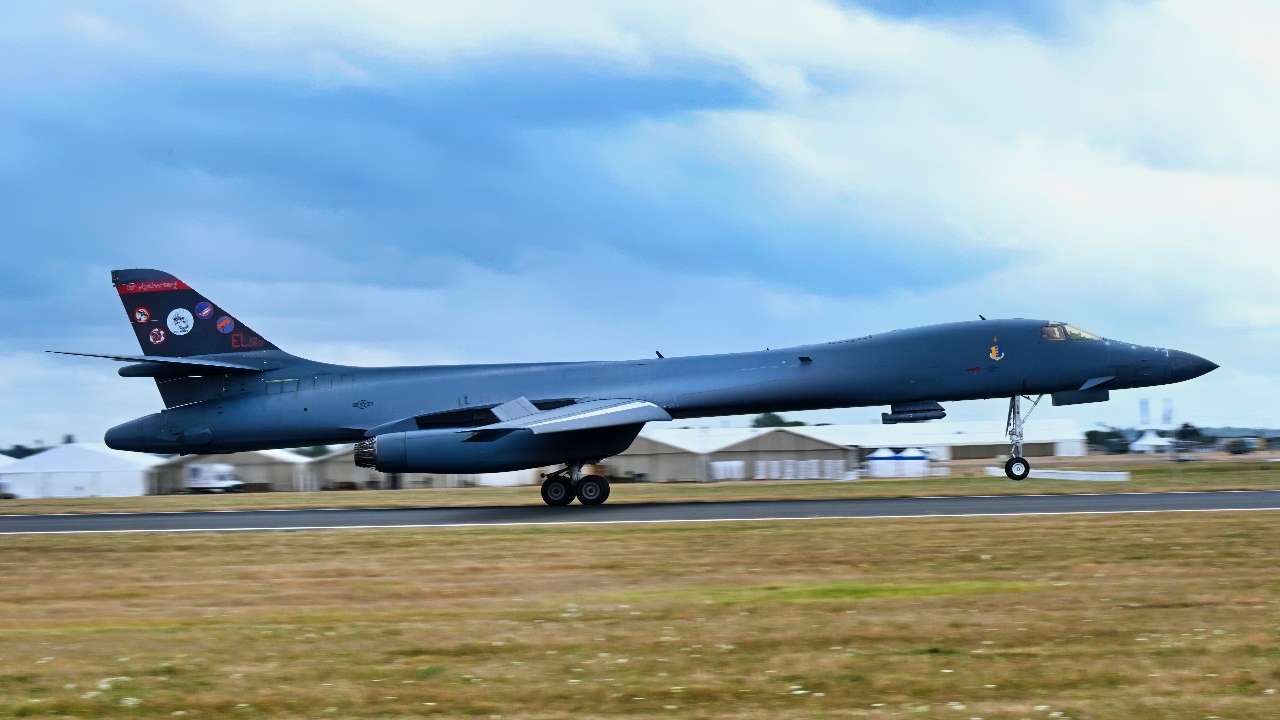
B-1B Lancer Bomber. Image Credit: Creative Commons.
Israel’s response was similarly measured, although the counterattacks inflicted some damage and left more than a dozen people wounded. Little information is currently available on the effectiveness of Houthi missile launches.
The Israeli strikes against Beirut that triggered the eruption targeted suspected Hezbollah facilities in the southern Beirut suburbs.
Israel launched without warning to Iran or, apparently, the United States, indicating that there is still friction between Prime Minister Netanyahu and President Trump over the aims and conduct of the war.
For its part, Tehran expressed in military terms its willingness to take risks on behalf of Hezbollah, a relationship that remains a sore point for Israel and for the US-Israeli relationship.
Indeed, Iranian leadership is undoubtedly aware of the tension between Washington and Jerusalem on this point, and likely sees these strikes as a way of driving a larger wedge in the US-Israeli relationship.
Reciprocity
Many have characterized the ceasefire as brittle or frail, but it might be better to think of it as flexible and elastic. The ceasefire has now lasted for two months, longer than the 39-day conflict that precipitated it.

U.S. Air Force F-16 Fighting Falcons intercept two U.S. Air Force B-1B Lancers during exercise Amalgam Dart 21-2, March 23, 2021. The exercise will run from March 20-26 and range from the Beaufort Sea to Thule, Greenland and extend south down the Eastern Atlantic to the U.S. coast of Maine. Amalgam Dart 21-2 provides NORAD the opportunity to hone homeland defense skills as Canadian, U.S., and NATO forces operate together in the Arctic. A bi-national Canadian and American command, NORAD employs network space-based, aerial and ground based sensors, air-to-air refueling tankers, and fighter aircraft controlled by a sophisticated command and control network to deter, detect and defend against aerial threats that originate outside or within North American airspace. NATO E-3 Early Warning Aircraft, Royal Canadian Air Force CF-18 fighter aircraft, CP-140 long-range patrol aircraft, CC-130 search and rescue and tactical aircraft, and a CC-150T air refueler; as well as U.S. Air Force F-16 fighter aircraft, KC-10 Extender refueler, KC-46 Pegasus, KC-135 Stratotanker, as well as C-130 and C-17 transport aircraft will participate in the exercise. (U.S. Air National Guard courtesy photo)
Despite numerous violations on both sides and ongoing military blockades by Iran and the United States, full conflict has yet to resume.
This suggests that both sides continue to gain something important from the ceasefire. Indeed, if either side thought that they could improve their position by fighting, they have had ample opportunity to restart the war.
Fundamentally, Iran does not want to give the United States cause for a full resumption of the war.
While Iran has likely reconstituted much of the military capability it lost at the beginning of the conflict, it cannot inflict nearly as much damage on the US, Israel, and the Gulf monarchies as it would be forced to accept in return.
For its part, Washington appears to have little appetite for a resumption of full war, with public polling indicating high disapproval of President Trump’s handling of the conflict.
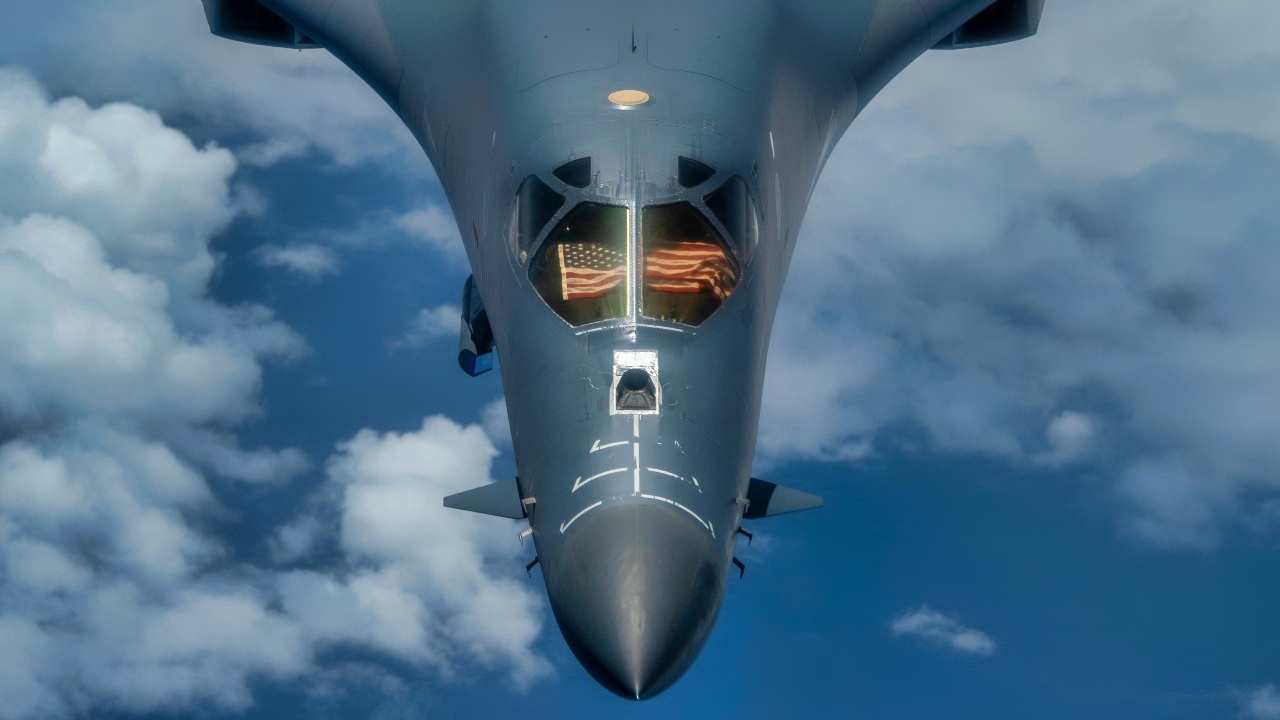
A 9th Expeditionary Bomb Squadron B-1B Lancer flies over the East China Sea May 6, 2020, during a training mission. The 9th EBS is deployed to Andersen Air Force Base, Guam, as part of a Bomber Task Force supporting Pacific Air Forces’ strategic deterrence missions and commitment to the security and stability of the Indo-Pacific region. (U.S. Air Force photo by Senior Airman River Bruce)
Yet it’s not as if there’s nothing left to fight for. The United States and Israel have not achieved their core war objectives, including the destruction of the Iranian nuclear program, the destruction of Iran’s missile and drone industries, and the defeat of Iran’s militias.
The dual blockade continues to inflict damage on both Iran and the global economy. But these problems are chronic, not acute, and it is difficult to resolve chronic problems in a limited war.
Unfortunately, without a permanent peace agreement that addresses the core issues in some fashion, the uneasy balance of war and peace will continue. Maintaining the status quo in the long term is not tenable because the economic pain on both sides will only continue to increase.
This is not akin to the situation at the end of the Korean War, which led to decades of a stable if uneasy peace. The ceasefire will end in either peace or war; it cannot endure forever.
About the Author: Robert Farley, PhD
Dr. Robert Farley has taught security and diplomacy courses at the Patterson School since 2005. He received his BS from the University of Oregon in 1997 and his Ph. D. from the University of Washington in 2004. Dr. Farley is the author of Grounded: The Case for Abolishing the United States Air Force (University Press of Kentucky, 2014), the Battleship Book (Wildside, 2016), Patents for Power: Intellectual Property Law and the Diffusion of Military Technology (University of Chicago, 2020), and most recently Waging War with Gold: National Security and the Finance Domain Across the Ages (Lynne Rienner, 2023). He has contributed extensively to a number of journals and magazines, including the National Interest, the Diplomat: APAC, World Politics Review, and the American Prospect. Dr. Farley is also a founder and senior editor of Lawyers, Guns, and Money.


