


Key Points and Summary – New PLA footage of a J-20 flying alongside a stealthy GJ-11 drone underlines how quickly China is moving into manned–unmanned teaming.
-Beijing has already migrated the J-20 from Russian engines to indigenous WS-10C and now WS-15 powerplants, and is fielding the two-seat J-20S as an airborne mission commander for “loyal wingmen” swarms. Chinese state media even touts it as a “5.5th-generation” fighter.

Chinese J-20 Fighters. Image Credit: PLAAF.
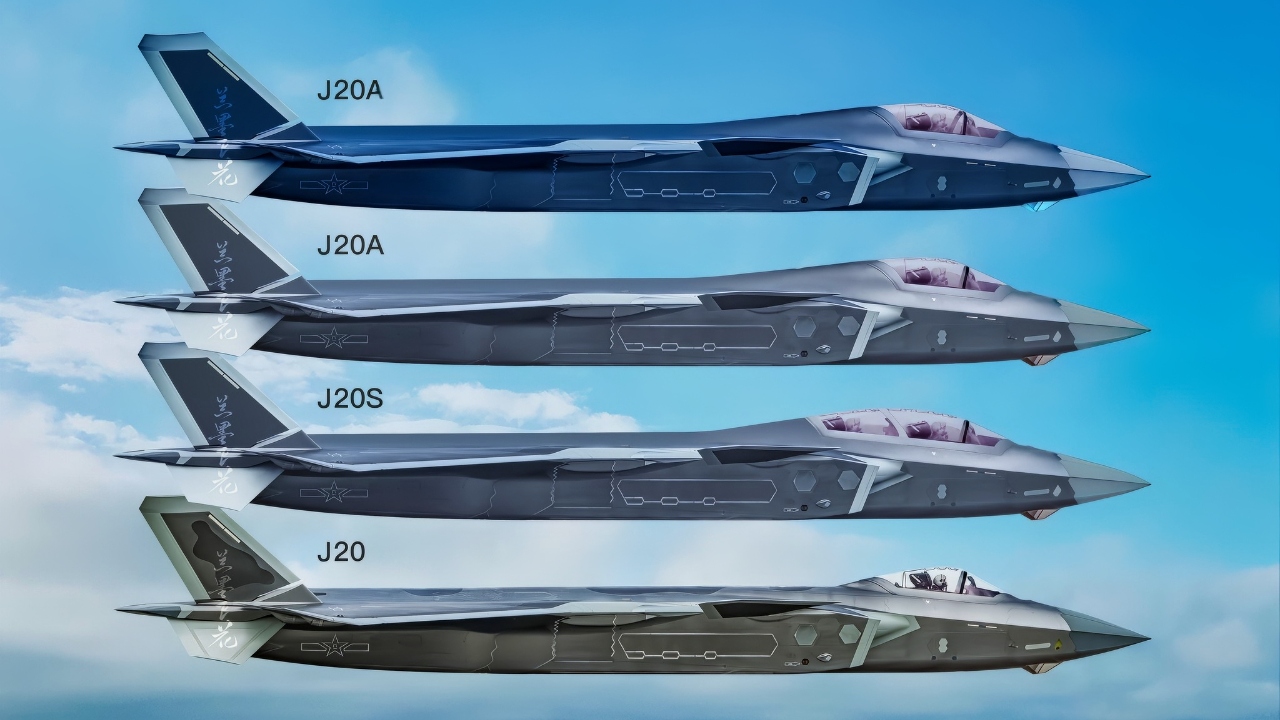
China J-20 Fighter X Screenshot.
-Behind the tech is a worrying numbers story: the PLAAF now fields more than 2,200 fighters, including roughly 320 fifth-gen jets, with J-20 production reportedly hitting 120 a year.
-How the U.S. and regional allies answer that combination of mass and autonomy is now an urgent question.
The J-20 Stealth Fighter Teaming with Drones?
Footage recently shared by the People’s Liberation Army shows that China is going all-in on manned-unmanned teaming for fighter operations. The clips show one of China’s fighters, the J-20, flying in close proximity to a Chinese GJ-11 drone, which is itself a stealthy platform.
Though other countries besides China are experimenting with manned-unmanned teaming, the footage marks a new chapter for China’s first stealth aircraft.
The J-20 Keeps Evolving
China’s early-build J-20s were equipped with a foreign engine: initially, the Saturn AL-31 engine, a Russian-derived, originally Soviet aircraft engine.
The decision reflects China’s long reliance on Russia for meeting jet-engine needs and filling a gap in what China’s aerospace firms can build domestically. But in keeping with Xi Jinping’s directive for self-sufficiency, later J-20s were equipped with the WS-10C, a Chinese jet engine. Fast forward to today, and China’s even more advanced WS-15 is the J-20’s powerplant of choice.
Two Seater J-20
One recent J-20 derivative, the J-20S, is notable as the world’s first two-seat stealth jet and, compared to its single-seat predecessor, will likely bring additional capabilities to that platform.
One Chinese military expert explained as much to the Global Times, a Chinese state-owned publication. “Having one more pilot means having one more mission commander.
In the era of fifth-generation fighter jets, the addition of a pilot to the J-20S is like a number ten player in soccer, who could both score points on his own and command the members of the warplane formation in combat,” the man explained.

China J-20S Fighter. Image Credit: Creative Commons.
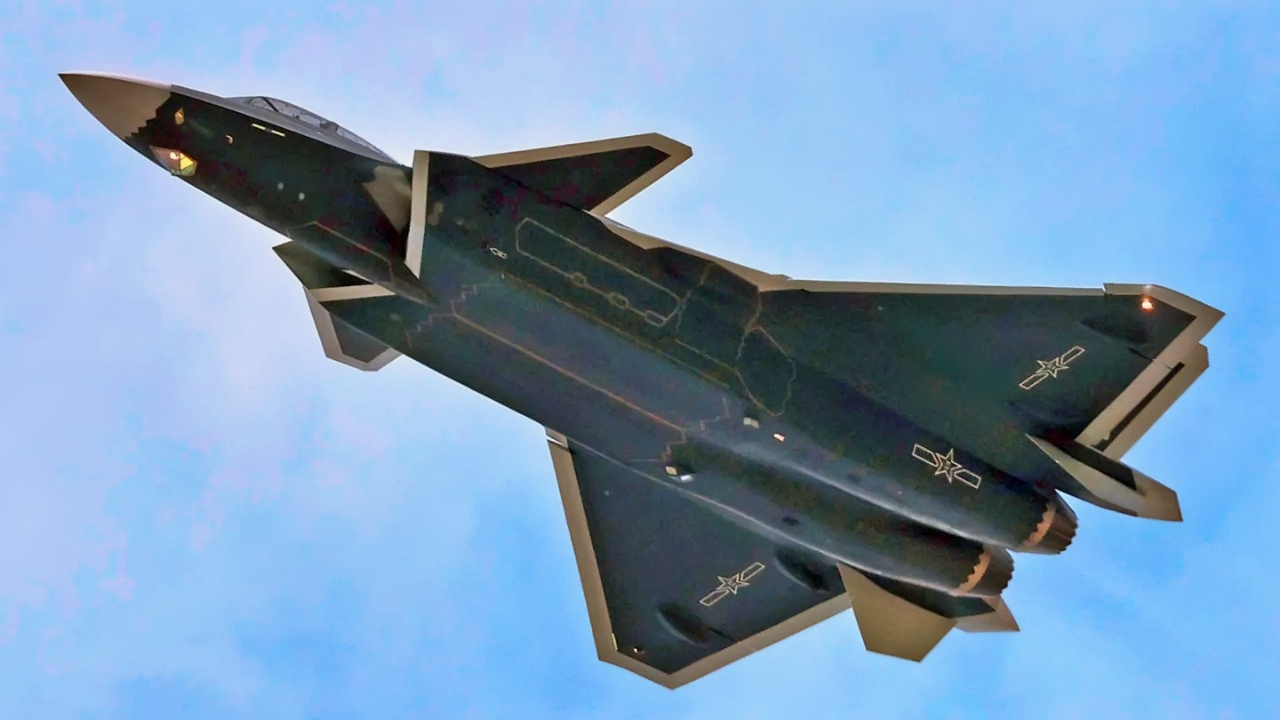
J-20S Fighter from X Screenshot. Image Credit: X.
More Changes Coming
A second place inside the cockpit is nothing new. Typically, those seats are reserved for Weapon System Officers who are responsible for communications, targeting, and firing the aircraft’s weapons.
But today, that hard distinction between a pilot’s responsibilities and those of the WSO is becoming less precise.
“In the past, the function of the back seat of a two-seat fighter jet was used to train new pilots or for the second pilot to operate airborne weapons, allowing the front seat pilot to focus on flight missions. However, the addition of a second pilot to the J-20S may not have been for these tasks,” an additional expert explained to the Global Times.
Compared to the F-22 and F-35
Compared to the United States’ current fifth-generation aircraft, like the F-22 Raptor or the F-35 Lighting II, the J-20 is significantly larger, even in its single-seat variant.
Though not definitive, the disparity in size may reflect the aircraft’s onboard space for fuel and weapons. Naturally, a larger aircraft suggests a larger payload capacity.
But the addition of a second seat to the J-20 has implications for the growing crop of Loyal Wingmen unmanned aircraft appearing in service with air forces around the world. It is an area in which China is making significant strides — and the Global Times concurred.
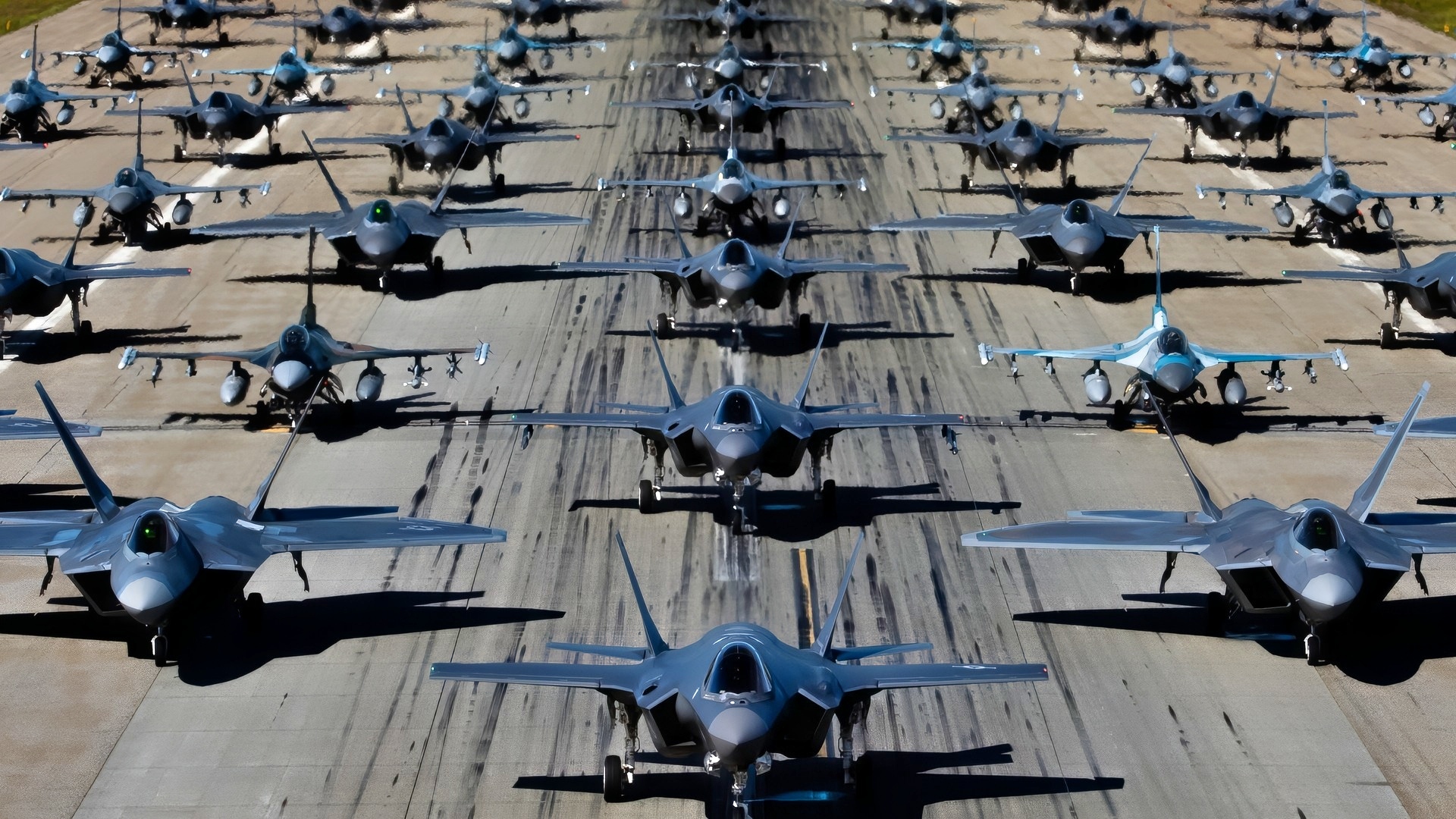
The 354th Fighter Wing conducts a 75-fighter jet formation at Eielson Air Force Base, Alaska, Aug. 12, 2022, in honor of the U.S. Air Force’s 75th Anniversary. This capabilities demonstration included F-35A Lightning II, F-16 Fighting Falcon and F-22 Raptor aircraft from across Pacific Air Forces. (U.S. Air Force photo by Senior Airman Gary Hilton)
“The J-20S is the world’s first two-seat fifth generation fighter jet. If it does have the ability to command loyal wingmen, I believe it can even be regarded as the world’s first 5.5th generation fighter jet, putting China in a leading position in the field of manned-unmanned cooperative operations in the air,” the newspaper wrote.
Here Come the Questions
Questions about payload capacity, range, and Loyal Wingmen aside, one of the more conventionally pressing issues is the sheer number of Chinese aircraft that are in service — and how many could be in service in China in the future. One report from the Mitchell Institute, an aerospace-focused think tank, painted a stark picture.
A recent report released by the Mitchell Institute for Aerospace Studies, a think tank, presents the facts and figures relevant to China’s aircraft. Its conclusion is concerning. “China has an estimated 2,225 fighters in its inventory, of which 1,311 are 4th-generation and 320 are 5th-generation aircraft,” the report explains.
“With a production rate reportedly increasing to 120 J-20s a year, the PLAAF’s acquisition of 5th-generation jets almost triples that of the USAF. There is little data available regarding readiness, but assuming 70 percent of their fleet is combat-coded and has the same 70 percent MC rate that was assumed for the allies is reasonable. That equates to the PLAAF having roughly 799 MC fighters available to employ at any given time.”
Drone Time for J-20
The race is on to build Loyal Wingmen at scale, and the J-20’s recent foray into manned-unmanned teaming is evidence of the progress being made in that domain in China.
But equally relevant to China’s air power is the sheer number of aircraft that the country’s defense industrial base can sustain.
How other countries in the region, including the United States, react to thousands of Chinese aircraft complemented by thousands of unmanned but armed aircraft remains to be seen.
About the Author: Caleb Larson
Caleb Larson is an American multiformat journalist based in Berlin, Germany. His work covers the intersection of conflict and society, focusing on American foreign policy and European security. He has reported from Germany, Russia, and the United States. Most recently, he covered the war in Ukraine, reporting extensively on the war’s shifting battle lines from Donbas and writing on the war’s civilian and humanitarian toll. Previously, he worked as a Defense Reporter for POLITICO Europe. You can follow his latest work on X.


