

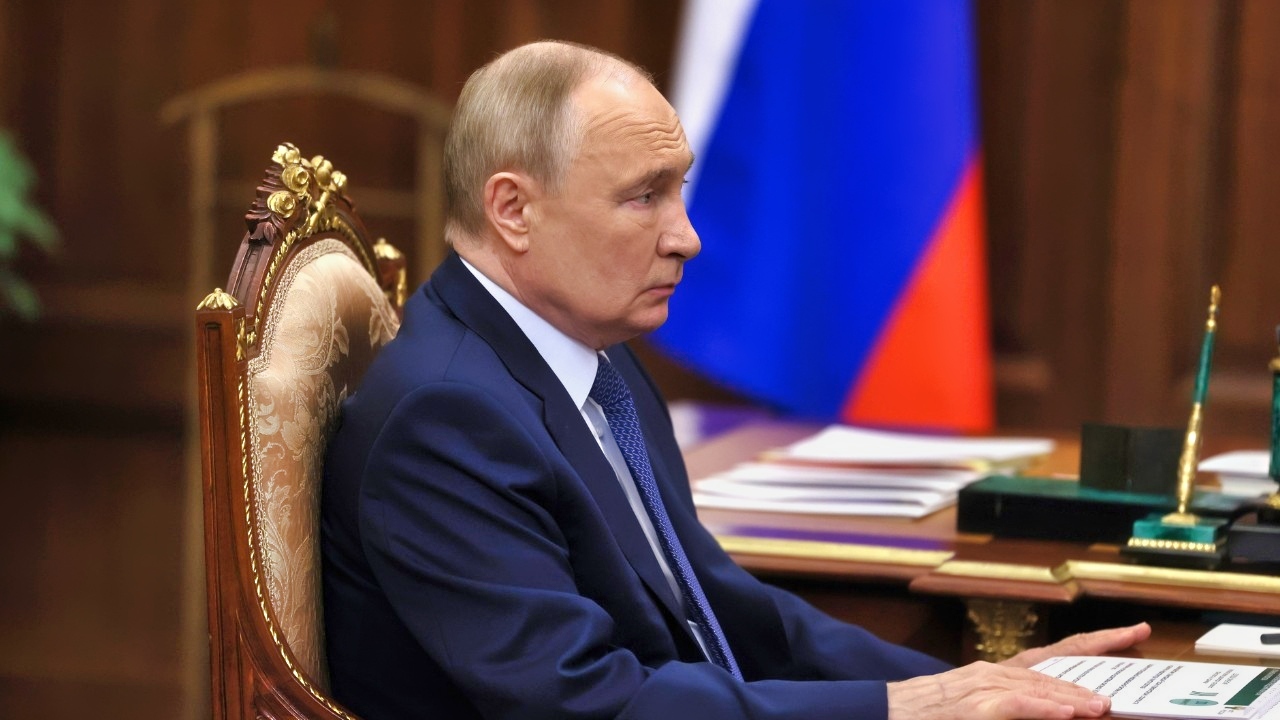
Key Points and Summary – A fierce debate is raging among experts about the future of Russia. Strained by over three years of war in Ukraine, massive casualties, and a crippled economy, some analysts argue the country’s collapse is “inevitable.”
-They point to deep internal rot—from a demographic crisis to rampant corruption—and believe the Putin regime is fragile and breaking down from within.
-However, other experts caution that this is dangerous “wishful thinking.”
-They argue that Putin has learned from the mistakes that led to the Soviet Union’s collapse and that Western policy should not be based on the assumption that lightning will strike twice.
Russia’s Fate: Collapse?
There are many reasons to think things are turning bad for Russia. In its war in Ukraine, Russia has sustained major casualties, with Ukraine and Western intelligence agencies placing the casualty count at over 1 million. Russia continues to absorb crippling Western sanctions, as well as experiencing a demographic crisis that Russian President Vladimir Putin’s strongest efforts have done little to mitigate. Russia is also facing a slowing economy and worsening inflation.
Does all this mean that the Putin regime, or possibly even Russia itself, is on the verge of collapse? Opinions certainly differ.
“Collapse is Inevitable”
A recent piece by Euromaidan Press tries to make the case that Russia might indeed be close to collapse.
“The rapid and epic fall of Assad’s regime, which fought the opposition for 13 years with the support of allies, has once again reminded us that dictatorships are fragile. This shouldn’t surprise those of us who were born in the USSR or its ruins. However, many believe in Putin’s regime’s invulnerability, and Russian propaganda helps maintain this belief,” Yurii Bohdanov wrote for Euromaidan.
“In reality, the key factors that typically seal the fate of authoritarian regimes are already at work within Russia’s KGB state. Its collapse isn’t a matter of IF but WHEN and HOW.”
While dictatorships such as the Putin regime can look powerful, according to Bohdanov that power can be fleeting. It is weakened by several factors: power centralization; institutional degradation; social apathy and demotivation; an unstable economy; and the use of violence as the primary tool of control.
“These factors are currently tearing Putin’s Russia apart from within. The Kremlin, which relies on the illusion of strength, is gradually losing control over the country. History shows that when dictatorships break, their collapse is both swift and devastating,” he writes.
Bohdanov sees four reasons why Putin’s regime is facing imminent collapse, including demographic trouble as well as Russia’s vast geography, which has “become a burden.” There’s also the Russian state’s rampant corruption, as well as what the author calls “a broken society.”
“Putin has achieved unprecedented levels of social demotivation, creating exactly what he sought: an atomized, opportunistic society,” Bohdanov writes. “The result is a population stripped of meaning, motivation, and unity. The war in Ukraine has only deepened this crisis, producing a massive class of armed, traumatized criminals who will struggle to reintegrate into civilian life.”
“Three Potential Futures” for Russia
There are three potential scenarios that the author sees as possible futures for Russia: “Power transition and gradual (or rather quick) democratization,” or possibly a “Yugoslav scenario” or a “warlord era.”
“History shows that systems like Russia’s usually collapse from within, especially during long wars. This has happened before – look at the USSR or Portugal. No temporary fixes, like pausing the war or lifting some sanctions, can save a system that’s breaking down,” the author writes. “The basic problem is that Russia must choose: abandon imperial ambitions or disintegrate. But the changes needed for survival appear beyond the system’s capacity for reform.”
Or Maybe Not
Not everyone believes such a collapse is inevitable.
Peter Rutland wrote for Responsible Statecraft in the spring of 2024 that expectations of the Putin regime’s collapse display “wishful thinking.”
Responding to a Foreign Affairs essay stating that, like the USSR before it, Putin’s Russia was “always on the brink of collapse,” Rutland argued that this thesis is overstated.
“Wishful thinking always gets an audience: people like to be told what they want to hear. Absent any prospects of a successful counter-offensive in Ukraine, the most likely scenario for Ukrainian victory is regime collapse in Russia,” he wrote.
“To prevail in diplomacy and war one needs a realistic assessment of the adversary’s strengths and weaknesses. The abrupt collapse of the Soviet Union reminds us to expect the unexpected. But Putin (and China’s President Xi Jinping) have learned from Gorbachev’s mistakes. Washington should not build its Russia policy on the assumption that lightning will strike twice in the same place.”
About the Author: Stephen Silver
Stephen Silver is an award-winning journalist, essayist, and film critic, and contributor to the Philadelphia Inquirer, the Jewish Telegraphic Agency, Broad Street Review, and Splice Today. The co-founder of the Philadelphia Film Critics Circle, Stephen lives in suburban Philadelphia with his wife and two sons. For over a decade, Stephen has authored thousands of articles that focus on politics, national security, technology, and the economy. Follow him on X (formerly Twitter) at @StephenSilver, and subscribe to his Substack newsletter.
Military Affairs
China’s Stealth Air Force Has 1 Mission


