

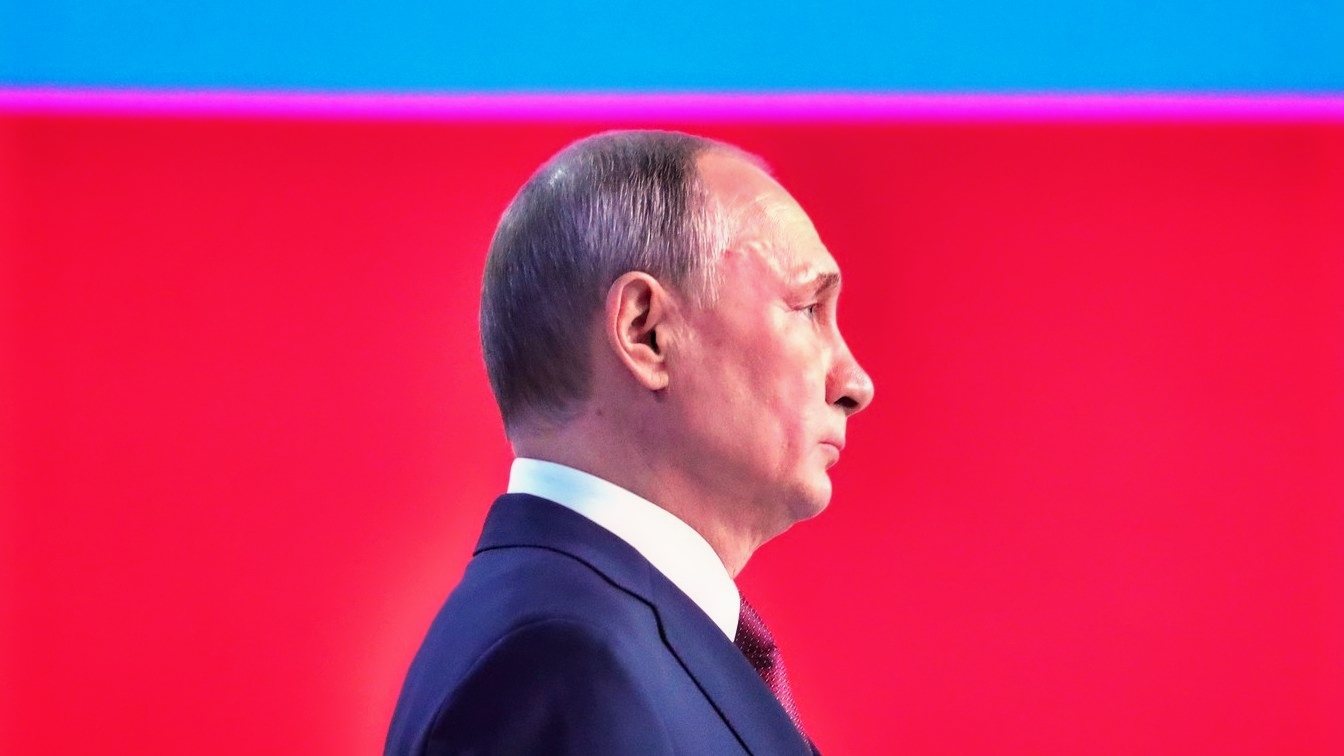
Russian President Putin’s fuel-shortage admission was really an admission that Ukraine has forced Russia into a repair war.
He did not put it that way, of course. He spoke as Russian leaders usually speak when a visible problem can no longer be denied. There were difficulties. They were being managed. The state was acting. The situation was not critical. That was the official line. It was meant to shrink the story.
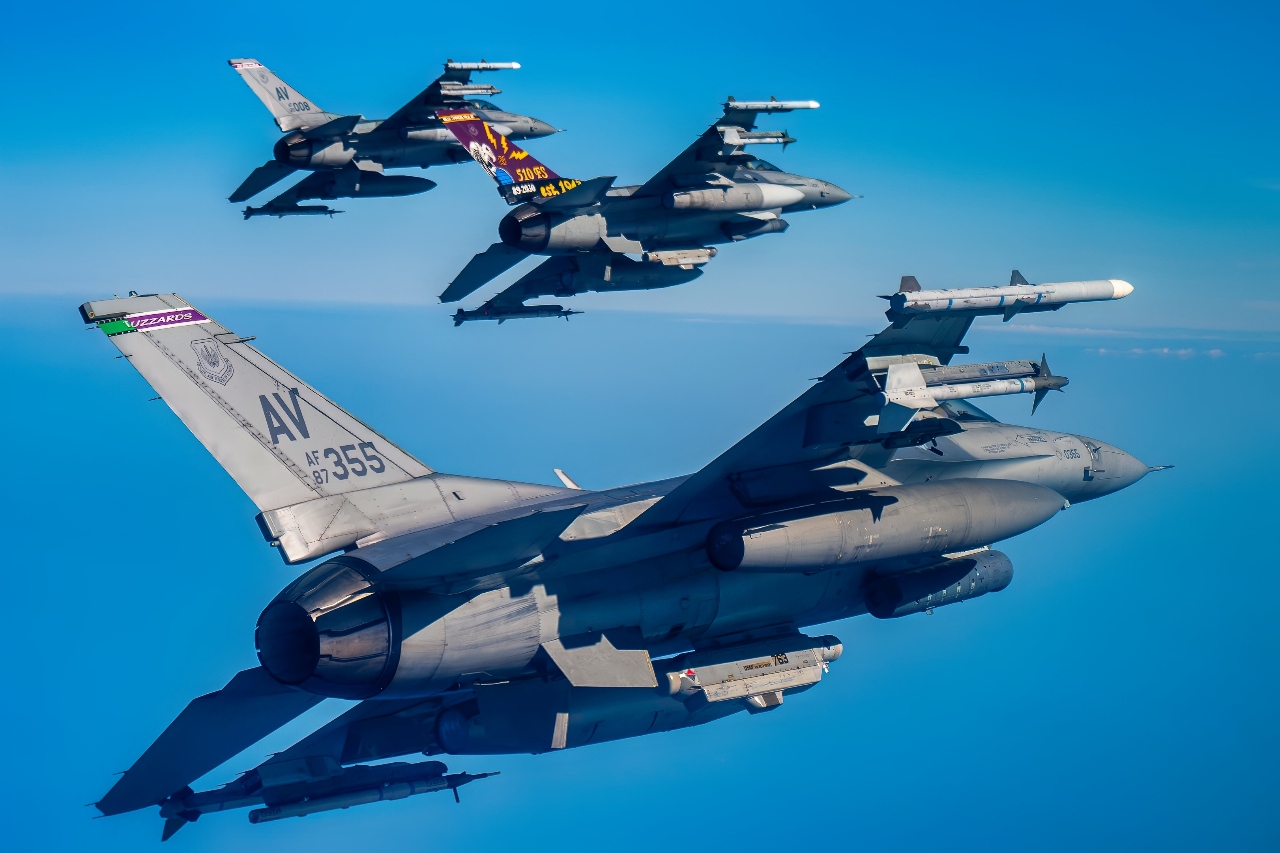
Three U.S. Air Force F-16 Fighting Falcons assigned to the 31st Fighter Wing at Aviano Air Base fly in formation during Exercise Combined Strike 25 along the coast of Italy, August 18, 2025. Integration flying training is key to enhancing interoperability with NATO partners and increasing our readiness capabilities. (U.S. Air Force photo by Senior Airman Zachary Jakel)
It did the opposite.
Russia is an energy power now, explaining fuel shortages to its own people in the middle of a war it chose. That is not a small thing. It does not mean the Kremlin is about to crack. It does not mean Ukraine has found a magic lever that ends the war on Kyiv’s terms. But it does mean Ukraine’s long-range strike campaign has begun to impose costs inside the Russian system in ways Moscow cannot fully hide.
The Drone War Becomes a Repair War
For months, Ukraine has been hitting Russian oil infrastructure with drones. Refineries, storage sites, pumping stations, and supply nodes have all become part of the battlefield. The logic is plain enough. Russia can absorb casualties at the front. It can grind forward in Donbas. It can send men and equipment into brutal, wasteful assaults and still claim momentum. That is the ugly arithmetic of this war.
Fuel is different.
A refinery is not a trench line. It cannot be dispersed into the tree line. It cannot be moved every few days. It is fixed, complicated, flammable, and difficult to repair under pressure. Some repairs require parts.
Some require skilled crews. Some require time. All of them require a state that is already fighting a large war to turn away from one set of problems and deal with another.
That is the point of Ukraine’s campaign. Kyiv does not need to destroy Russia’s energy sector. It needs to make the repair schedule part of the war.
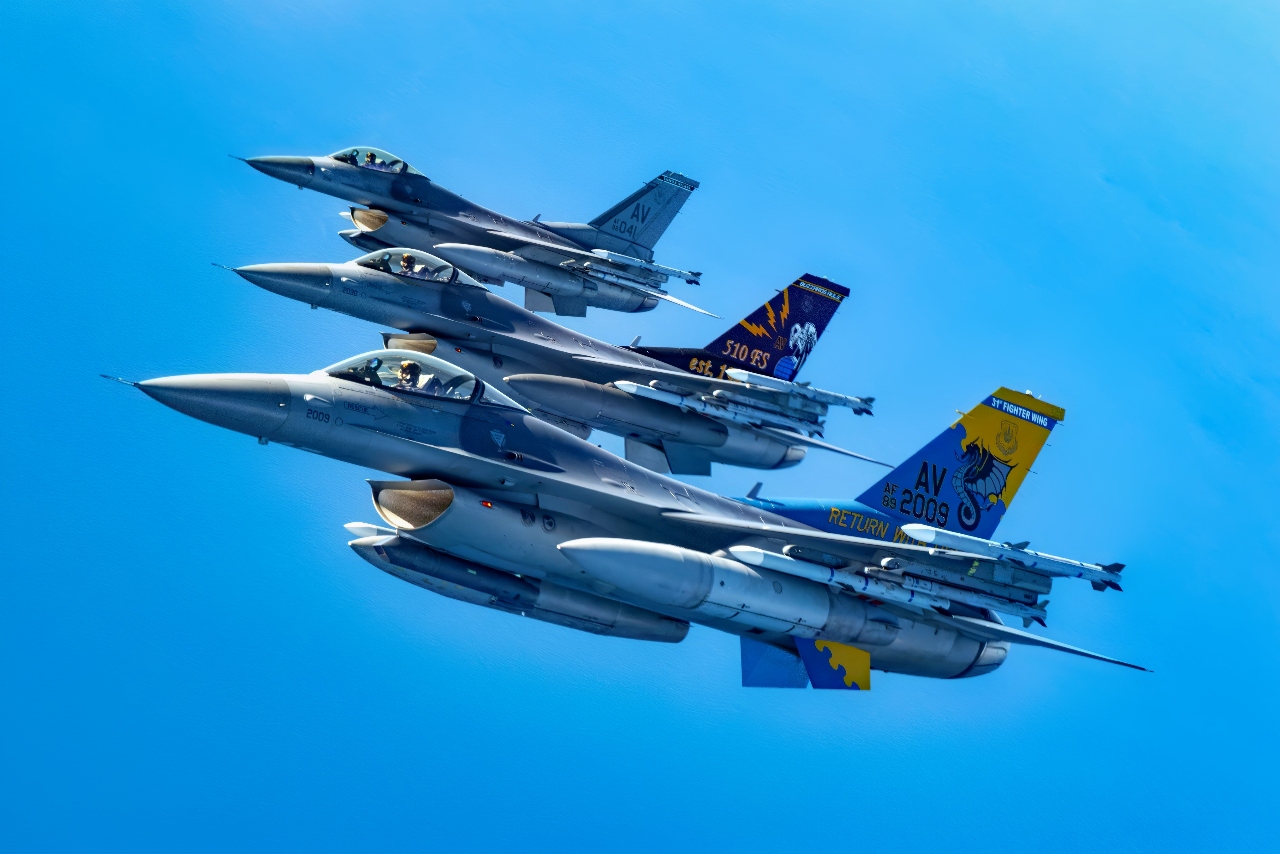
Three F-16 Fighting Falcons from the 31st Fighter Wing fly above Aviano Air Base, Italy, November 21, 2024. The F-16’s enduring appeal lies in its technological relevance, with continual upgrades to avionics, radar systems and weaponry ensuring it remains a formidable force in modern air warfare. (Courtesy photo by Frank Crebas)
One strike can be repaired. A second strike on the same system changes the calculation. A third strike forces choices. Which plant gets priority? Which region gets fuel? Which military requirement outranks which civilian need? Which air defense units stay near the front, and which are pulled back to protect the refinery that local officials insist must reopen before the public mood turns foul?
That is where the war is now moving. Drones are not just trying to beat Russian air defenses. They are trying to beat Russian repair crews.
Putin’s Problem Is Practical
Putin’s likely response will be hard, practical, and familiar. He will not respond to fuel shortages by looking for a way out of the war. He will try to make the shortages less visible, less politically dangerous, and less militarily damaging.
That means more air defense around oil infrastructure. It means more pressure on refinery managers. It means emergency fuel allocation. It means drawing on reserves and restricting exports if Moscow thinks domestic supply is becoming too tight. It may mean imports, which would be a strange sight for one of the world’s major energy exporters, but war has a way of making strange things normal.
It also means retaliation.
Russia will go after the Ukrainian strike chain more aggressively. Drone workshops, launch areas, storage sites, logistics routes, power systems, and command nodes will all move higher on the Russian target list. Putin has already shown no interest in treating long-range strikes as something that both sides should simply pause. That would help Ukraine too much. It would take pressure off the very Russian vulnerabilities Kyiv has spent months finding.
So the next phase is unlikely to be cleaner. It may be uglier. Ukraine will keep trying to reach deeper into the Russian war economy. Russia will try to crush the Ukrainian machinery that makes those strikes possible. The home front will keep bleeding into the front line.
This is how modern war works when cheap range meets an industrial state that still depends on large fixed systems.
The Wrong Lesson for Washington
There is a temptation in Washington to read every Russian difficulty as a sign of approaching collapse. That temptation should be resisted. Realism begins with the unpleasant fact that states can endure a great deal of pain, especially authoritarian states fighting wars they have already sold as existential.
Russia can ration. Russia can conceal. Russia can punish local officials. Russia can force companies to absorb losses. Russia can move fuel away from one use and toward another. It can leave some civilians angry if the army still gets what it needs. None of that is new in Russian history.
The better reading is more limited and more useful. Ukraine has created a burden Russia must now carry.
That matters. In a war this attritional, every recurring burden counts. A refinery fire that forces Moscow to move air defense away from the battlefield has a military effect. A fuel shortage that complicates harvest logistics has a political effect. A repair cycle that keeps reopening has a strategic effect because it turns Russian depth into another zone of exposure.
This is where U.S. policy should be clear-eyed. Ukraine’s long-range drone campaign does not replace artillery, air defense, manpower, or fortifications. It does not solve Ukraine’s battlefield problems by itself.
But it gives Kyiv a way to impose costs on Russia without requiring American troops, NATO pilots, or reckless promises about direct intervention.
That is exactly the sort of leverage a restrained American strategy should prefer.
Support the capabilities that make Russia spend more to continue the war. Help Ukraine with targeting, drone production, electronic warfare adaptation, and defense of its own strike infrastructure. Keep the campaign tied to the Russian war machine. Do not let Moscow define every strike behind its border as an escalation while Russian missiles continue to hit Ukrainian cities as a matter of routine.
A tragic war does not become less tragic because one side finds a clever pressure point. It simply becomes more honest about what power requires.
The Test Comes Later
Putin’s admission will probably fade from the news cycle. Some stations will reopen. Some queues will shorten. Moscow will patch enough of the system to claim control. Russian television will find a way to explain the rest.
That should not fool anyone.
The real test is what happens after the first round of repairs. If Ukraine can strike once and Russia can fix once, Moscow can live with that. If Ukraine can return often enough to make repairs a permanent wartime function, the burden changes. Russia then has to defend the front, protect the rear, feed the war economy, and reassure the public that an energy superpower still has fuel.
Putin can survive that kind of pressure. He may even absorb it for longer than Western observers expect. But he cannot pretend it is nothing. He has already admitted too much.
The war will not be decided by one burning refinery or one fuel queue outside Moscow. It may be shaped by something duller and more grinding: whether Russia can keep repairing faster than Ukraine can keep breaking.
About the Author: Dr. Andrew Latham
Andrew Latham is a professor of international relations and political theory at Macalester College in Saint Paul, MN. You can follow him on X: @aakatham.


Swamplaw Yankee
July 1, 2026 at 3:47 pm
What is duller + more grinding? Can we guess?
The millions of new international war criminals in Moscow who believed the legal POTUS Obama covert, unilateral “GREEN” light facilitation February 6th, 2014 as to the Balkanization of Independent Ukraine.
They run In blind panic, yellow bellies swaying, from the unlimited FREE Real estate that POTUS Obama alluded was in Ukraine for the taking, say like the Muscovy have stolen repeatedly over the last 111 years.
Perhaps they are all thorougly re-reading the joyous PR that Obama + Carny emitted that the legal USA endorsed Obama’s Ukraine Balkanization + the re-start of the ancient 1000 year old genetic need for sex-slave trade in Ukrainian children was totally invisible to the White House + POTUS Cabal. No “little green Groomers” could be seen in 2014 by any OBAMA elite.
Refineries – not so much a challenge for the 2014 POTUS Obama.