


As the West screams about Russia’s impending industrial collapse due to the unexpected strain of the long-running Ukraine War, Russia’s United Aircraft Corporation (UAC) seems to have other thoughts on the matter.
After recently announcing they were moving to the experimental prototype stage of their Su-75 Checkmate fifth-generation stealth warplane, Russia’s other advanced plane, the Su-57, appeared sporting a new design. That’s right. Russia has built a new variant of the Su-57 Felon. Known as the Su-57D, it is a two-seat version of the controversial fourth-generation-plus warplane.
The Su-57D was test-piloted by Sukhoi chief test pilot Sergey Bogdan.
Su-57D: Why Is This Significant?
Most analysts initially assumed the second seat existed simply for training. In fact, the second seat serves a vital function in the lethality of this continually evolving Russian platform. Just as with the Chinese Chengdu J-20S “Mighty Dragon” variant, the Russians conceived the Su-57D’s second seat as being integral to their evolving airborne fighter command-and-control concept. What’s more, as the Russians integrate manned-unmanned teaming (MUMT) into their wider Armed Forces, the Su-57D will command those MUMT operations.
Yet the Americans are still stuck with the 1990s-era concepts that gave rise to the F-35 and F-22. That mindset is strange, considering how obvious the importance of drones is.
The Real Story: Drone Command Aircraft
The most important implication is the connection to the Sukhoi S-70 Okhotnik-B stealth drone.
Russian planners have long discussed using the Su-57D as a “quarterback” aircraft capable of controlling multiple autonomous or semi-autonomous drones while the pilot focuses on flying and making tactical decisions. The rear-seat operator would manage sensors, electronic warfare (EW) systems, targeting, and drone coordination.
Essentially, the pilot flies the aircraft and fights enemy planes while the weapons systems officer controls drones and maintains the plane’s advanced systems. That function is important as drone warfare becomes more ubiquitous and more complex.
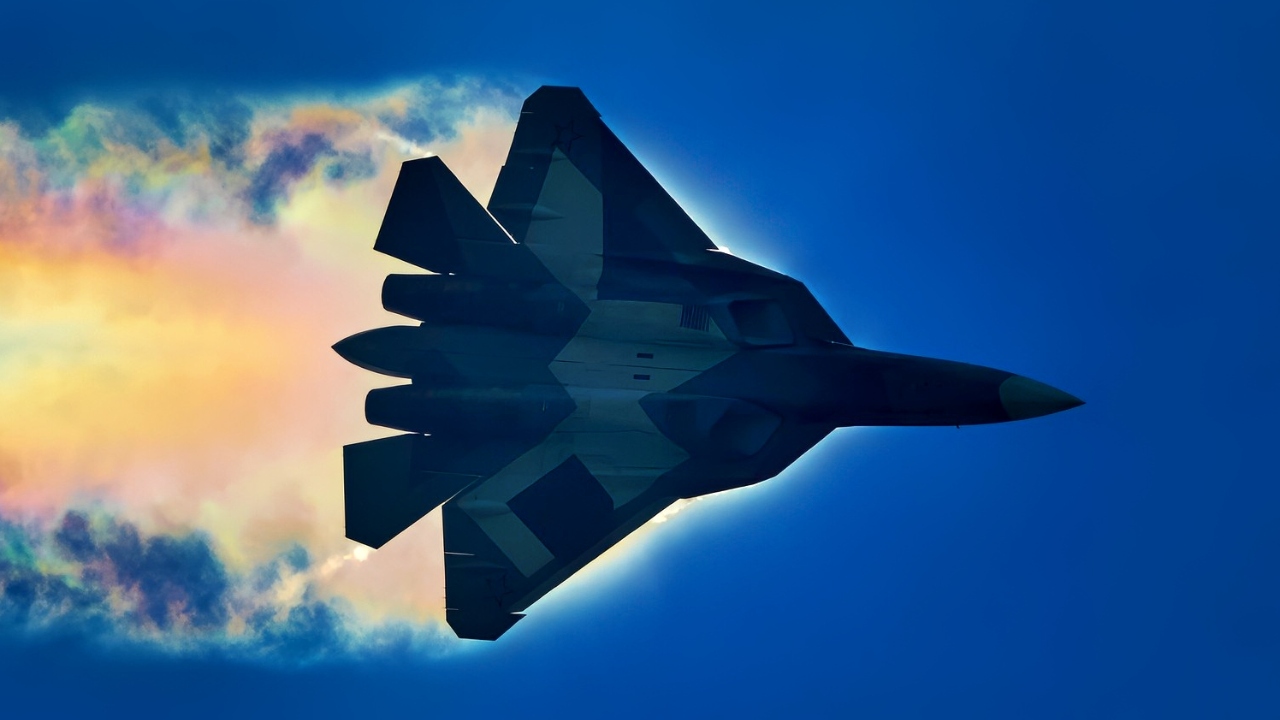
Su-57 Felon Fighter with Trail. Image Credit: Creative Commons.
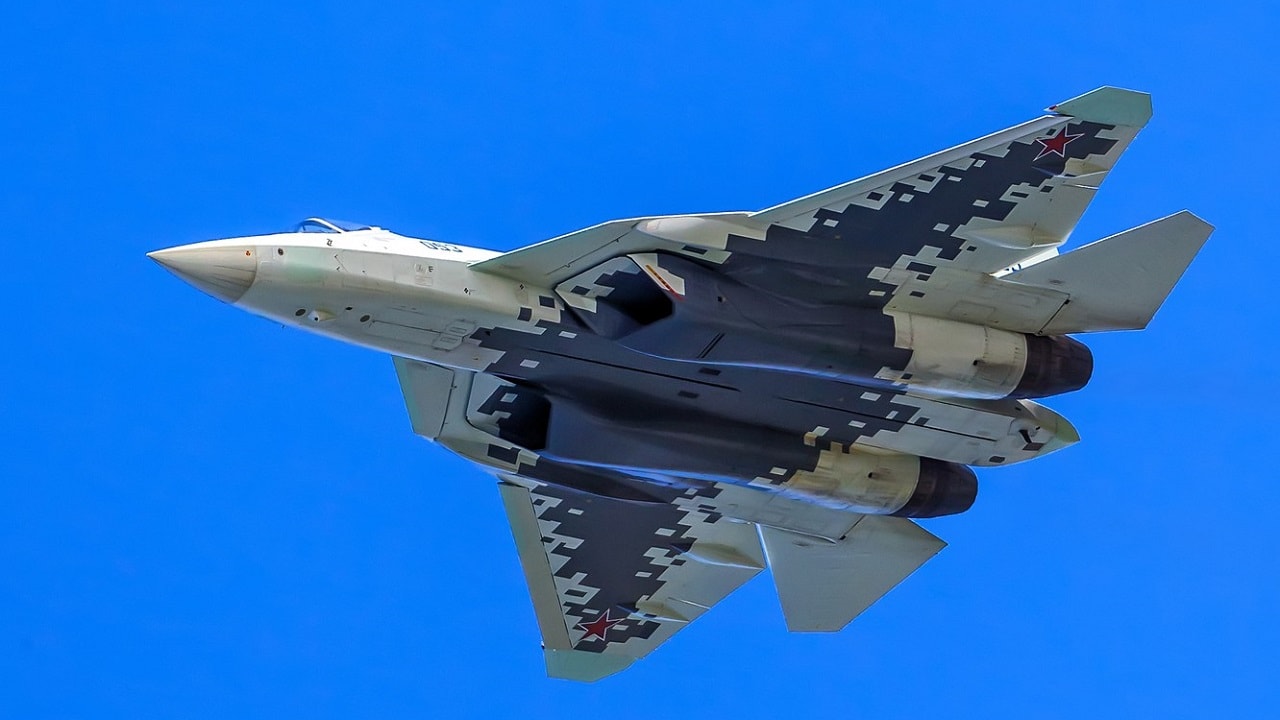
Su-57 Felon from Russian Air Force. Image Credit: Creative Commons.
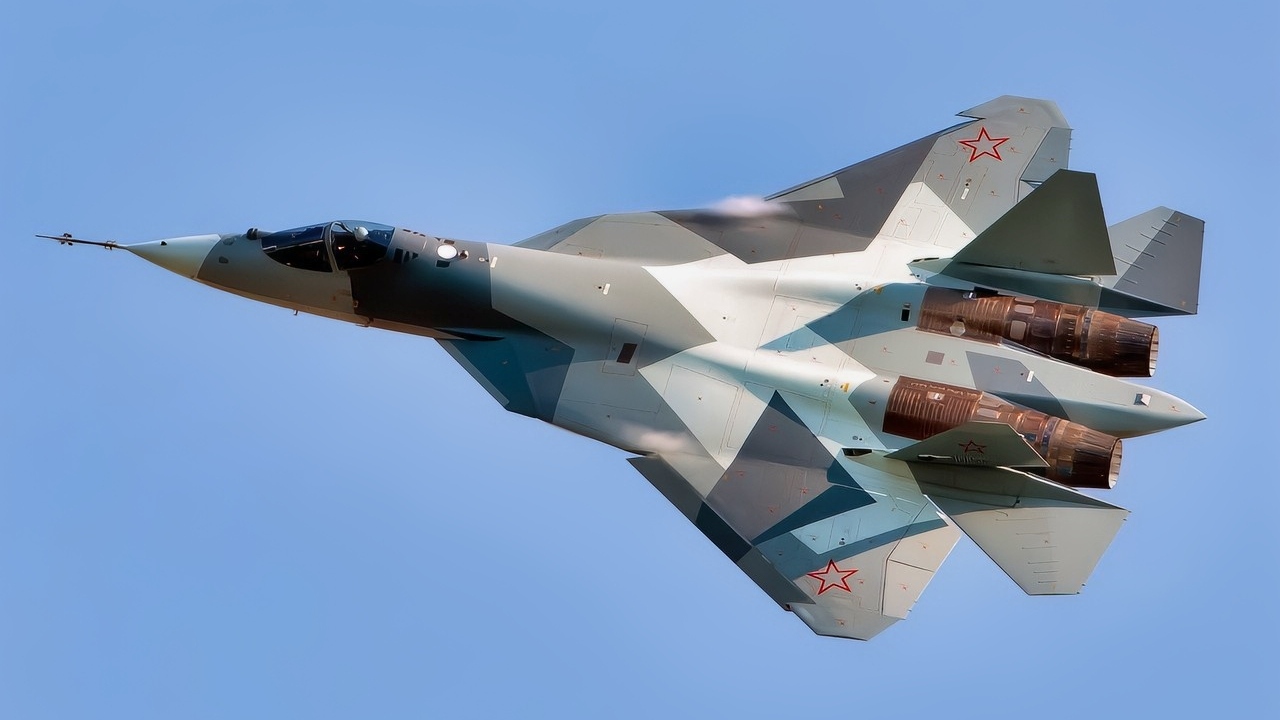
Su-57 Felon Fighter from Russia. Image Credit: Creative Commons.
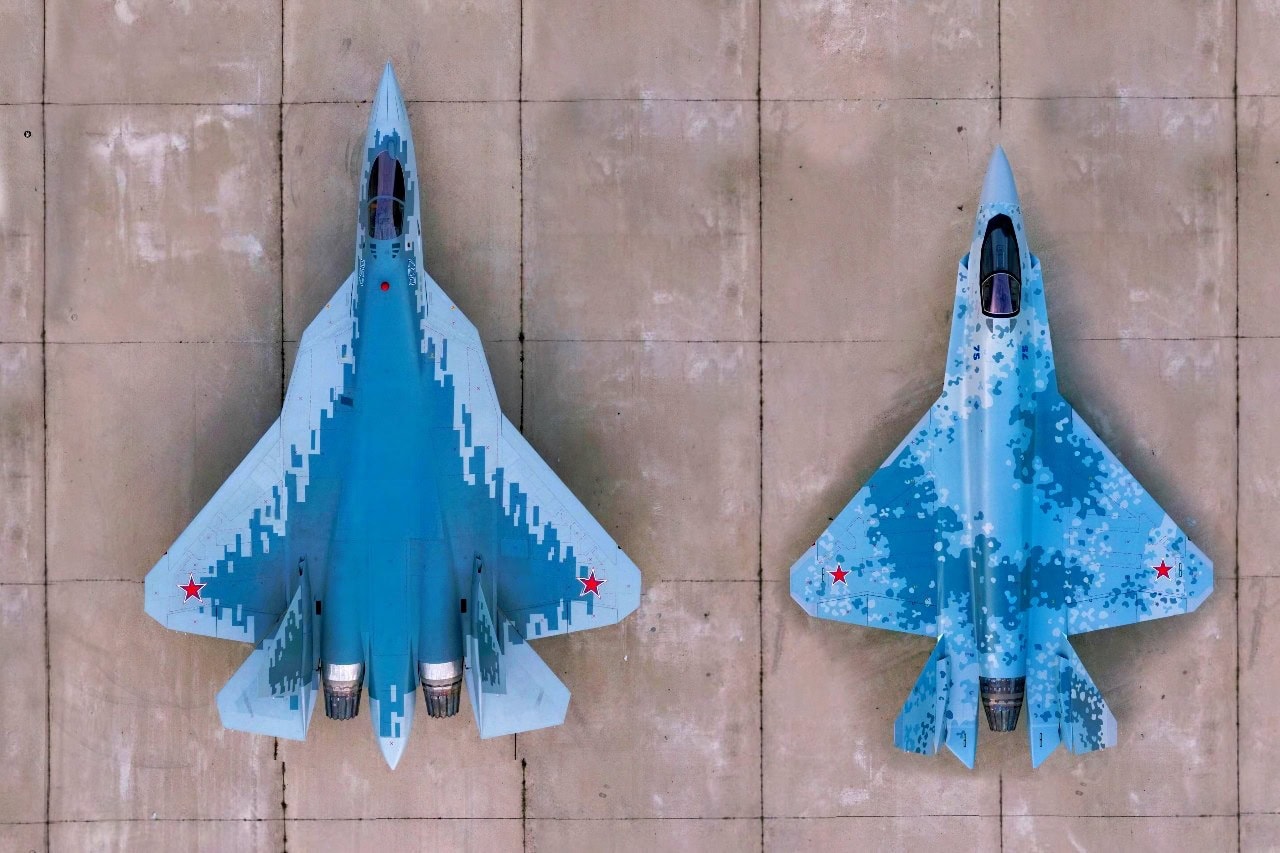
Su-57 and Su-75. Image Credit: Artist Rendering/Creative Commons.
Russia’s Su-57D is a Warning to America
The United States initially assumed that single-seat stealth fifth-generation warplanes would dominate the world’s skies. Now there’s a new trend occurring. Multiple nations, especially China, are embracing the two-seater approach to fourth-generation-plus and fifth-generation warplanes.
That’s because both Moscow and Beijing recognize that, with drones rising to primacy in the modern battlespace, the cognitive burden on a single pilot attempting to manage a plane in combat while also controlling drones and other EW capabilities is too much for one person.
If the Russian and Chinese planners are correct, they might enjoy serious advantages over their American rivals in combat over time.
India May Be Part of the Story
There’s another angle to this story that deserves attention. Before India withdrew from the FGFA program, one of the concepts under discussion was procuring an export variant of the two-seater Su-57. Russian industry periodically floated the idea of what’s become the Su-57D, believing it could improve export prospects–especially for countries that traditionally prefer two-seat strike fighters.
With India still searching for ways to expand its fifth-generation fighter fleet, Moscow may hope this version helps revive export interest.
Of course, there’s a reason that New Delhi distanced itself from the Su-57 initially. It was part of India’s overall push to get closer to the United States. But with the trade war and the haphazard display India’s air force put on during the Indo-Pakistani War last year, New Delhi wants to again balance against overreliance on expensive Western technology (which they are rightly skeptical of).
What the Su-57D Tells Us About Russia’s Aerospace Industry
Russia is still evolving the Su-57 program despite sanctions and wartime pressures. Over the last few years, Western commentary has often portrayed the Su-57 as effectively stalled.
How can this be, though?
Moscow is clearly moving ahead at their own, effective pace with this plane. They’re expanding production, developing a modernization package for it, testing new engines for the plane, and now flying the Su-57D twin-seat variant–which might cause headaches for US single-seat warplanes as drones are increasingly integrated with manned fighters.
As I have argued for years, Russia is far more resilient than Western analysts give it credit. The two major aerospace stories out of Russia this week, the creation of the Su-75 Checkmate prototype plus the arrival of the Su-57D two-seat variant, prove that the Russian defense industrial base is doing just fine, despite the pressures of the Ukraine War and Western sanctions.
Strategic Assessment
Moscow’s strategists have clearly concluded that the future of air warfare will revolve around human-machine teams rather than individual fighters. The Su-57D is Russia’s first major step toward making that realization a part of Russia’s military.
Russia expects the Su-57D to enter service with its air force in the 2030s. And that’s a frightening prospect. Contrary to what Western pundits argue, the Su-57 is generally an impressive plane. With its two-seater variant operational, the Su-57D can now command swarms of “loyal wingman” drones, missiles, advanced sensors, and other EW systems at once.
That second seat on the new Su-57D variant is not Cold War nostalgia on display. The Su-57D is a realization, light-years ahead of American planners’, that the future air war is too complex for a single pilot to manage on their own. Russia’s Su-57D spells trouble for the US and NATO.
About the Author: Brandon J. Weichert
Brandon J. Weichert is Senior National Security Editor. He also manages The Weichert Brief on Substack. Weichert hosts “National Security Talk” on Rumble, too. He is the author of four bestselling national security books, the most recent of which is A Disaster of Our Own Making: How the West Lost Ukraine (Encounter Books). Follow him via Twitter/X @WeTheBrandon.


John
June 9, 2026 at 6:21 pm
A second seat is not new for the US. WSOs and RIOs have been around for a long time and with the F15EX, the US already has a drone management platform.