


In 1997, Russia unveiled the Sukhoi Su-47 Berkut, one of the most unusual fighter aircraft ever built. The aircraft was built with forward-swept wings and a black composite body, traits which gave it a futuristic appearance.
Although only one prototype was ever completed, the Su-47 represented a bold experiment in aviation technology during a difficult period in Russian history.
The Su-47 Story: Russia Tried to Take on the F-22
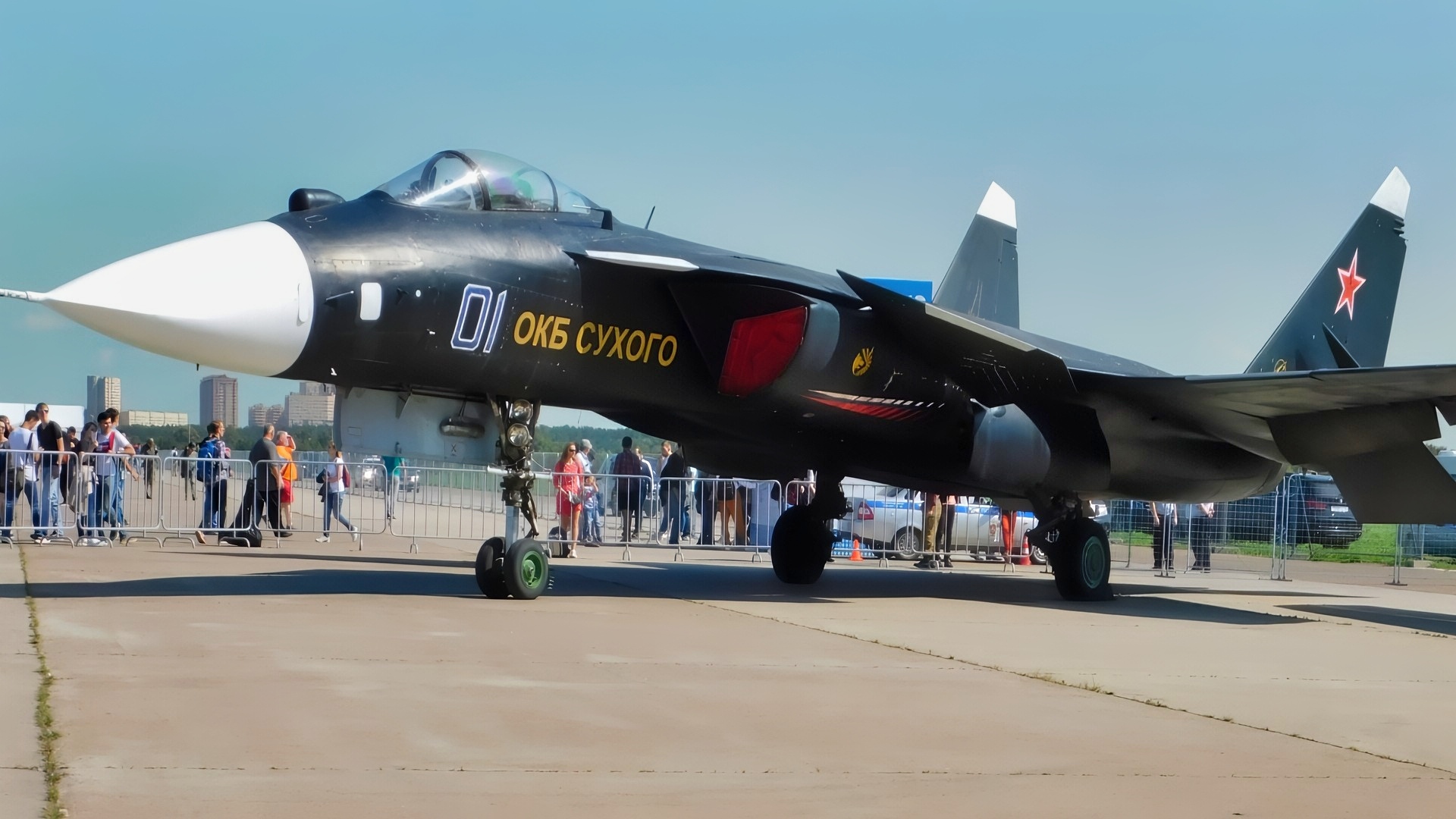
Sukhoi Su-47 Berkut. Image Credit: Creative Commons.
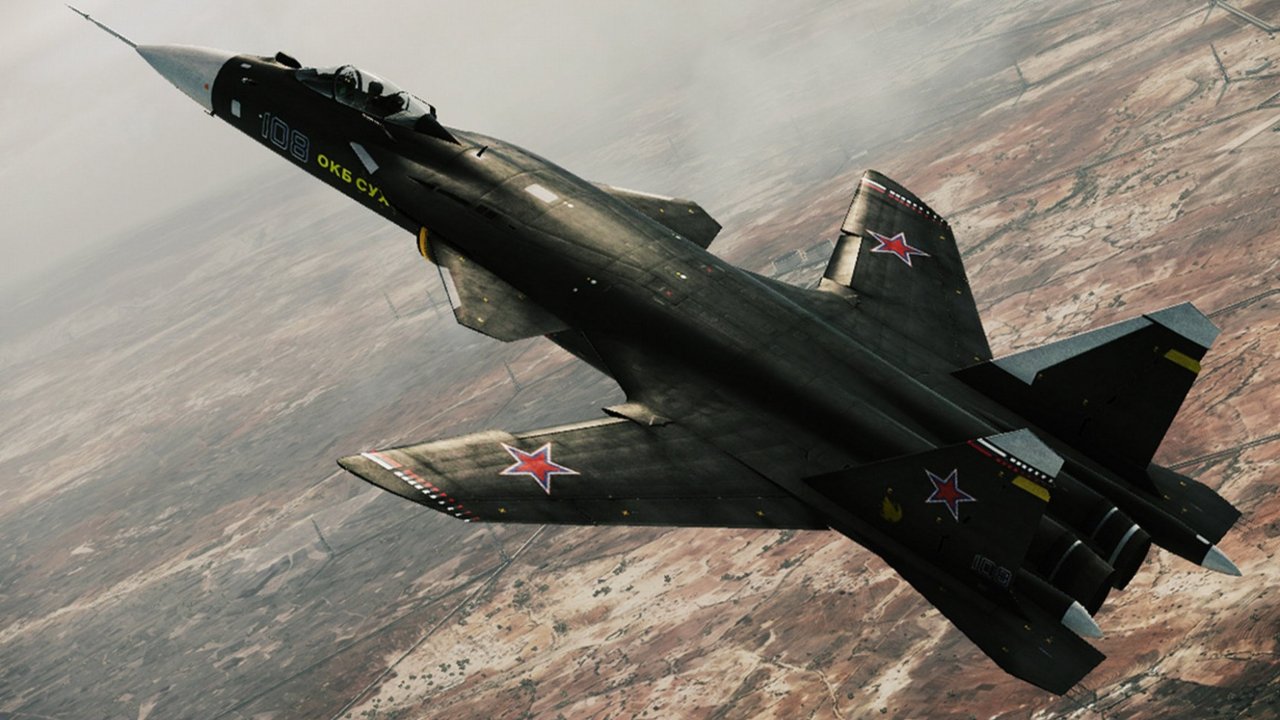
Su-47 Fighter. Image Credit: Creative Commons.
The aircraft can perhaps best be understood as an emblem of Russia’s determination to remain a military aerospace power after the collapse of the Soviet Union. Interestingly, despite its ultimate failure, the Su-47 likely inspired or contributed positively to Russia’s Su-57.
The story of the Su-47 began during the final years of the Soviet Union.
During the 1980s, Soviet aircraft designers sought ways to compete with advanced American fighters such as the F-22 Raptor.
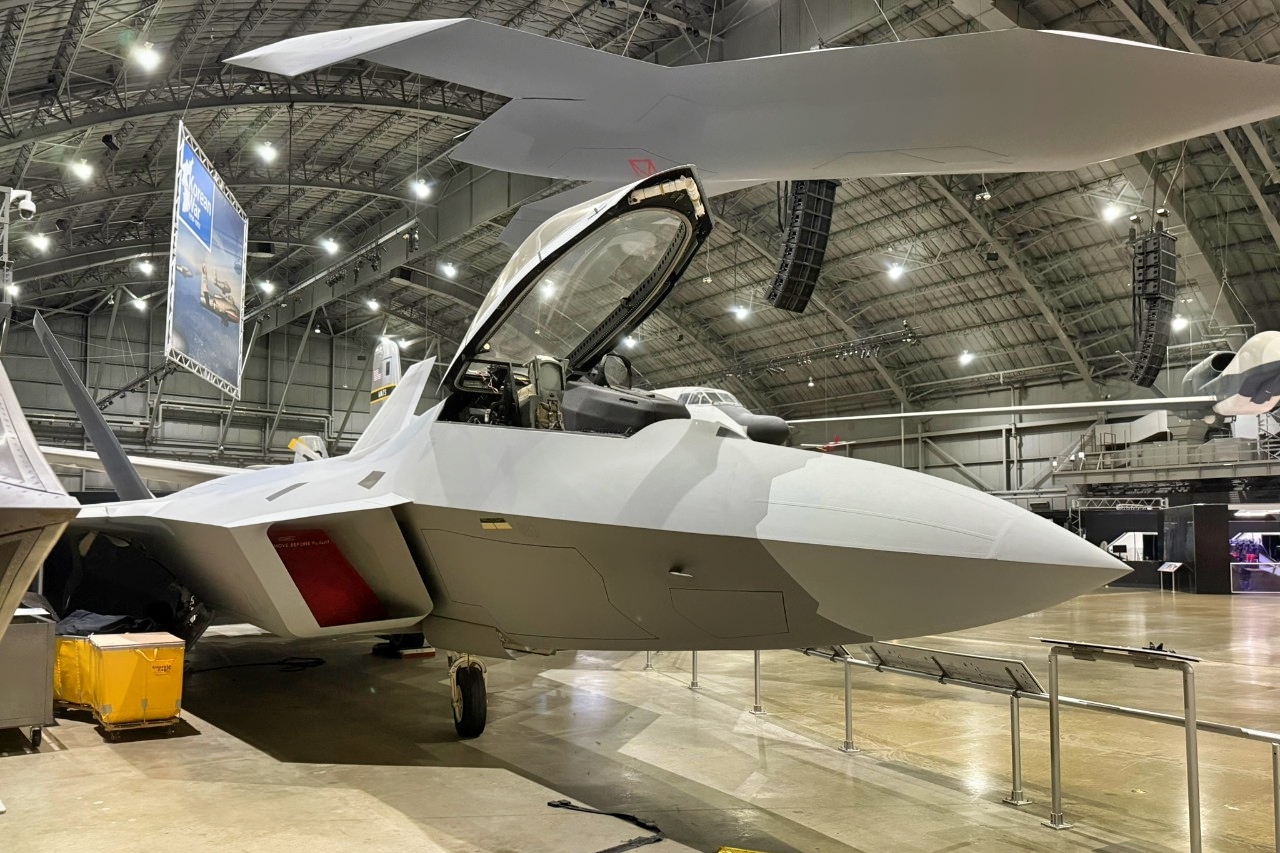
F-22A Raptor with YF-118G Overhead. Image Credit: National Security Journal.
Russian fighter-jet developers maintained that future air combat would require greater maneuverability, improved aerodynamics, and better control at high angles of attack.
One idea that attracted attention was the use of forward-swept wings, a configuration in which the wings angle forward rather than backward, as on conventional jets.
Forward Swept Wings
Forward-swept wings offered several advantages.
Aerodynamically, they could provide better lift at low speeds and help an aircraft maintain control during sharp turns.
This design also improved agility by reducing airflow separation near the wingtips.
Theoretically, a fighter with forward-swept wings could outmaneuver nearly any opponent in close-range dogfights. In addition, the wing shape allowed the aircraft to place weapons and equipment closer to the center of gravity, improving balance and stability.
An interesting essay from years ago in the BBC’s “Science Focus” magazine describes the maneuverability advantages associated with “forward-swept” wings. “Forward-swept wings make an aircraft harder to fly, but the advantages are mainly down to maneuverability.
They maintain airflow over their surfaces at steeper climb angles than conventional planes, which means the nose can point higher without the aircraft going into a dangerous stall,” the essay says
However, the design came with severe engineering problems.
Traditional backward-swept wings naturally resist twisting during flight, but forward-swept wings tend to twist upward under aerodynamic pressure.
This phenomenon, known as aeroelastic divergence, can quickly destroy an aircraft if not controlled. Earlier experiments with forward-swept wing aircraft, including the German Junkers Ju 287 during World War II and the American Grumman X-29 in the 1980s, showed both the potential and dangers of the design.
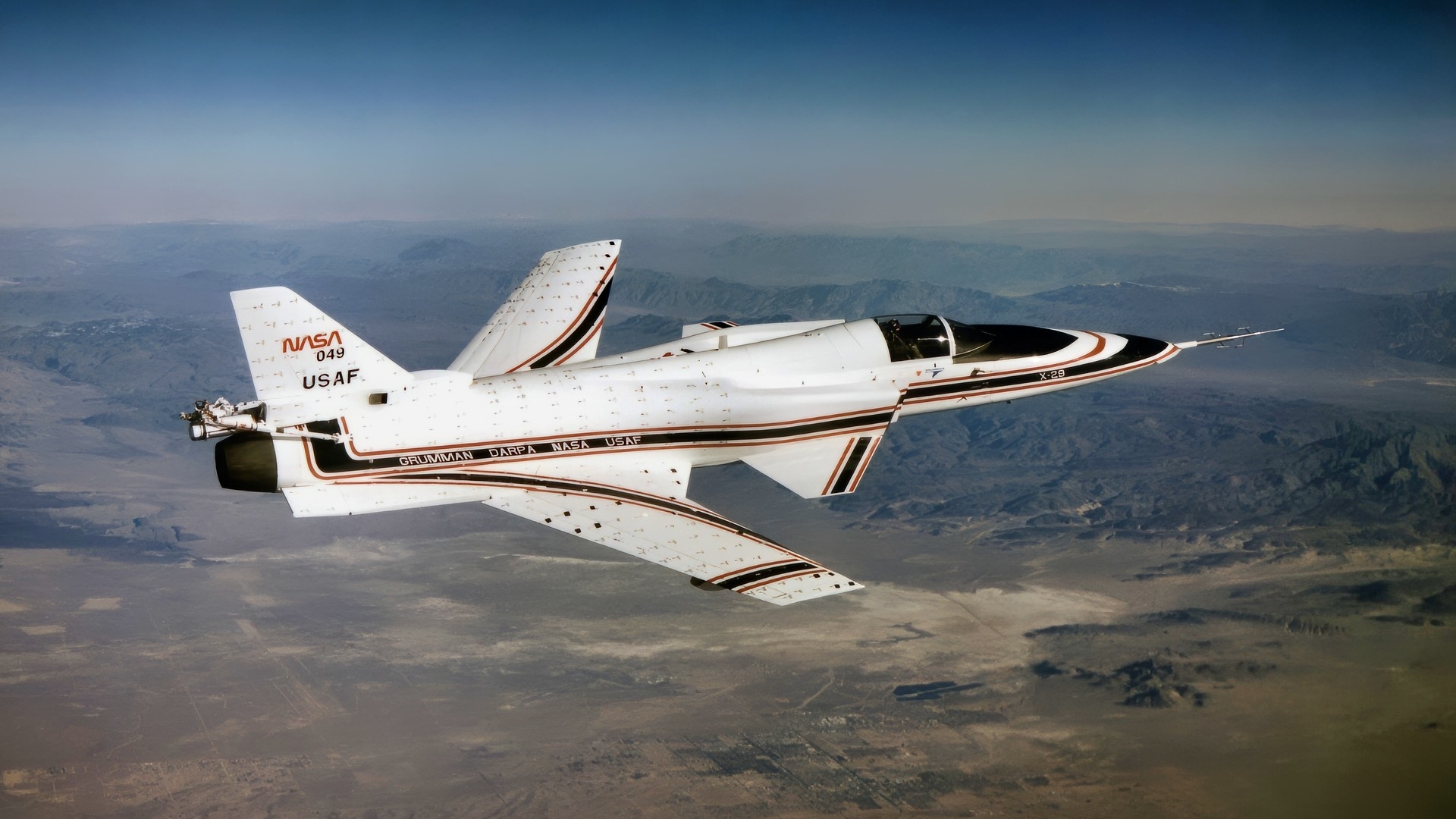
X-29 From NASA and DARPA. Image Credit: Creative Commons.
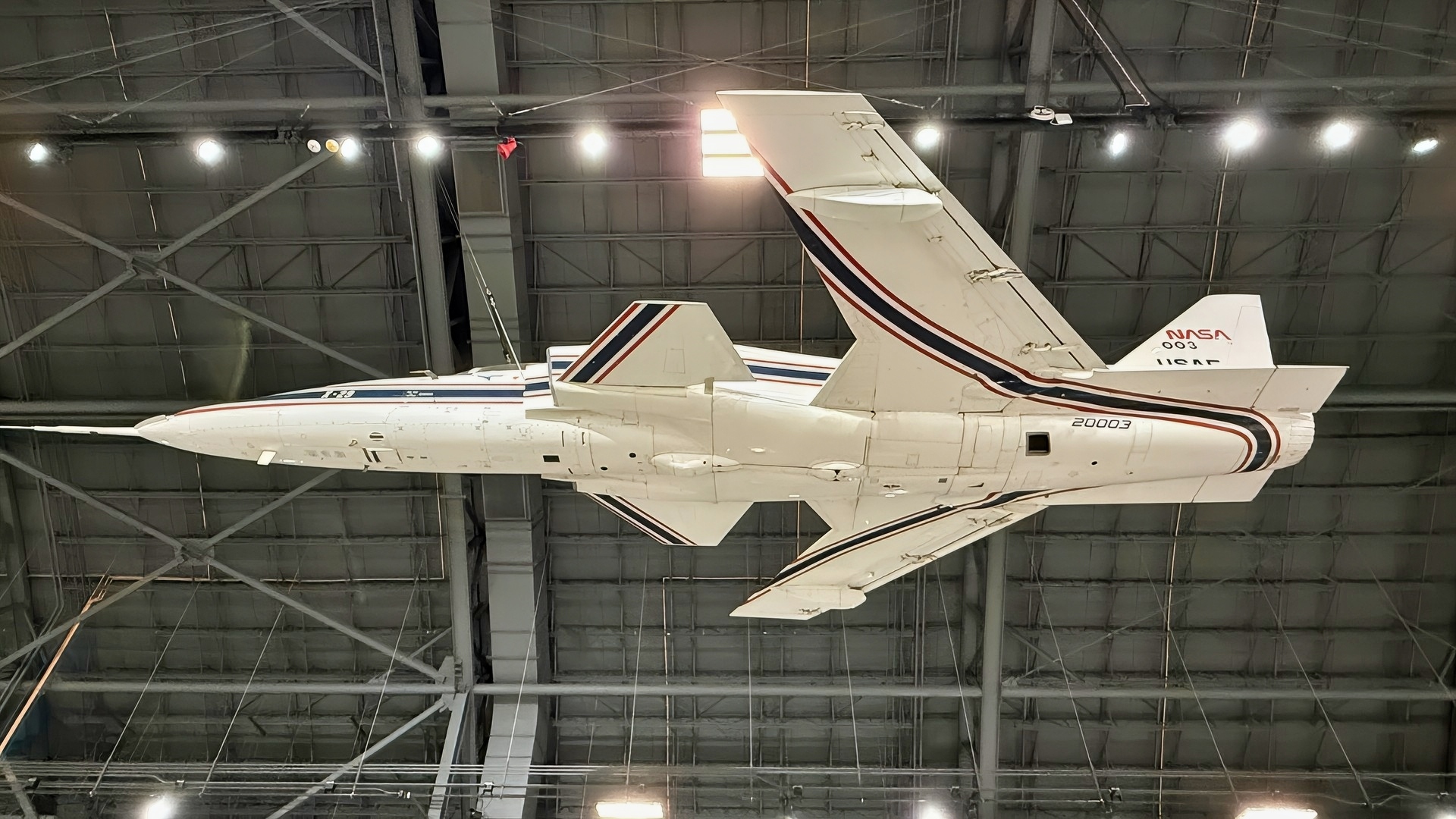
X-29. Image from the U.S. Air Force Museum. Image Credit: National Security Journal/Harry J. Kazianis.
Su-47 After Soviet Collapse
By the early 1990s, the Soviet Union had collapsed, leaving Russia in economic chaos.
Military budgets were slashed, and many aerospace projects were canceled.
Despite these hardships, Sukhoi continued work on its experimental fighter, partly to demonstrate that Russian aviation technology still remained competitive with the West.
The project was originally known as the Su-32, later redesignated Su-37, and eventually became the Su-47 Berkut. The word “Berkut” means “golden eagle” in Russian, a fitting name for an aircraft designed to dominate the skies.
Not Really New
Although the Su-47 looked revolutionary, many of its components were adapted from existing Russian aircraft programs to reduce costs. The landing gear came from the Sukhoi Su-27 family, while the engines were modified versions of those used in other Russian jets. The real breakthroughs with the plane arguably existed in its use of composite materials.
Engineers relied heavily on carbon-fiber composites to prevent the dangerous wing twisting associated with forward-swept designs.
Nearly 90 percent of the wing structure reportedly consisted of advanced composite materials, making the Su-47 one of the most technologically ambitious Russian aircraft of its era.
Flight tests revealed impressive performance characteristics. The aircraft demonstrated exceptional agility, performing extremely tight turns and high-angle maneuvers that conventional fighters struggled to match. Observers believed the Su-47 could have been devastating in close-range air combat.
The design also offered improved takeoff and landing characteristics, potentially allowing operation from shorter runways or aircraft carriers.
Can the Su-47 be Manufactured?
Yet despite its impressive capabilities, the Su-47 also revealed why forward-swept wing fighters never became common.
The aircraft was extremely expensive to build and maintain. The advanced composite structures required complex manufacturing techniques that were difficult for Russia’s struggling aerospace industry to support during the 1990s. In fact, Russia’s aerospace industry is still struggling today.
As part of this equation, the aerodynamic benefits also did not fully outweigh the structural complications and increased maintenance demands.
Su-47 Never Existed
As a result, the Su-47 never entered mass production. Only one prototype was built, and the aircraft served primarily as a flying laboratory for advanced technologies. However, the project was far from a failure.
Many of the lessons learned during the Su-47 program later influenced Russia’s development of its next-generation fighter.
Technologies tested on the Berkut, including composite materials, internal weapons bays, fly-by-wire systems, and maneuverability research, contributed to the development of the Sukhoi Su-57 decades later.
About the Author: Kris Osborn
Kris Osborn is a Military Technology Editor. Osborn is also President of Warrior Maven – Center for Military Modernization. Osborn previously served at the Pentagon as a highly qualified expert in the Office of the Assistant Secretary of the Army—Acquisition, Logistics & Technology. Osborn has also worked as an anchor and on-air military specialist at national TV networks. He has appeared as a guest military expert on Fox News, MSNBC, The Military Channel, and The History Channel. He also has a Master’s Degree in Comparative Literature from Columbia University.


