


Key Points and Summary – The Tu-160 “Blackjack” is the Soviet answer to America’s long-range bomber problem—a variable-sweep, Mach-2 class cruise-missile carrier built to sprint around air defenses and threaten targets oceans away.
-After the USSR collapsed, Russia kept the airframes alive, then doubled down: new avionics, new NK-32-02 engines, and new-build Tu-160M airframes as its stealthy PAK DA slipped to the right.
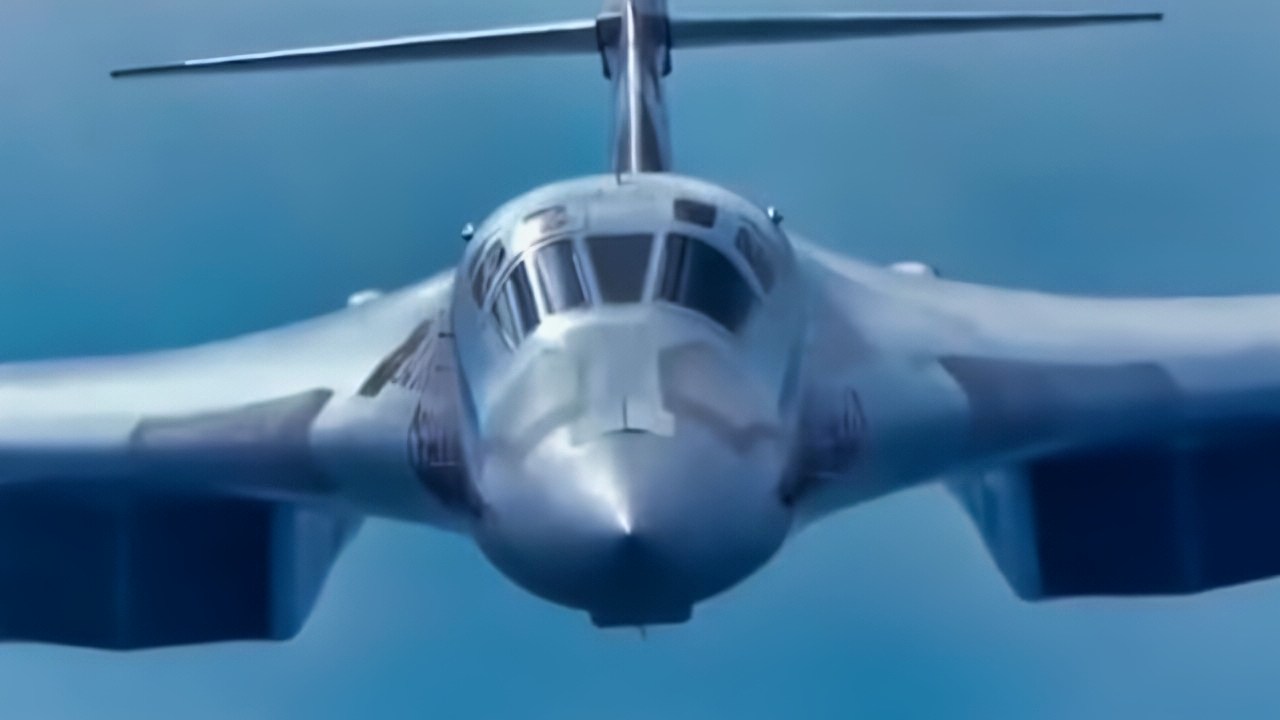
Tu-160 Bomber. Image Credit: Creative Commons.

Tu-160 Bomber Russian Air Force Photo
-The bomber has fired stand-off cruise missiles in Syria and repeatedly in the Ukraine war, staying far from hostile air defenses.
-Moscow will keep upgrading it because it works, it signals, and it buys time—but it also exposes how far behind Russia’s next-gen bomber really is.
The Tu-160: Moscow’s Supersonic Insurance Policy
If you want to understand why Russia keeps pouring money into a 1980s supersonic giant, start with the simple truth that long-range strike is a math problem.
How do you put enough warheads on targets at intercontinental distance, through modern air defenses, with enough reliability to matter in both conventional and nuclear scenarios?
The Soviet Union’s late-Cold War answer was the Tu-160: a massive, variable-sweep-wing aircraft optimized not for dogfighting or penetration at treetop height, but for speed, range, and the ability to sling precision cruise missiles from far outside the envelope of enemy surface-to-air missiles.
The bomber’s purpose was political as much as technical. Washington had the B-52 in huge numbers and kept iterating on high-end bombers (B-1, then the stealthy B-2). Moscow needed an asymmetric equalizer that could threaten NATO bases, ports, and critical infrastructure without gambling on tank armies in the Fulda Gap. A long-range, high-speed, heavy-payload missile truck fit that brief—and it still does.
How A Late-Cold War Sprint Became A Post-Soviet Workhorse
The Tu-160’s design bets were bold. Variable-sweep wings to trade lift and drag across flight regimes. A big, clean fuselage for range, speed, and internal carriage. Four afterburning turbofans to push the jet past Mach 2 at altitude. Most important, cavernous weapons bays sized for long-range air-launched cruise missiles (ALCMs). In modern use, the bomber’s real weapon is distance: it can orbit safely in Russian airspace and release conventional Kh-101 or legacy Kh-555 missiles that fly the last thousand-plus kilometers on their own.
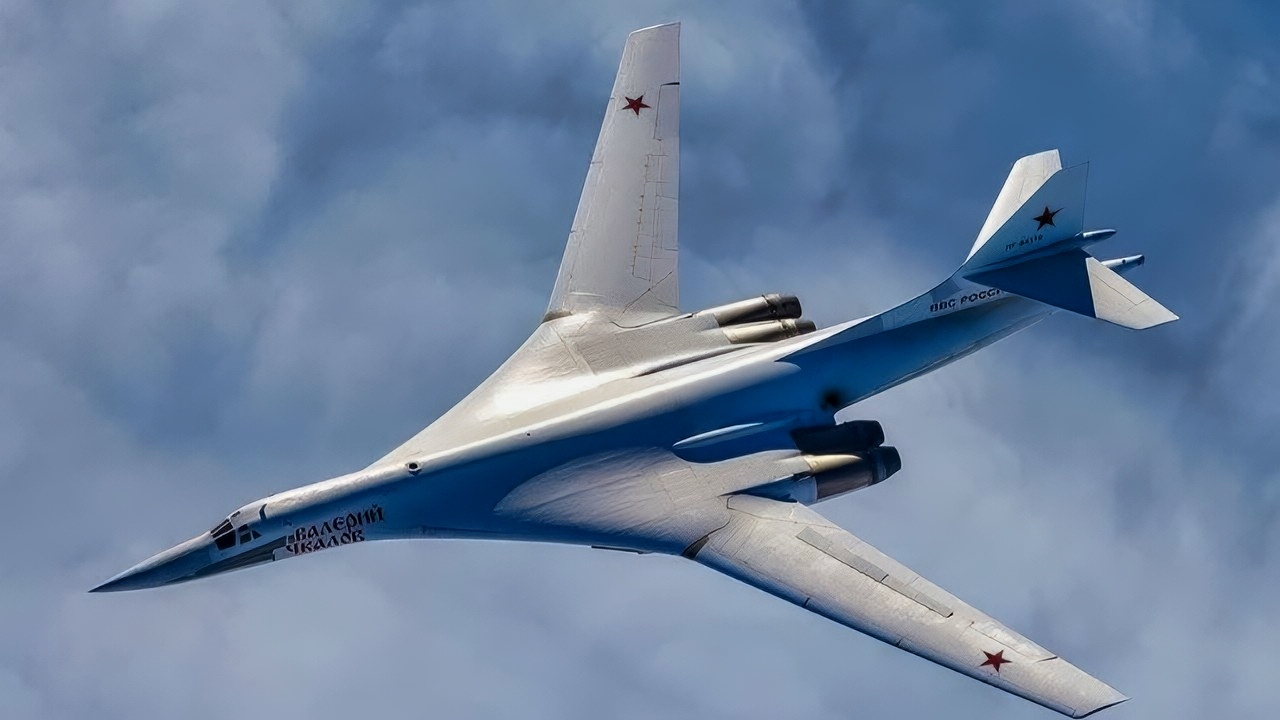
Tu-160 Bomber from Russia. Image Credit: Creative Commons.

Russia Tu-160 Bomber on Tarmac. Image Credit: Creative Commons.
Then the USSR fell apart. Several Tu-160s were stranded in newly independent Ukraine; some were scrapped, others transferred to Russia in the late 1990s as part of debt arrangements. The aircraft that did make it home were nursed along, flown sparingly, and used as strategic messaging—long patrols that edged into the North Atlantic, Arctic, or even the Caribbean to remind everyone that Russia still had long legs.
Tu-160 In 2 Words: Massive Upgrades
The blunt reason is that long-range strike is unforgiving. You need platforms today, not a perfect paper design tomorrow. Russia’s stealth bomber project—the PAK DA—has slipped repeatedly. Instead of accepting a strike gap, the Kremlin chose to modernize what it had and restart production lines that had gone cold.
Enter the Tu-160M program: new “glass” cockpits, modernized navigation/targeting systems, a digital backbone for weapons and mission software, and the NK-32-02 engine refresh to claw back performance and range. A new production run of Tu-160M airframes out of Kazan signals more than just fleet growth; it’s an industrial moonshot to relearn how to build big strategic aircraft under sanctions and without the Soviet industrial ecosystem.
Even a small trickle of new-build jets offers three dividends: it sustains the bomber leg of Russia’s nuclear triad, keeps missile salvos flowing in conventional war, and buys time while PAK DA tries to get off the drawing board.
Wartime Reality Check: Syria To Ukraine
The Tu-160’s conventional résumé began in Syria, where Russia used it as a stand-off cruise-missile shooter. The point wasn’t to dodge Western fighters; it was to demonstrate reliability and reach, firing from well-defended airspace and letting precision weapons do the risky last miles.
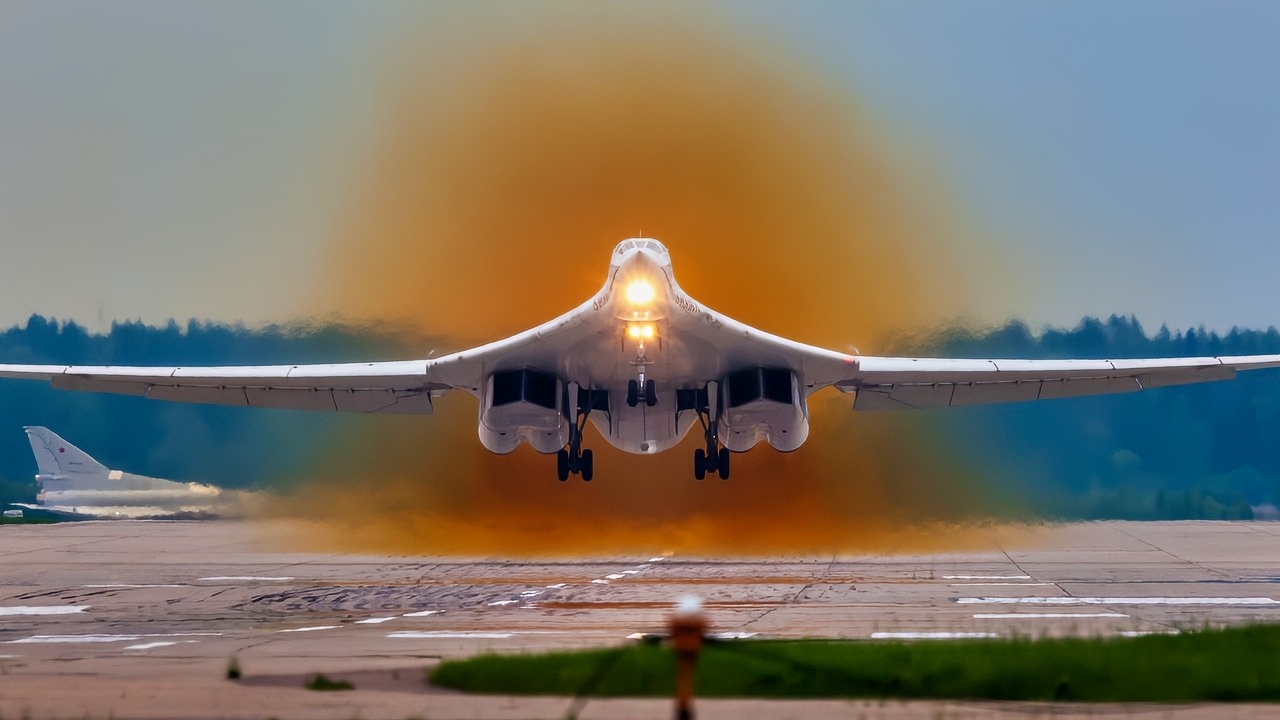
Tu-160 Bomber from Russia. Image Credit: Creative Commons.

Tu-160M Bomber Air Force. Image Credit: Creative Commons.
That playbook is now standard in the Ukraine war. Tu-160s have launched repeated Kh-101 salvos at Ukrainian infrastructure and military targets from deep inside Russia, typically out of range of Ukrainian air defenses.
This is strategic coercion in bomber form: keep pressure on the grid, complicate air defense allocations, and force Kyiv to invest scarce interceptors in costly, nightly campaigns. It’s also evidence that Russia’s concept for the jet is brutally pragmatic—use the airplane as a truck and protect the truck. When Ukrainian long-range drones strike Russian bases, the bombers move, disperse, and keep firing. Survivability today is about basing, distance, and sortie generation, not daring penetrations of dense Integrated Air Defense Systems (IADS).
Why Putin Ordered New Tu-160s—And What That Says About PAK DA
Ordering new-build airframes in the 2020s was never about romance for the “Blackjack.” It was a vote of no confidence in timelines elsewhere. A stealth flying-wing like PAK DA demands world-class materials science, exquisite manufacturing tolerances, and supply chains that sanctions hit hardest.
The Tu-160M, by contrast, leverages proven alloys, proven aerodynamics, and a homegrown engine path. It’s not cheap or easy, but it’s doable—now.
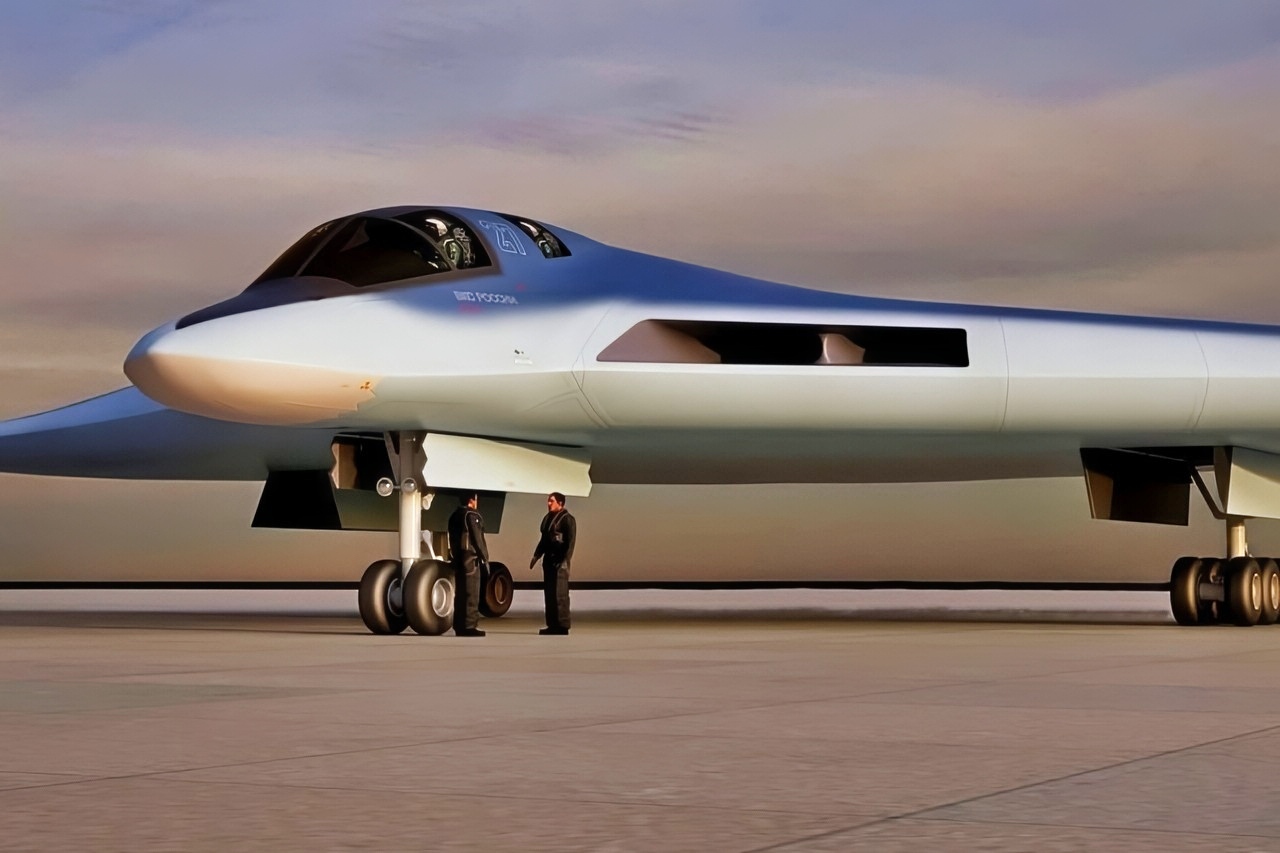
PAK DA Stealth Bomber Artist Rendering. Image Credit: Creative Commons.
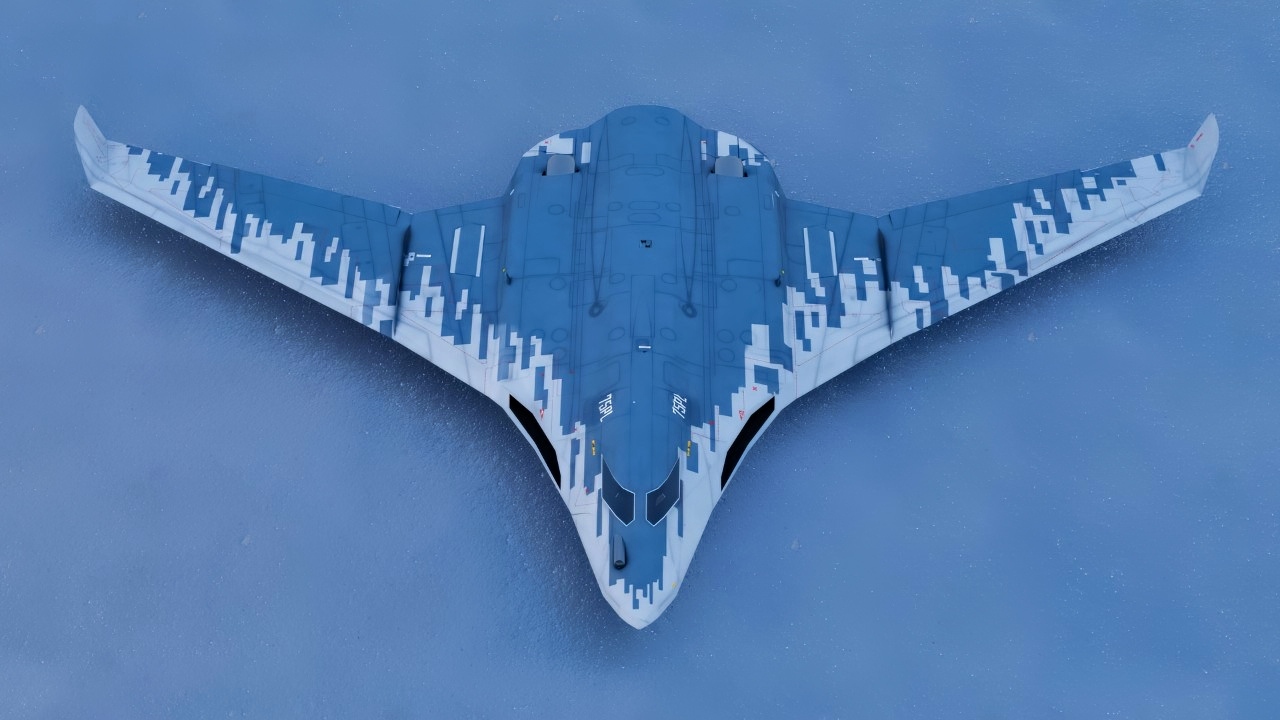
PAK DA Stealth Fighter Screenshot from X Artist Image.
There’s also signaling. Rolling a snow-white supersonic bomber out of Kazan and flying it in front of cameras conveys stamina to domestic audiences and adversaries alike. It tells NATO that Russia can still put steel in the air at range. It reassures clients about Russia’s missile portfolio. And it answers a home-front question—“can we still build great power hardware?”—with an emphatic, if qualified, yes.
Strengths That Still Matter In 2025
Range plus payload is the headline. A Tu-160 orbiting over central Russia can reach deep into Europe, the Middle East, or the North Atlantic with a belly full of modern ALCMs. Speed is not the primary defense anymore, but it remains useful for time-to-station and complicating interception windows at altitude. The variable-sweep wing gives a big airframe handling flexibility for takeoff, cruise, and recovery in less-than-ideal weather.
Where the jet really earns its keep is as a node in a missile ecosystem. The more accurate, stealthier, and longer-legged Russia’s cruise missiles become, the more lethal a stand-off shooter looks—especially when it can mass fire dozens of weapons from safe airspace. Add modernized comms, mission computers, and the refreshed engines, and you get a credible strategic tool, even without stealth.
The Limits Are Clear—And Getting Clearer
No one should confuse the Tu-160 with a B-2 or the incoming B-21. It is not a stealth bomber meant to saunter into contested airspace and kill the crown jewels on night one. Against a modern IADS backed by capable fighters and airborne sensors, the Tu-160’s survival depends on stand-off. That means missiles do the penetrating, not the bomber.
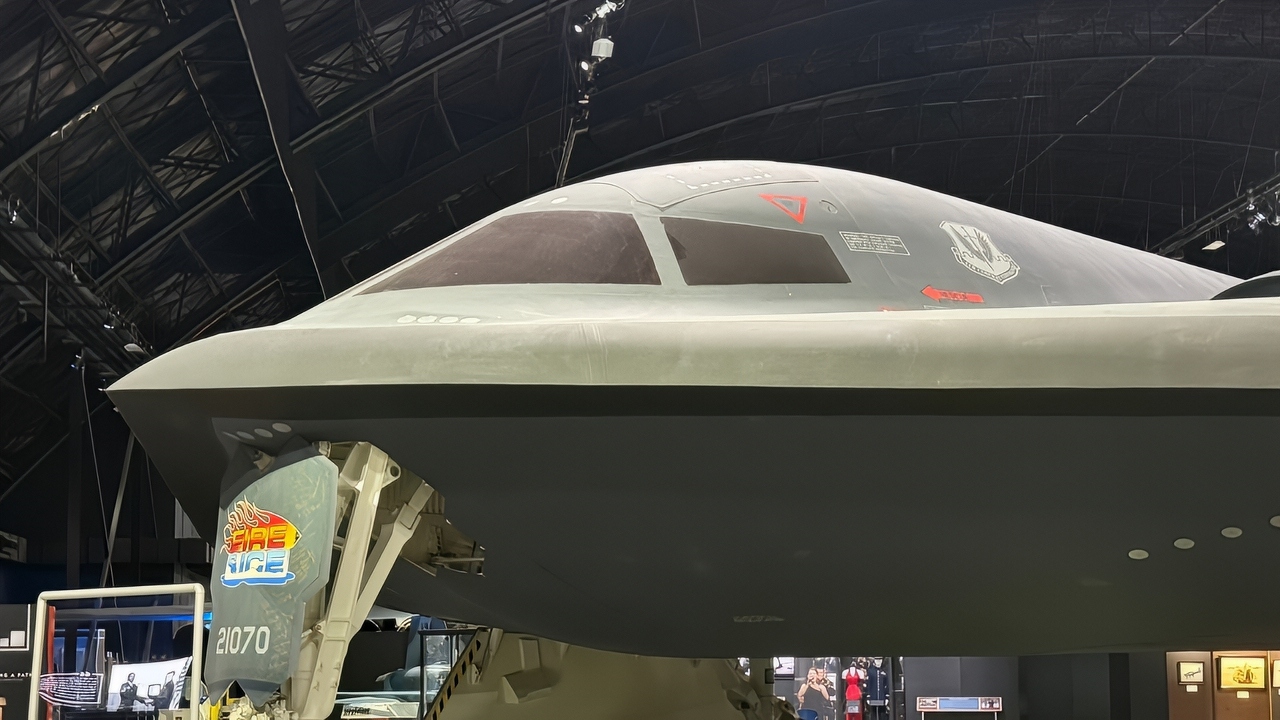
Really Close Up of B-2 Bomber in Dayton, Ohio Museum. Image Credit: National Security Journal Image.
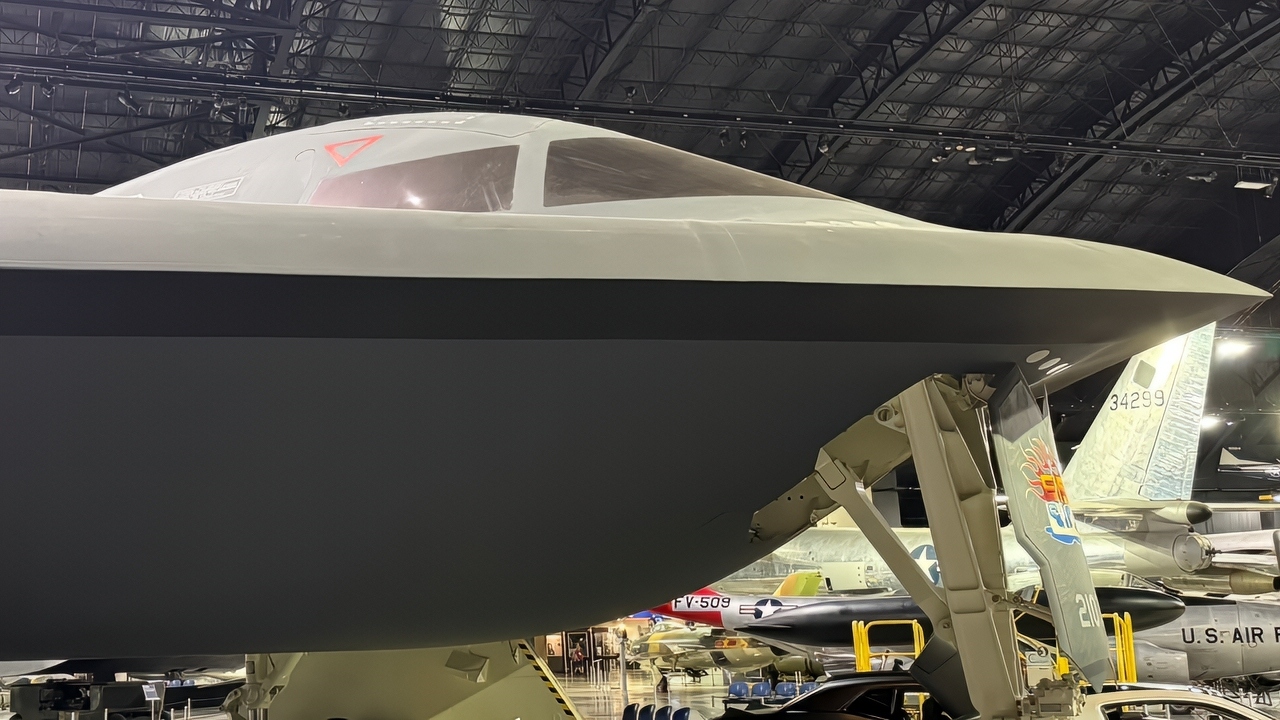
B-2 Bomber Really Close Up National Security Journal Photo
The airframe is also big, expensive to operate, and dependent on a handful of specialized bases and depots. Ukraine’s long-range drones and saboteurs have shown that those nodes can be reached. Even when damage is limited, the logistical whiplash—dispersal, repair, moving munitions and crews—reduces sortie rhythms and complicates planning. Attrition does not need to destroy the bomber to hurt the campaign; it only needs to slow it.
Finally, sanctions grind. Engines, avionics components, materials and tooling all exist in a global ecosystem Russia no longer fully accesses. That’s survivable for a modernization program; it’s brutal for a pristine stealth bomber that tolerates zero substitution.
How The Tu-160 Shapes Russia’s Strike Doctrine
Think of the Tu-160 as the “quarterback” of a conventional long-range strike package—less for sensor fusion (this isn’t an F-35) and more as a launch manager. Its job is to carry a lot of cruise missiles to a safe release line, coordinate timing with other shooters (ground-based launchers, surface ships, submarines, and Tu-95s), and then sprint home.
Russia doesn’t need a stealth bomber to shut down a power plant or destroy a fixed depot; it needs sufficient accurate missiles and a platform to sling them in volume. The Tu-160 does that.
At the nuclear level, the bomber offers signaling flexibility that ballistic missiles cannot. You can fly patrols, move aircraft around, and load visible weapons as compellence or reassurance—without crossing thresholds that an ICBM does by simply boosting.
Why Russia Will Keep The Blackjack Through The 2030s
There are three reasons. First, it works. The aircraft has already proved that it can deliver conventional and nuclear stand-off strike. Second, it’s available. Russia can produce a small number of new airframes, remanufacture old ones, and keep crews current. Third, it is politically valuable. In a war that has embarrassed prestigious units and factories, a gleaming supersonic bomber on national TV is a morale balm.
Will the fleet grow large? Unlikely. New-build bombers are complex and slow to produce even in peacetime. The most realistic scenario is a modest fleet of modernized Tu-160Ms sustained by engine and avionics refreshes—enough to keep the mission alive and the industrial skills warm, not enough to change the balance of power by itself.
The PAK DA Question
Could PAK DA still fly this decade? Perhaps. Should anyone count on it to replace the Tu-160 soon?
No.
The gap between glossy mockups and a stealth bomber that can repeat-fly in winter, carry a certified weapons set, and deploy to forward bases is measured in years and billions—especially under sanctions. Until PAK DA is real, the Tu-160 remains the indispensable bridge.
Future Prospects: What To Watch
Watch engines. The NK-32-02 line is the heart of fleet viability; spares and hot-section life will tell you how many jets are truly available on any given day. Watch missile stocks and accuracy. The more Kh-101-class weapons Russia can make, the more military utility the bomber has. Watch basing and dispersal. If Russia pushes more shelters, decoys, and runway repair kits to satellite fields, it’s planning for a long conventional campaign under persistent drone pressure. And watch for quiet electronics upgrades; survivability in the next decade will come from better electronic support measures, networking, and mission planning software—not just shiny paint.
The Hard Truth
The Tu-160 is a blunt instrument elegantly wielded. It will not slip past Aegis cruisers and modern fighters to kill an aircraft carrier at close range. It will not unmake NATO air defenses on night one. But as a launcher of many accurate, long-range cruise missiles from sanctuary, it is exactly what Russia needs while the stealth future remains over the horizon.
That’s why the Kremlin revived it, why it will keep flying, and why—despite the program’s costs and vulnerabilities—you’ll continue to see a white swan circling on grainy videos before another wave of missiles lights off toward a distant city.
About the Author: Harry J. Kazianis
Harry J. Kazianis (@Grecianformula) is Editor-In-Chief and President of National Security Journal. He was the former Senior Director of National Security Affairs at the Center for the National Interest (CFTNI), a foreign policy think tank founded by Richard Nixon based in Washington, DC. Harry has over a decade of experience in think tanks and national security publishing. His ideas have been published in the NY Times, The Washington Post, The Wall Street Journal, CNN, and many other outlets worldwide. He has held positions at CSIS, the Heritage Foundation, the University of Nottingham, and several other institutions related to national security research and studies. He is the former Executive Editor of the National Interest and the Diplomat. He holds a Master’s degree focusing on international affairs from Harvard University.
More Military
The British Army’s Big Challenger 3 Tank Mistake Still Stings
F-35 Stealth Fighter Program Has Passed the Point of No Return
The Iowa-Class Battleships Have A Message for Any Navy on Earth
Canada Has a Big Message for the Eurofighter Typhoon
The Mach 2 F-16 Fighting Falcon Fighter Has a Message for the U.S. Air Force


