

The Russian army is now losing ground in Ukraine for the first time since January 2024. As one top retired British Army commander told me several hours ago: “Ukraine might actually have a path to something that might look like a victory.”
The Ukraine War Is Changing Fast: Russia Has a Problem

MSTA-S Russian Army. Image Credit: Creative Commons.
That’s a big deal. This is not a minor tactical development, and it is not propaganda from Kyiv.
The Institute for the Study of War, the gold-standard Western open-source military tracking organization, has confirmed across multiple consecutive weekly assessments that Russian forces are surrendering net Ukrainian territory at an accelerating pace.
According to analysis of ISW battlefield data through May 19, Russian forces registered a net loss of 69 square miles of Ukrainian territory across the four-week period ending May 19, 2026. In the single week ending May 19, Russia lost 29 square miles. The previous week, Russia lost 12 square miles. In the four-week period preceding that one, Russia gained only 2 net square miles.
The trajectory is unmistakable. Russia is moving in the wrong direction for the first time since the opening months of the full-scale invasion.
How the Ukraine War Is Changing, and Russia Might Be Losing
This reversal is the strategic story of 2026, and the mainstream coverage of the war has substantially underreported its significance. Russia spent the entirety of 2024 and 2025 grinding forward across the Donbas at an average rate of between 15 and 70 meters per day.
Each kilometer of Ukrainian territory captured costs approximately 1,000 Russian casualties per day across the entire front line. The Russian theory of the war was that attritional advance against Ukrainian defenses would eventually exhaust Kyiv before it exhausted Moscow.
That theory has now collapsed. Russian forces no longer hold the battlefield initiative. The grinding offensive that Putin’s generals promised would eventually break Ukraine has instead broken itself against the combination of Ukrainian drone warfare, sustained Western weapons deliveries, and the sheer mathematical reality that Russia cannot replace its losses faster than Ukraine can inflict them.

T-14 Armata Tank. Image Credit: Creative Commons.

T-14 Armata. Image Credit: Russian State Media.
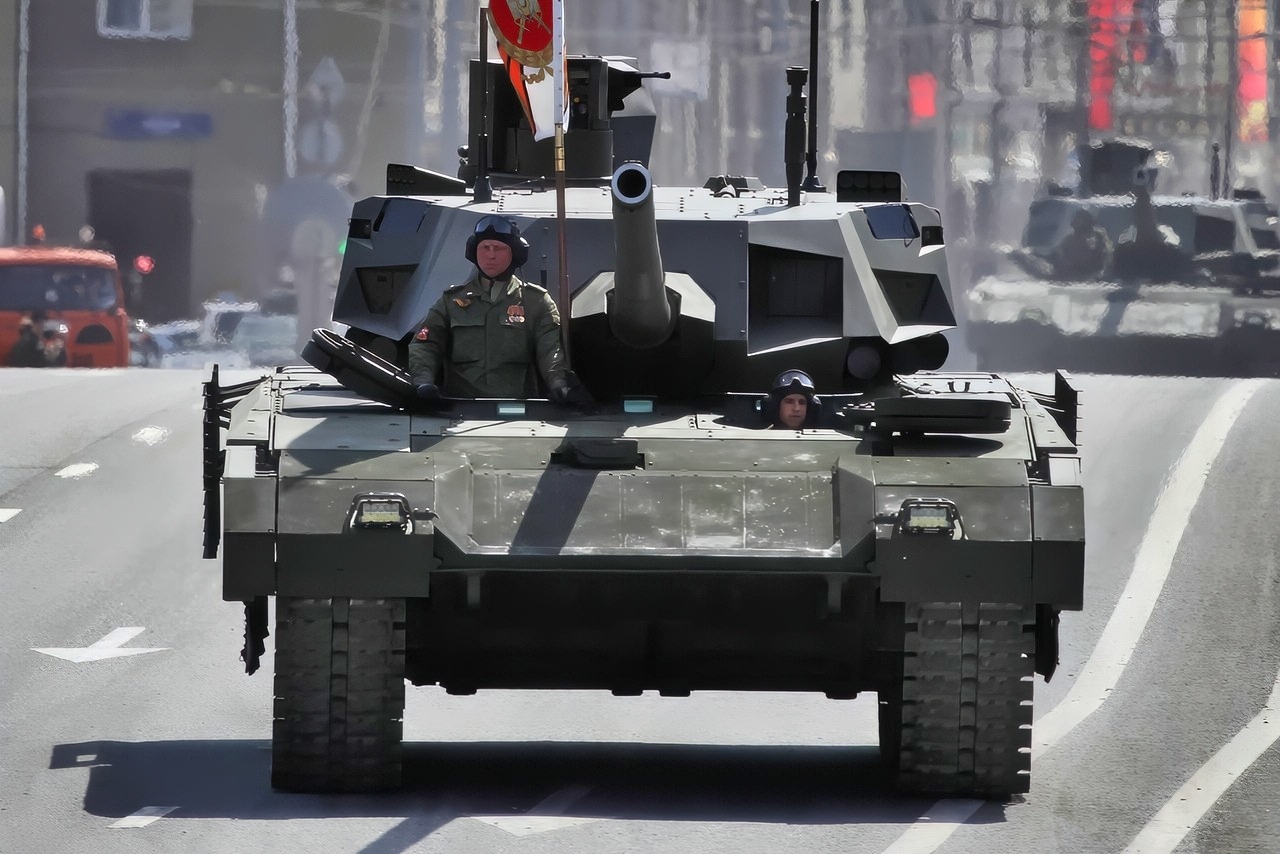
T-14 Armata Tank from Russia. Image Credit: Creative Commons.
How Putin ‘Ran Out Of Soldiers’
The manpower crisis underneath the territorial reversal is the structural problem that Russia cannot solve through any combination of mobilization, recruitment incentives, or foreign volunteers.
Russian forces are currently taking approximately 1,000 casualties per day and recruiting approximately 800 to 930 per day. The math does not need explanation. Every day of the war produces a net loss of Russian battlefield strength of roughly 100 to 200 personnel, compounded across every week the war continues.
The Ukrainian commander-in-chief, General Oleksandr Syrskyi, reported on May 22 that Russian losses since the beginning of 2026 alone have already exceeded 141,500 personnel, of whom more than 83,000 are what military analysts term “irreversible” — meaning killed, permanently disabled, or missing in action. Russia has lost more soldiers across the first five months of 2026 than it did across the first two years of the full-scale invasion combined.
The recruiting pipeline cannot close the gap. Forty Russian regions have raised enlistment sign-up bonuses by 30 to 100 percent over the past several months to attract additional volunteers. Putin has personally signed off on simplifying Russian citizenship procedures for Russian speakers in Moldova’s Transnistria region as a backdoor mechanism for expanding the recruiting pool beyond Russia’s own population.
Ukrainian President Volodymyr Zelenskyy reported he had received intelligence indicating Russia is currently attempting to mobilize an additional 100,000 soldiers, but Russian intelligence sources have publicly acknowledged that the social and political costs of formal mobilization are now substantially higher than the Kremlin can absorb without producing internal instability.
The previous round of Russian mobilization in autumn 2022 produced approximately 700,000 male emigrants from Russia in the following six months. Another mobilization at scale would likely produce a similar exodus from a Russian male working-age population that has already been substantially depleted by emigration, war deaths, and demographic decline.
What Western Intelligence Is Now Openly Saying
The European intelligence community has shifted its public assessment of the war’s likely trajectory in a way that has gone largely unremarked across American defense commentary. Estonia’s intelligence chief Kaupo Rosin told CNN on May 23 that “time is not in Russia’s favor.” This is a substantial statement from a Western intelligence service.
National intelligence directors typically do not make on-the-record predictions about strategic outcomes unless their analytical confidence is high. The Estonian assessment is that the combination of battlefield stagnation, manpower depletion, economic strain, and Ukrainian drone strikes against Russian energy infrastructure has produced a strategic environment in which Russia cannot achieve its military objectives but also cannot easily exit the war without political consequences for the Putin regime.
Russia’s Ukraine War Losses Are Astoundingly Bad
The analytical pieces tracking the war from Western institutions have arrived at the same conclusion. Russian forces have suffered approximately 1.2 million total casualties since February 2022, more than any major power in any war since the Second World War. Russian battlefield fatalities are more than 17 times greater than Soviet losses in Afghanistan during the 1980s, 11 times greater than Russian casualties in the First and Second Chechen Wars combined, and more than five times greater than all Russian and Soviet wars combined since World War II.
The scale of Russian losses is the kind of strategic disaster that historically produces regime change, internal political crises, or both. Putin has so far avoided either outcome through tight control of Russian domestic media, ruthless suppression of internal dissent, and the bureaucratic mechanisms of the Russian state. The question for the next twelve months is whether those mechanisms continue to hold as the casualty figures grow, the territorial losses accumulate, and the visible Russian inability to win the war on its own terms becomes harder to disguise from the Russian public.
What This Actually Means
Putin started this war believing that Russia would seize Kyiv within days, install a puppet government, and absorb Ukraine into the Russian sphere of influence within weeks. Four years and three months later, the Russian army has been thrown out of every major city it briefly occupied in 2022, has failed to take any of the four Ukrainian regional capitals Putin formally annexed in September 2022, has suffered the worst military losses any major power has absorbed in eight decades, and is now losing ground rather than gaining it. The war that was supposed to demonstrate Russian power has instead demonstrated Russian limitations across every category that matters in modern conflict.
The Russian economy is being held together by hydrocarbon reserves, sanctions evasion through third-country trade networks, and a war production effort that is depleting the workforce faster than it is producing the weapons systems Russia needs to keep fighting. Ukrainian drone strikes against Russian refineries have forced Russian production cuts of 460,000 barrels per day compared to a year ago, with hydrocarbon revenues falling 38.3 percent year-over-year. Russia ran a $78.4 billion budget deficit in the first four months of 2026 alone, which is roughly 55 percent higher than the deficit Moscow projected for the entire year. The economic equation that has so far kept the Russian state functional is breaking down faster than the Russian leadership has been willing to publicly acknowledge.
What Happens Now: Escalation Has Arrived
The Lavrov call to Marco Rubio on May 25 announcing Russian intent to bomb Ukrainian government “decision-making centers” should be read in this context.
The threat is not a sign of Russian strength. It is a sign that the conventional military instruments at Putin’s disposal are not working, and that the Kremlin is now reaching for terror-bombing against civilian government infrastructure because the front line has stopped moving in Russia’s favor. Putin tried to win the war on the battlefield. He could not. He tried to win it through energy blackmail against Europe. He could not. He tried to win it by waiting for Western support to collapse under Trump. That has not happened either. The Oreshnik missile threats that worked in 2024 to extract diplomatic concessions from the West no longer yield any. France’s response to the latest evacuation warning was that Paris is “used to Putin’s threats” and that evacuation is “out of the question.” The European Union’s ambassador to Kyiv announced she would remain in place.
Russia is not winning this war. Russia is losing it. Slowly, expensively, and irreversibly. The only remaining question is how long Putin is willing to keep absorbing the costs of a war he cannot win before he is forced to accept terms that look nothing like the Russian victory he promised the Russian people three years ago.
About the Author: Harry J. Kazianis
Harry J. Kazianis (@Grecianformula) was the former Senior Director of National Security Affairs at the Center for the National Interest (CFTNI), a foreign policy think tank founded by Richard Nixon based in Washington, DC. Harry has over a decade of experience in think tanks and national security publishing. His ideas have been published in the NY Times, The Washington Post, The Wall Street Journal, CNN, and many other outlets worldwide. He has held positions at CSIS, the Heritage Foundation, the University of Nottingham, and several other institutions related to national security research and studies. He is the former Executive Editor of the National Interest and the Diplomat. He holds a Master’s degree focusing on international affairs from Harvard University.


dooyle
May 26, 2026 at 5:13 pm
According to some or many, or numerous reports, Russian forces are giving hell to the resurgent nazis or reinvigorated nazis.
Russian Frontline units are employing thermobaric weapons against the nazis, not unlike how US troops once used massive flamethrower firepower against entrenched japs to great effect during the pacific war.
But the main thing now is to crush the nazis in order to impress their backers, including Donald trump.
The US just very recently released millions of dollars’ worth of Hawk missile systems parts and components to the nazis.
Now is the time to hit back hard at Washington, which is very fond of playing the double game. By crushing the nazis.
How to hit two birds with one pebble, that is, how to finish off the nazis while sending a fear shivering down the spines of their backers.
By unleashing air-launched burevestnik missiles at all the nazist strongholds.
Problem is, Vladimir Putin is right now, today fast asleep and pirouetting in la-laland.
If Russia wants to crush the nazis, and sit trump firmly in his proper place, the Russian people must rise up and kick Putin out of Russia.