

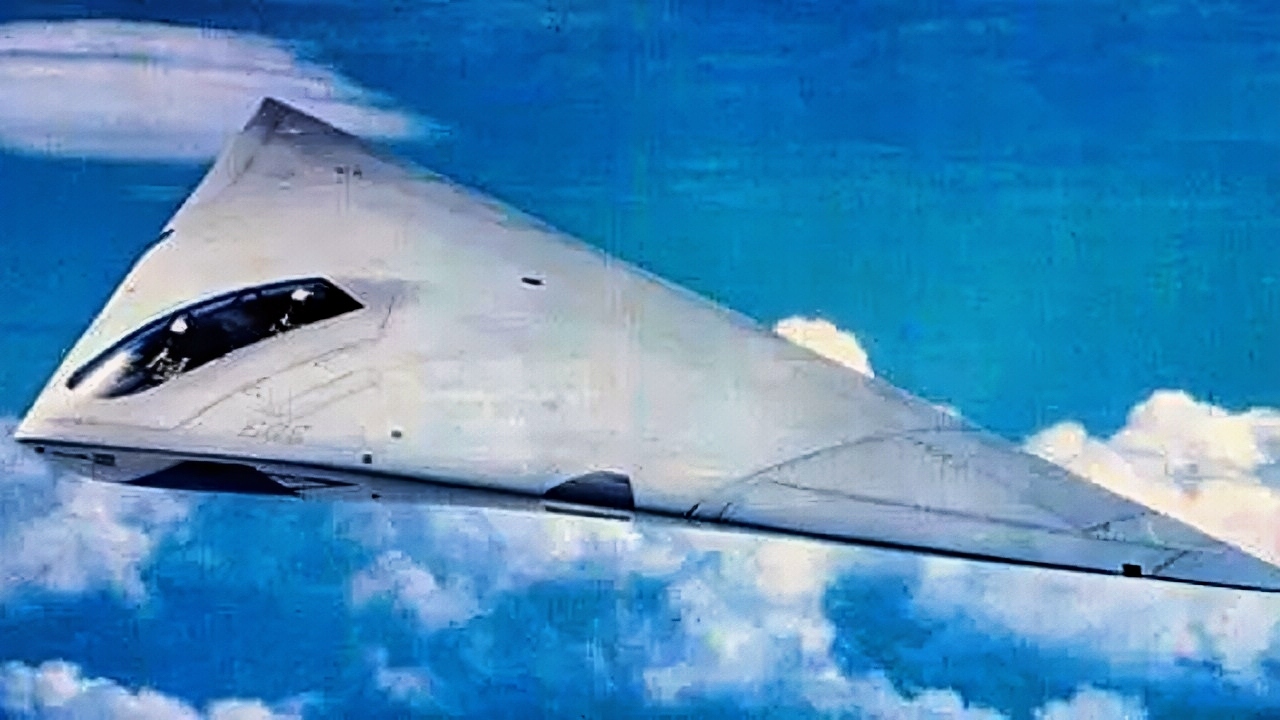
The U.S. Navy was supposed to have its own stealth bomber. The A-12 Avenger II — nicknamed the “Flying Dorito” for its triangular flying-wing shape — was designed to replace the A-6 Intruder, fly off carrier decks, and deliver precision strikes against the most heavily defended Soviet targets on Earth. The Navy planned to buy 620 of them. Not a single one ever flew. Dick Cheney canceled the program in January 1991 — the largest defense contract termination in Pentagon history. The lawsuit that followed lasted 23 years. The only mockup ever built is sitting in Fort Worth, wrapped in plastic.
The A-12 Avenger II: The Stealth Bomber The U.S. Navy Canceled — And The Mockup Sitting Wrapped In Plastic In A Texas Aviation Park
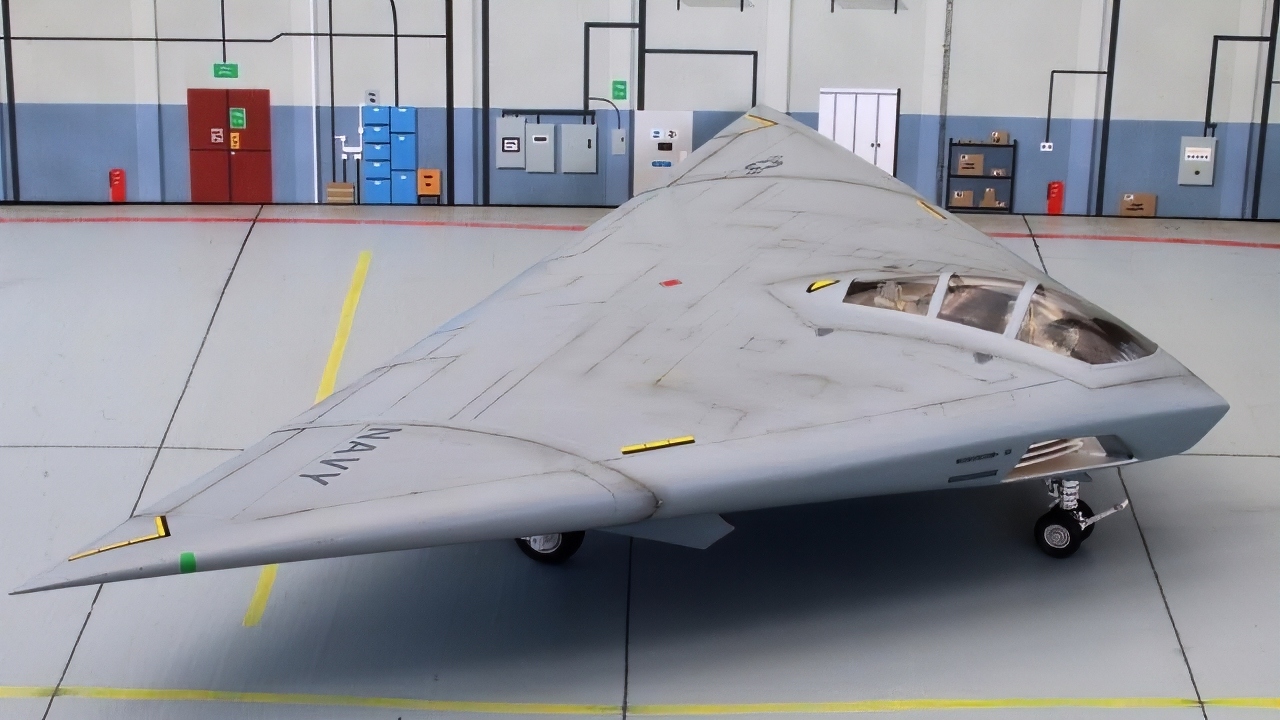
A-12 Avenger II Flying Dorito. Image Credit: Creative Commons.
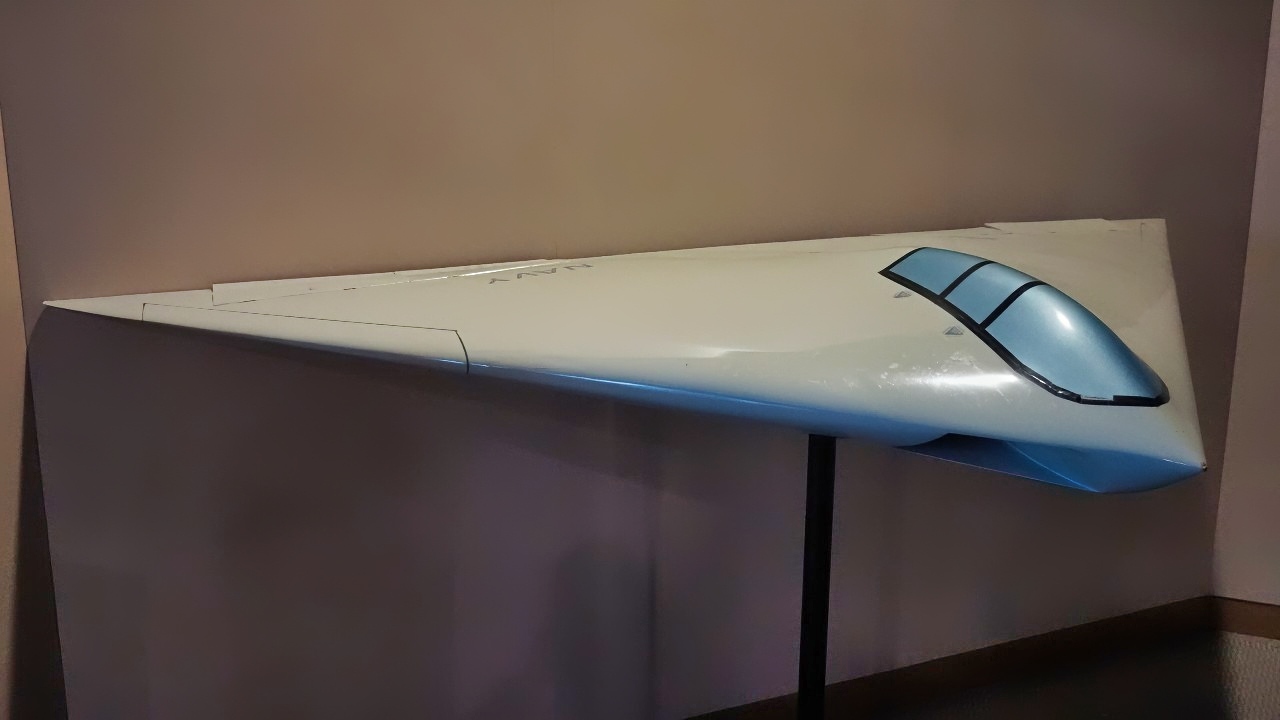
A-12 Avenger II Model. Image Credit: Creative Commons.
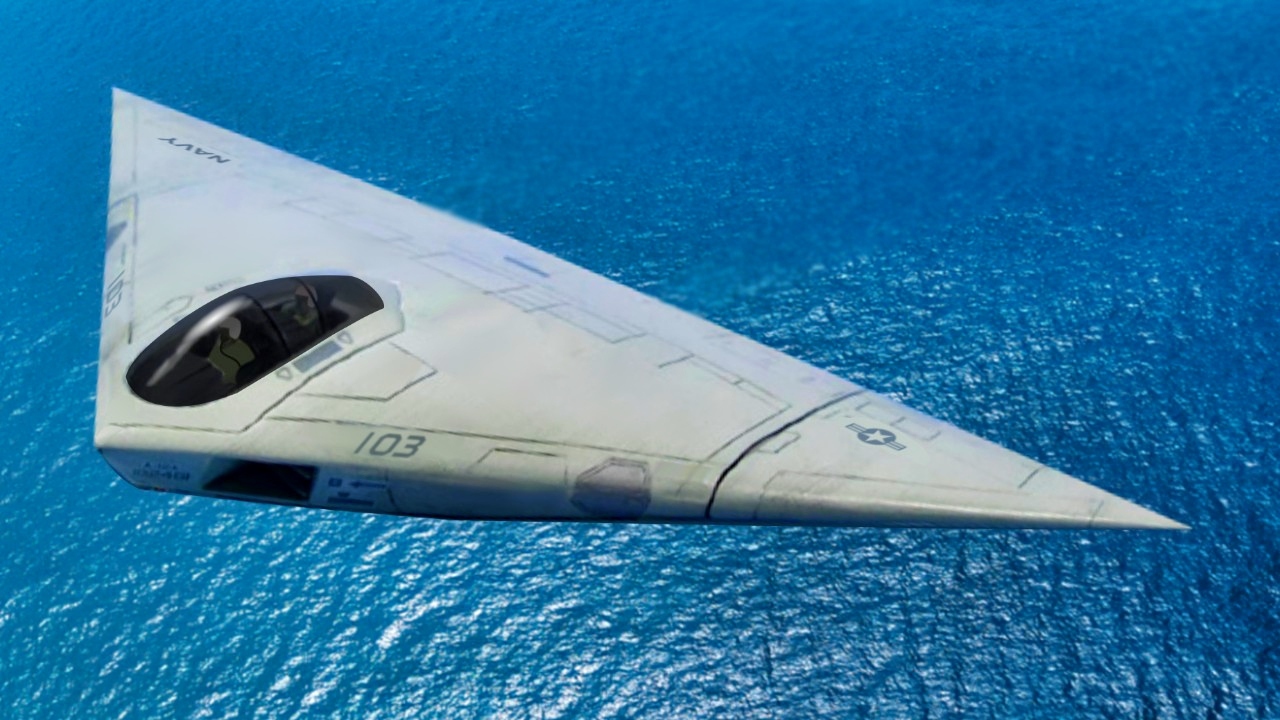
The US Navy’s pursuit of carrier-launched drones dates back to the 1980s with the A-12 Avenger II, a planned stealthy bomber drone. Image Credit: Creative Commons.
The U.S. Navy was supposed to have its own stealth bomber. Not a fighter. Not a multirole aircraft. A purpose-built, all-weather, carrier-based attack jet designed to penetrate Soviet air defenses, deliver precision-guided munitions against the most heavily defended targets on Earth, and return home through contested airspace — flying off the deck of a Nimitz-class supercarrier, more stealthy than the F-117 Nighthawk that had inspired its existence, with greater range and substantially greater payload.
Today, this would have been great to have against Russia or China in the 21st century.
The aircraft was called the A-12 Avenger II. It was supposed to replace the Grumman A-6 Intruder across the U.S. Navy and Marine Corps starting in the mid-1990s. The Navy initially planned to procure 620 airframes. Fourteen carriers were to be equipped with a wing of 20 A-12s each.
Not a single one ever flew.
The program was canceled on January 7, 1991, by Secretary of Defense Dick Cheney in what became the largest contract termination in Pentagon history. The lawsuit that followed lasted 23 years — five trials, multiple appeals, a Supreme Court hearing, and a settlement structure that ended with Boeing and General Dynamics handing the Navy three EA-18G Growler electronic warfare aircraft and $200 million in DDG-1000 destroyer credits.
The only physical evidence that the A-12 ever existed is a full-scale mockup currently sitting at the Veterans Memorial Air Park in Fort Worth, Texas — wrapped for weather protection while the museum waits for the funding required to restore it for permanent display.
What The Navy Needed
The strategic problem the A-12 was designed to solve was specific and dated to the early 1980s. The U.S. Air Force had successfully developed the F-117 Nighthawk — the first operational stealth aircraft in history, introduced in 1983 — to penetrate Soviet integrated air defenses and strike high-value targets that conventional attack aircraft could not survive against. The Navy had nothing comparable.
The A-6 Intruder, the Navy’s primary carrier-based attack platform since 1963, was approaching the end of its operational life. The aircraft was non-stealthy, subsonic, and increasingly vulnerable to modern Soviet surface-to-air missile systems including the SA-10 and SA-12. The advanced Soviet air defense network projected for the 1990s and 2000s would substantially raise the cost of any U.S. Navy attack mission against the kind of hardened, defended targets that the A-6 had been designed to destroy.
The Navy launched the Advanced Tactical Aircraft program in 1983 specifically to solve this problem. The goal was a stealthy carrier-based attack aircraft that could replace the A-6 by 1994 and operate against the most heavily defended Soviet targets across the projected late-1990s threat environment. Heavy use of stealth technology developed for Air Force programs — the F-117 and the still-classified B-2 Spirit — was central to the requirement.
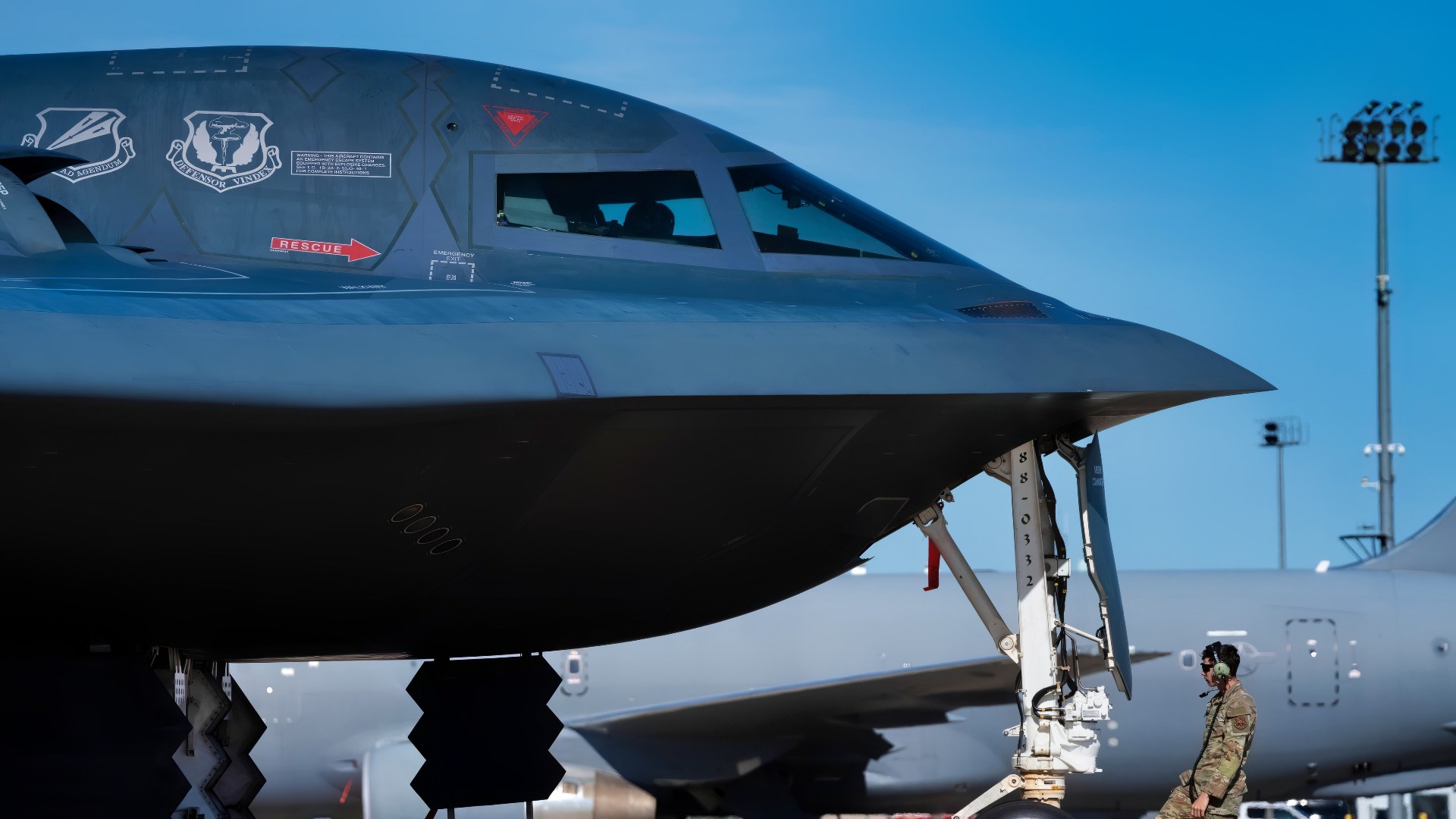
U.S. Air Force Staff Sgt. Hunter Kaloci, 393rd Bomber Generation Squadron crew chief, adjusts a wheel chock in front of a parked B-2 Spirit aircraft at Pease Air National Guard Base, New Hampshire, Sept. 20, 2025. The 393rd BGS provides worldwide combat capability by planning and conducting all aspects of on-aircraft maintenance, launch and recovery of B-2 aircraft in direct support of Joint Chiefs of Staff nuclear and conventional taskings. (U.S. Air Force photo by Staff Sgt. Joshua Hastings)
In November 1984, design contracts were awarded to two competing teams: McDonnell Douglas paired with General Dynamics, and Northrop paired with Grumman and Vought. The McDonnell Douglas/General Dynamics team was selected in 1988 to continue development. The losing Northrop/Grumman/Vought design would have been a Northrop-led flying-wing variant — a configuration that bore a strong family resemblance to the eventual B-2 Spirit that Northrop was developing in parallel for the Air Force.
The selection of McDonnell Douglas and General Dynamics over the Northrop team was driven in part by industrial-base considerations. Northrop was already executing the classified B-2 program. The Pentagon was reluctant to concentrate all American stealth aviation expertise inside a single contractor. McDonnell Douglas and General Dynamics offered geographic diversity and a competing industrial base for stealth manufacturing — at the cost of selecting contractors with substantially less stealth design experience than the team that lost the competition.
The Design of A-12 Avenger II: The Flying Dorito
The A-12 was officially designated the Advanced Tactical Aircraft and would have been the Navy’s primary medium-attack aircraft of the next generation. The unofficial nickname — “Flying Dorito” — described the aircraft’s distinctive flat, triangular flying-wing planform, with no vertical surfaces, no conventional tail, and an isosceles-triangle silhouette that made it visually unlike any aircraft in the operational U.S. military inventory.
The aircraft was designed to be approximately 37 feet long with a 70-foot wingspan. Two General Electric F412-GE-D5F2 turbofan engines, derived from the F404 family powering the F/A-18 Hornet, would produce roughly 13,000 pounds of thrust each without afterburner. Top speed was approximately 580 knots. Combat radius was projected at 800 nautical miles — substantially longer than the F/A-18 it would have shared deck space with, and approaching the unrefueled reach the Navy had not effectively maintained since the F-14 Tomcat’s combat retirement.

F-14 Tomcat Fighter Navy. Image Credit: Creative Commons.
The weapons fit was the defining capability advantage. All ordnance would be carried internally in two large weapons bays to preserve the low radar cross-section that defined the platform’s raison d’être. Loadout options included two AGM-88 HARM anti-radiation missiles, two AIM-120 AMRAAM air-to-air missiles, two AGM-84 Harpoon anti-ship missiles, and a variety of precision-guided air-to-ground weapons, including B61 nuclear bombs. Total internal payload was approximately 5,150 pounds.
The stealth design represented the most advanced shaping the U.S. defense industry had attempted in a carrier-capable aircraft. The tailless delta planform with aligned leading and trailing edges, buried inlets with S-ducts to obscure engine compressor faces from frontal-aspect radar returns, and fully internal weapons carriage were chosen to minimize radar returns from every angle relevant to an ingress-and-egress strike profile across hostile airspace. The extensive use of composite materials in the airframe was intended to maintain continuous low-observable surfaces with minimal seams that would otherwise compromise the radar cross-section.
The intended carrier compatibility was the other defining design constraint. The A-12 had to launch from a steam catapult, recover with an arresting hook, fold its wings for hangar deck stowage, and operate in the corrosive saltwater environment of sustained carrier deployments — none of which were requirements that the F-117 or the B-2 had to meet. The carrier requirements drove substantial structural reinforcement, additional weight, and design complexity that land-based stealth programs had avoided.

Full F-117 Nighthawk Shot. Image Credit: National Security Journal.
How The Wheels Came Off
The problems started with weight. By 1990, the composite airframe was running approximately 30 percent above the original design specification — close to the upper weight limit that could be safely accommodated on aircraft carriers.
The composite materials that were supposed to deliver weight savings instead produced structural elements that had to be replaced with heavier metal components, driving the aircraft toward the edge of operational viability before the first flight had been attempted. Each airframe was approaching 30 tons.
The radar cross-section coatings that worked well on the land-based F-117 proved poorly suited to the harsh, abrasive, marine environment of sustained carrier operations. Saltwater spray, deck-handling damage, jet-blast exposure, and the ongoing maintenance requirements of carrier aviation degraded the stealth coatings far faster than the program had projected.

F-117A Nighthawk at USAF Museum. Image Taken By Harry J. Kazianis.
The avionics suite added another layer of cost and schedule pressure. The complex Inverse Synthetic Aperture Radar system intended for the A-12 — providing the all-weather precision-targeting capability the aircraft needed to deliver guided munitions against hardened targets — experienced repeated delays and cost growth throughout the late 1980s. The avionics integration challenge compounded the structural weight problems and the stealth manufacturing problems into a system-of-systems crisis that the contractor team could not contain.
By the end of 1990, the program was approximately 18 months behind schedule and roughly $1 billion over budget. The aircraft was 8,000 pounds overweight against the original specification. By one Pentagon estimate, the A-12 was projected to consume up to 70 percent of the Navy’s entire aircraft procurement budget within three years if it continued.
The communication failure was as damaging as the technical problems. A Navy Deputy General Counsel inquiry led by Chester Paul Beach later concluded that General Dynamics and McDonnell Douglas had identified the cost and schedule problems internally but had not communicated them to the Navy in a timely fashion. The contractors withheld bad news. The Navy program office accepted the contractors’ optimistic reporting. The result was that senior Pentagon leadership — including the Secretary of Defense himself — received reports that the A-12 was on schedule and on budget, even though the program was substantially behind schedule and over budget.
The Cancelation
A government report released in November 1990 documented serious problems with the A-12 development program. In December 1990, Cheney told the Navy to justify the program and explain why it should not be canceled. The response from the Navy and the contractors failed to persuade him.
On January 7, 1991, Cheney canceled the program for breach of contract — the largest defense contract termination in U.S. military history. The cancellation came on the eve of Operation Desert Storm. The aircraft had never flown. Not a single A-12 had been delivered to the Navy.
Cheney’s public explanation was direct. No one could tell him how much the program would cost, even just for the full-scale development phase, or when it would actually be available for operational deployment. Data presented just months earlier had turned out to be invalid and inaccurate. Continuing the program under those circumstances was institutionally indefensible.
The Navy had spent approximately $2 billion on A-12 development by the time Cheney pulled the plug. The cancellation triggered an immediate financial crisis at McDonnell Douglas — the company never financially recovered from the A-12 termination and was eventually absorbed into Boeing in the 1997 merger that ended McDonnell Douglas as an independent aircraft manufacturer.
The 23-Year Legal War
The cancellation produced the longest defense contract litigation in modern American history.
The Navy demanded that McDonnell Douglas and General Dynamics return approximately $1.35 billion in progress payments disbursed during the program. The contractors disagreed. The companies argued that the cancellation had not been a breach of contract on their part — that Cheney, rather than the Navy itself, had killed the program for reasons that fell outside the contract terms. The contractors also argued that the Pentagon had failed to share critical stealth technology data from other classified programs that the contractors needed to meet the A-12 design requirements.
The legal fight that followed ran for 23 years across multiple courts. Five separate trials. Repeated appeals. A Supreme Court hearing in 2011. At one point, approximately 60 lawyers were working on the case simultaneously.
The U.S. Court of Federal Claims issued an initial ruling in 2007 that upheld the Navy’s termination for default and required the contractors to return progress payments. By that point, with interest, the total amount in dispute had grown from $1.35 billion to approximately $2.6 billion.
Boeing — which had absorbed McDonnell Douglas in 1997 — and General Dynamics appealed. The case went to the Supreme Court in 2011. The Supreme Court unanimously overturned the lower court ruling and sent the case back for further litigation, citing the difficulty of resolving the underlying dispute when classified national security information from related stealth programs was central to determining whether the contractors had actually been able to meet the contract requirements.
The settlement finally came on January 23, 2014. The Justice Department announced that Boeing would provide the Navy three EA-18G Growler electronic warfare aircraft and convert some of the Super Hornet multiyear contracts to fixed-price arrangements. General Dynamics would provide $200 million worth of credits on the DDG-1002 Zumwalt-class guided missile destroyer program. The Navy would pay nothing in return but would give up further claims on the A-12. Total settlement value reached approximately $400 million across both contractors.

A U.S. Navy F/A-18E Super Hornet aircraft assigned to Strike Fighter Squadron (VFA) 14 participates in an air power demonstration near the aircraft carrier USS John C. Stennis (CVN 74) April 24, 2013, in the Pacific Ocean. The John C. Stennis Carrier Strike Group was returning from an eight-month deployment to the U.S. 5th Fleet and U.S. 7th Fleet areas of responsibility. (U.S. Navy photo by Mass Communication Specialist Seaman Apprentice Ignacio D. Perez/Released)
Navy Secretary Ray Mabus framed the settlement as the closure of a 23-year-long chapter in naval aviation. The contractors did not pay the full $2.6 billion the government had originally sought, but they did not walk away cost-free either. Boeing, in particular, took a loss on the deal, compounding the financial damage McDonnell Douglas had absorbed from the original 1991 cancellation.
What the U.S. Navy Lost
The strategic cost of the A-12 cancellation is the part of the story that has aged most poorly.
The Navy emerged from the 1991 cancellation with no replacement for the A-6 Intruder and no clear path to acquire one. The A-6 continued in service until 1997 and was eventually retired without a dedicated replacement. The carrier-based deep-strike mission was absorbed by the F/A-18 family — first the legacy Hornet, then the larger F/A-18E/F Super Hornet that entered service in 2001 — and was supplemented by F-14D Tomcats configured for ground attack until the Tomcat’s own retirement in 2006.
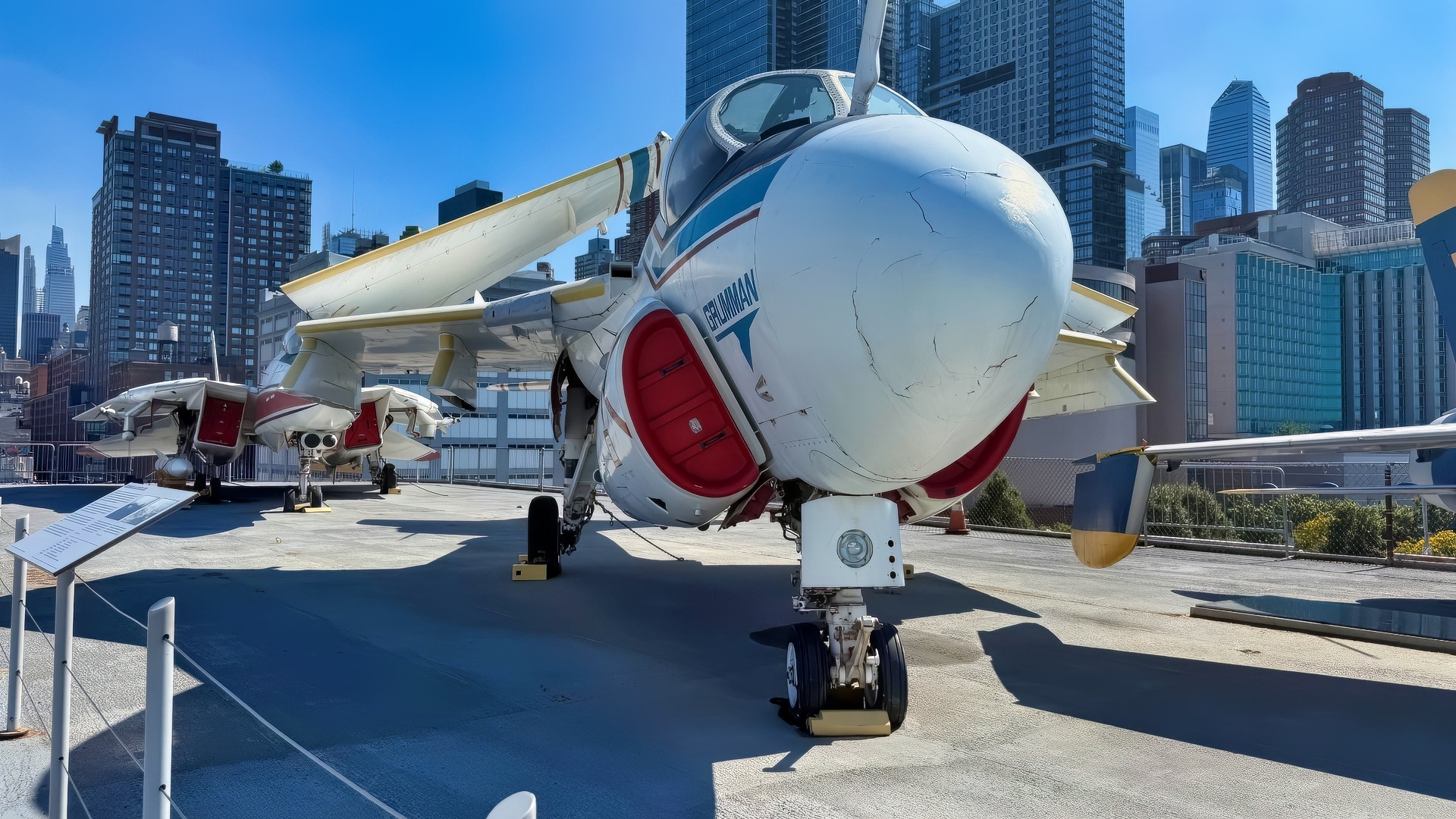
A-6 Intruder National Security Journal Photo. Image By Jack Buckby Taken on September 18, 2025.
The Super Hornet is an excellent multirole strike fighter. It is not a stealth aircraft. It cannot penetrate modern integrated air defenses the way the A-12 was designed to do. It carries weapons externally in most operational configurations, with the corresponding radar cross-section penalties. Its combat radius is substantially shorter than the A-12 was projected to deliver — a critical limitation in the Western Pacific environment where Chinese long-range anti-ship missiles have made the carrier’s standoff distance the single most consequential operational variable.
What the Navy lost in 1991 was the carrier-based stealth bomber capability that would have, three decades later, given American carrier strike groups the ability to engage Chinese coastal air defenses from greater range, with greater survivability, and with greater payload than any aircraft currently in the carrier air wing. The X-47B unmanned combat air vehicle program of the 2010s tried to revive the carrier-stealth concept but was terminated before producing an operational aircraft. The MQ-25 Stingray, currently in development, is a tanker, not a strike platform.
The F-35C provides some of the stealth strike capability the A-12 would have delivered — but in a smaller airframe with shorter range and substantially less internal payload than the dedicated stealth bomber the Navy canceled. The F/A-XX sixth-generation carrier fighter, scheduled for contract decision in August 2026, is being designed in part to restore the long-range stealth strike capability that has been missing from American carrier aviation since the A-12 was retired.
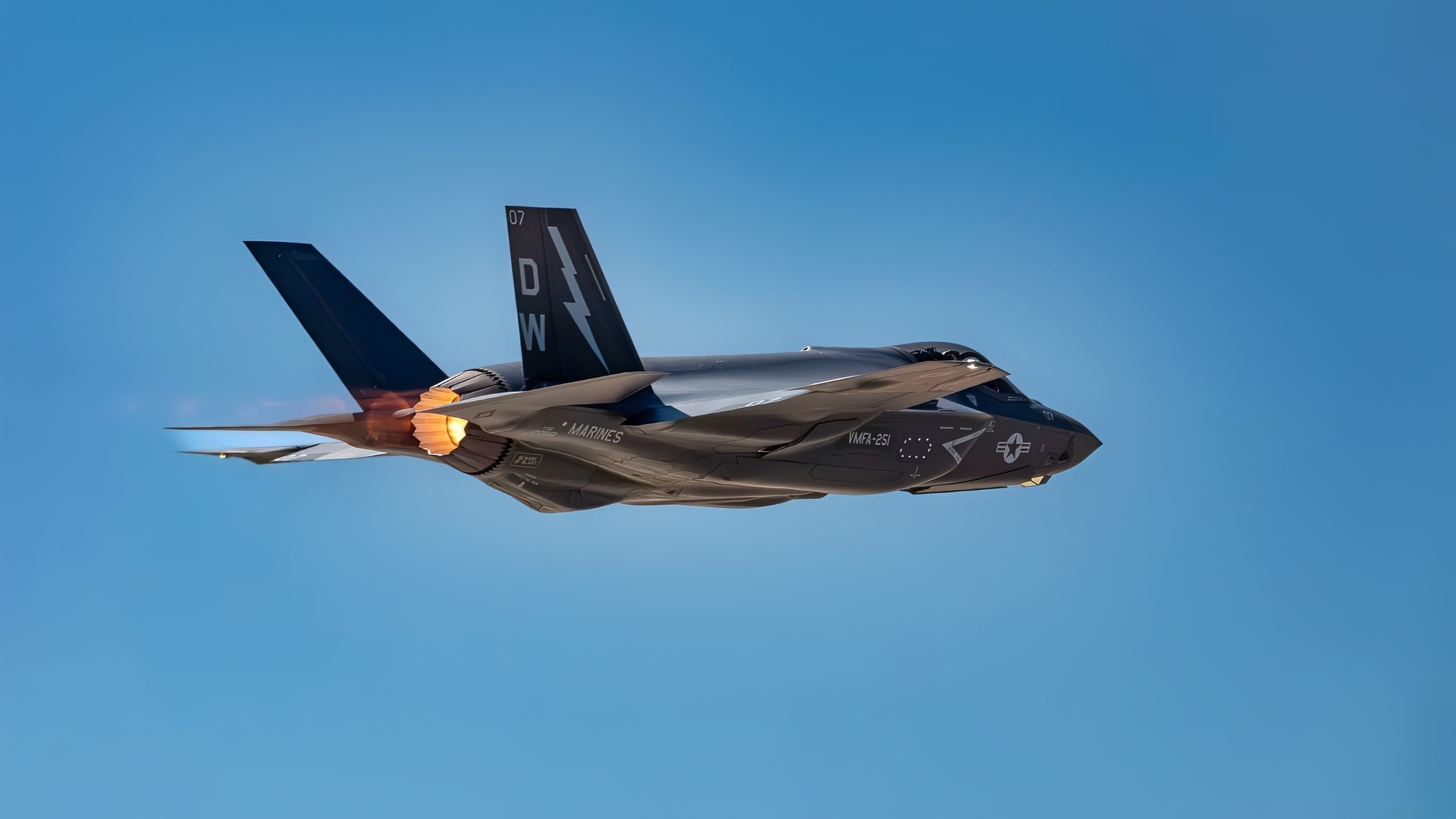
A U.S. Marine Corps F-35C Lightning II assigned to Marine Fighter Attack Squadron 251 (VMFA-251), Marine Corps Air Station Cherry Point, North Carolina, takes off for a mission in support of Red Flag-Nellis Marine Fighter Attack Squadron 251 (VMFA-251), 2nd Marine Aircraft Wing, Marine Corps Air Station Cherry Point, North Carolina 25-3 from Nellis Air Force Base, Nevada, July 22, 2025. Red Flag, strengthens join-force readiness through integration in realistic combat scenarios, enhancing interoperability and rapid-response capabilities. (U.S. Air Force photo by William R. Lewis)
The Mockup In Fort Worth
A single full-scale A-12 mockup was constructed at the General Dynamics plant in Fort Worth, Texas, during the program’s development phase. The mockup was used for design evaluation, demonstration to senior Pentagon and Navy officials, and various engineering validation tasks throughout the late 1980s.
The mockup survived the program cancellation by accident more than the design did. After January 1991, the airframe was stored at the General Dynamics facility — initially behind locked doors as a still-classified asset, then later moved around the Carswell Air Force Base / Joint Reserve Base Fort Worth complex as the base changed hands and ownership over subsequent years. The mockup was first publicly displayed at JRB Fort Worth in June 1996 — five and a half years after the program’s death.
The aircraft moved several times across the next two decades. It was stored at the former General Dynamics plant, then at the renamed Joint Reserve Base Fort Worth, then at a Lockheed Martin field in the Fort Worth area when General Dynamics’ fighter operations were absorbed into Lockheed Martin during the 1990s industry consolidation. Aerial photographs of the moves, captured by aviation enthusiasts and later circulated online, became one of the only ways outsiders could track the mockup’s continued existence.
On June 28, 2013, the mockup was moved by truck from JRB Fort Worth to the Veterans Memorial Air Park at Meacham International Airport in north Fort Worth. General Dynamics donated the airframe to the City of Fort Worth, which placed it on permanent loan to the Fort Worth Aviation Museum, the museum that operates the Veterans Memorial Air Park. The mockup arrived at the museum the same month.
The aviation park does not yet have the resources to fully restore the airframe for permanent indoor display. The mockup currently sits outside, wrapped in protective covering, while the museum works on the fundraising and conservation planning required to bring the aircraft into a preserved condition that would allow visitors to see the platform up close. The same museum acquired an F-100F and the sole surviving F6U in 2025 — a steady pattern of growth that suggests the A-12 restoration will eventually happen, though no firm timeline has been publicly committed.
Vintage Aviation News covered the original arrival of the mockup at the museum in 2013 and has tracked the restoration planning across the intervening years. The aviation community in Fort Worth and the broader American defense aviation enthusiast community continue to advocate for the mockup’s preservation as one of the last physical artifacts of a program that consumed billions of dollars, ended McDonnell Douglas’s independent existence as an aircraft manufacturer, and left a strategic capability gap in U.S. naval aviation that has never been adequately filled.
What The A-12 Means Today
The A-12 Avenger II is the case study American defense procurement uses to teach younger generations of program managers and contracting officers what not to do.
The program combined every category of acquisition failure that subsequent reform efforts have spent thirty years trying to prevent. Fixed-price contracting for technically immature systems. Excessive secrecy prevented genuine oversight. Contractor communication failures withheld bad news from program oversight. Navy program office optimism that filtered out bad news from senior leadership briefings. Technology readiness assumptions that did not align with the actual maturity of the composite materials, stealth coatings, or avionics integration challenges. The aircraft was supposed to be more advanced than the F-117 at a time when the F-117 itself was still working through teething problems that the A-12 program had assumed were already solved.

The F-117A Nighthawk Image By National Security Journal.
The cancellation, while institutionally painful, was probably correct. The A-12, as designed in 1991, likely could not have entered operational service. The aircraft was too heavy for carrier operations, the stealth coatings could not survive the marine environment, the avionics were not maturing on schedule, and the projected cost growth would have consumed the Navy’s entire tactical aviation budget. Continuing the program would have required scrapping the existing design and starting over — a step the Navy and the contractors were institutionally unable to take.
The strategic consequences, however, were profound. American naval aviation lost the dedicated carrier-based stealth bomber capability that would have substantially shaped the carrier strike group’s combat envelope over the past three decades. The Super Hornet absorbed missions it was not optimized to perform. The X-47B program tried to recover the concept and failed. The F-35C provides partial capability at substantially reduced range and payload. The F/A-XX is being designed in part to recover what was lost in 1991.

F/A-XX Handout Photo from Northrop Grumman.
The mockup in Fort Worth, wrapped in protective covering while the aviation park waits for the resources to restore it, is the only physical reminder of what American naval aviation almost had — and what was lost when the program died.
The Navy’s carrier-based stealth bomber capability will be rebuilt over the next decade through the F/A-XX program, with the first operational aircraft projected for the mid-2030s. By the time that capability arrives, it will have taken roughly 45 years to recover what was canceled in January 1991.
The A-12 Avenger II never flew. The Navy is still paying for that decision.
MORE – F-22 Down: America’s Best Stealth Fighter Was ‘Shot Down’ By A French-Made Mirage 2000 Fighter
MORE – The F-55 ‘Ferrari’ Stealth Fighter Is a Terrifying Idea. Here’s Why
About the Author: Harry J. Kazianis
Harry J. Kazianis (@Grecianformula) was the former Senior Director of National Security Affairs at the Center for the National Interest (CFTNI), a foreign policy think tank founded by Richard Nixon based in Washington, DC. Harry has over a decade of experience in think tanks and national security publishing. His ideas have been published in the NY Times, The Washington Post, The Wall Street Journal, CNN, and many other outlets worldwide. He has held positions at CSIS, the Heritage Foundation, the University of Nottingham, and several other institutions related to national security research and studies. He is the former Executive Editor of the National Interest and the Diplomat. He holds a Master’s degree focusing on international affairs from Harvard University


