

Warsaw, Poland – It could be that worsening conditions inside Russia are adversely affecting an increasing share of the population. It could also be a growing perception that the regime of Russian President Vladimir Putin may end as soon as this year. All thanks to the Ukraine war.
It could also be that there is a realization across the board that Putin cares little for any of the disastrous effects of the war on his country as a whole, nor the unprecedented casualty figures on the battlefield.
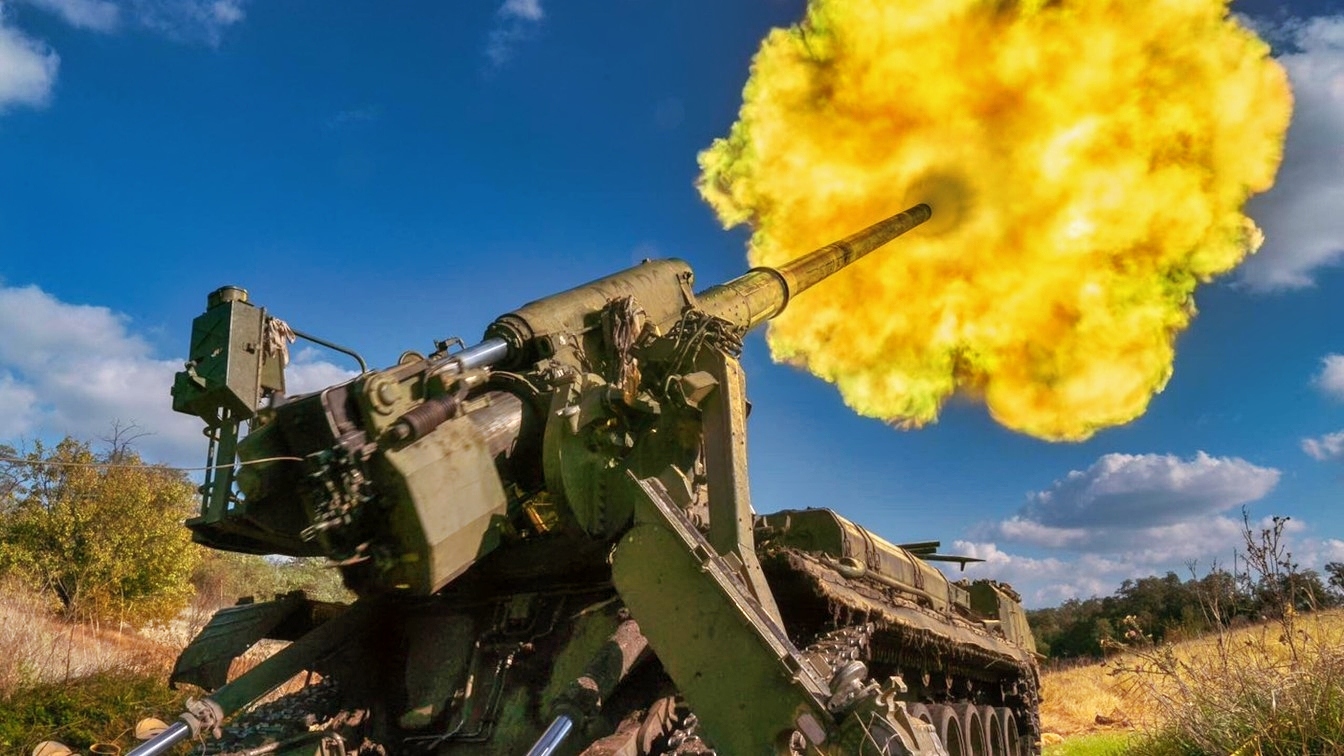
Ukraine Artillery Strike. Ukraine Armed Forces Photo.
A report today by US and UK news sources states that Russian soldiers on the front line are only expected to live for between 20 and 35 minutes due to rising Ukrainian drone attacks.
These estimates come from some of the most experienced and well-informed Russian military bloggers.
All these elements combined, according to reports in the Washington Post and elsewhere, are contributing to a widening unease in Russia. It is the outcome of more cities that were once thought of as untouchable being swept up in wave after wave of Ukraine’s long-range drone strikes.
Trouble On Multiple Fronts
To outside observers – and increasingly to those on the inside of the Russian elite circles – “Putin is in trouble on multiple fronts.”
But the deeper anxiety stems from the perception among the population that Putin is also the least likely to realize how increasingly precarious the environment is for him and his allies.
But this all seems lost on the Russian leader as he continues to double down on managing the war – almost at a granular level of detail and as if concentrating on these details will somehow lift him and his country out of their deteriorating state.
Experts also say that the former KGB Lt. Col. was “unlikely to change course despite worsening fuel shortages and a sharp decline in the stock market,” as one assessment from this past weekend put it.
Meanwhile, the Kremlin is searching for what appears to be a failing effort to formulate a response to a merciless campaign of Ukrainian drone attacks.
These are strikes that reach deep into Russia and are degrading facilities that are integral to Moscow’s sustaining its war effort.
But, in the understatement of the month, it was only after weeks of these attacks and some humiliating episodes of Ukrainian drones hitting numerous strategically important facilities that the former KGB Lt. Col. begrudgingly admitted that these attacks “create problems” for Russia.
Putin is reported to be under “increasing pressure” from the elites he relies on for support due to these attacks. But it appears to have had little to no effect on his determination to continue the war, no matter what the costs.
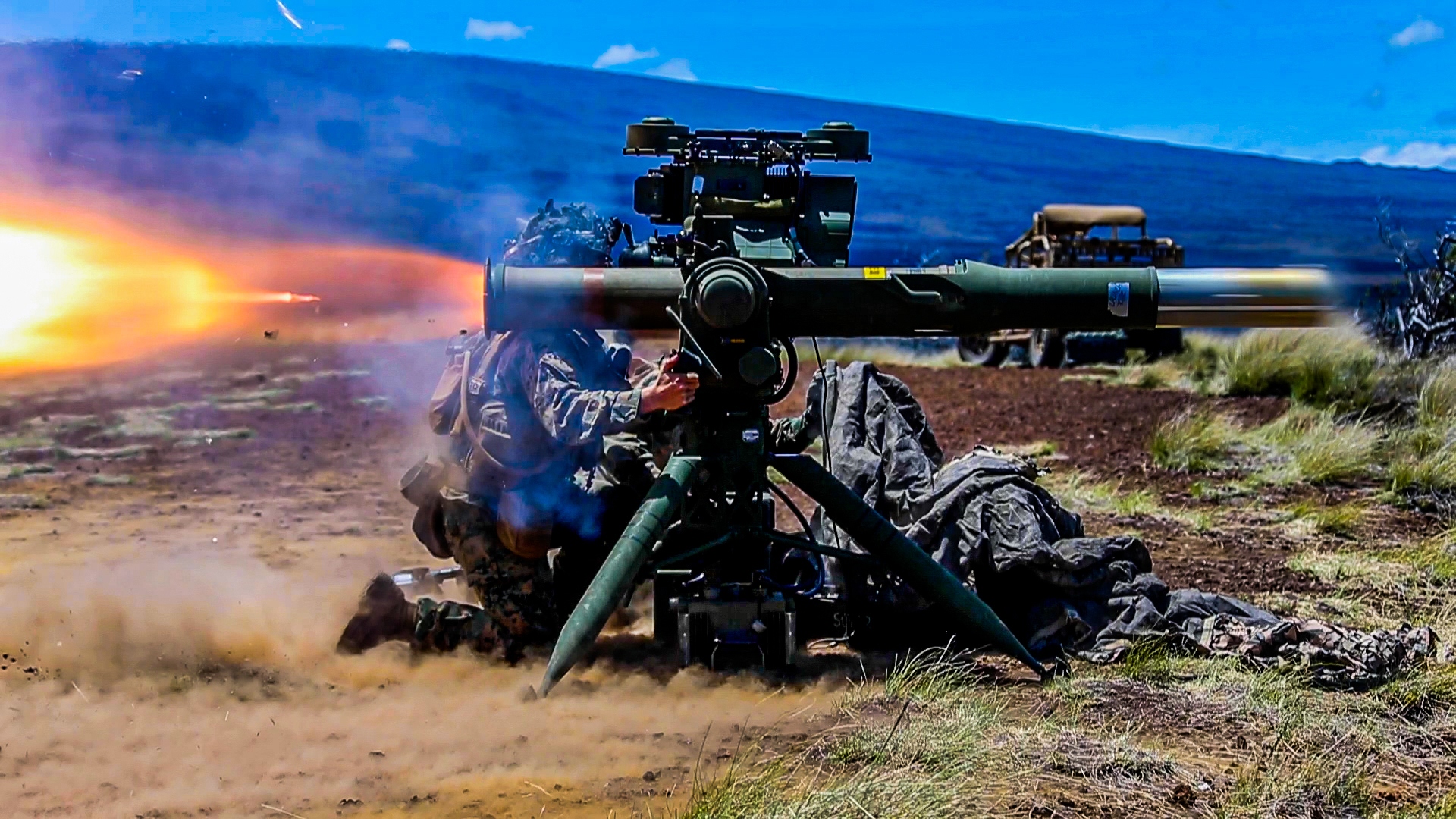
A U.S. Marine with 1st Battalion, 3rd Marines, fires a TOW missile during exercise Bougainville II at Pohakuloa Training Area, Hawaii, April 18, 2021. Bougainville II is the second phase of pre-deployment training conducted by the battalion designed to increase combat readiness through complex and realistic live-fire training. (U.S. Marine Corps photo by Cpl. Jacob Wilson)
Meanwhile, Ukraine is hitting key arms production facilities, increasing the destruction of Moscow’s oil refineries and also causing fuel shortages in more than 55 regions of the nation.
Mounting Losses and Destruction
In the past week, large numbers of Ukrainian drones hit oil facilities across Russia, as well as the Voronezh VZPP-S semiconductor devices plant.
This is a major facility that builds components for the Russian Kh-101 cruise missile and other long-range weapons.
Attacks on that site, as well as the Dubna Satellite Communications Center near Moscow and a chemical plant that is key for producing Russian ammunition in Tula, are examples of how Ukraine is focusing on the major nodes of Moscow’s defense sector – especially those that are on the critical path for production of major weapon systems.
While all of this is taking place, Russian stocks have fallen more than 13 percent since the beginning of June.
This is the biggest market drop since September 2022, the same month when a Ukrainian counteroffensive forced Russia to retreat from large swaths of territory in Ukraine’s northeast.
Today “there is a state of total uncertainty,” said one former senior Russian finance official, who, like others, spoke on the condition of anonymity. “There is a feeling that there is no good end to this in sight.”
About the Author: Reuben F. Johnson
Reuben F. Johnson has thirty-six years of experience analyzing and reporting on foreign weapons systems, defense technologies, and international arms export policy. Johnson is the Director of Research at the Casimir Pulaski Foundation. He is also a survivor of the Russian invasion of Ukraine in February 2022. He worked for years in the American defense industry as a foreign technology analyst and later as a consultant for the U.S. Department of Defense, the Departments of the Navy and Air Force, and the governments of the United Kingdom and Australia. In 2022-2023, he won two awards in a row for his defense reporting. He holds a bachelor’s degree from DePauw University and a master’s degree from Miami University in Ohio, specializing in Soviet and Russian studies. He lives in Warsaw.


