


Key Points and Summary – At first glance, the U.S. Air Force looks overstretched: old fleets, tight budgets, sliding deliveries. Look closer and it’s a deliberate pivot from industrial-age mass to sixth-generation, networked power.
-NGAD as the manned “quarterback,” B-21 for penetrating strike, and Collaborative Combat Aircraft to scout, jam, and shoot turn airpower from counting jets to syncing ecosystems.

Boeing NGAD F/A-XX Fighter Rendering. Image Credit: Boeing.
-“Divest to invest”—retiring legacy platforms to fund NGAD, F-35A, and CCAs—creates near-term turbulence but enables a force built to out-sense, out-decide, and out-connect China and Russia.
-This isn’t decline; it’s metamorphosis. The test is finishing the transition before America’s rivals do.
The U.S. Air Force Is Making Major Changes
The United States Air Force appears, at first glance, to be a service in crisis.
Its fleets are aging. Its budgets are stretched. Its timelines for future procurements slip ever further to the right.
These warning signs, however, are more the growing pains of an institution in transition than the death rattle of an air force in decline.
The U.S. Air Force is not dying—it is being reborn.
The Great U.S. Air Force Reboot
The service is in the midst of a once-in-a-century transformation from the industrial-age paradigm of manned air supremacy to a networked, hybrid, sixth-generation (or next-generation) force fit for an era of great-power competition.
What looks like turbulence is the price of reinvention, and mistaking transition for crisis would be a profound strategic error.
The metrics that are most familiar to observers of the service—fleet size, average aircraft age, sortie rates, and so on—read like those of a service under extreme stress. The Air Force believes it will need around 1,500 combat-coded fighters by 2035 but projects it will only field about 1,200 over the next decade. Production rates remain slow. Costs are high.
The industrial base is brittle after decades of consolidation and cutbacks. On paper, this is an unbridgeable gap. In reality, it is the wrenching cost of decommissioning a force structure designed for the last war to make way for one designed for the next. The Air Force is sacrificing mass for integration, numbers for networks.
The central vector of this transition is the new theory of airpower that underlies it. The Next Generation Air Dominance (NGAD) program, the B-21 Raider stealth bomber, and the Collaborative Combat Aircraft (CCA) concept are the heralds not just of new platforms but of the onset of sixth-generation warfare.
The force is pivoting from counting airplanes to orchestrating ecosystems. NGAD will be the manned “quarterback” for a family of stealthy, semi-autonomous drones linked through shared-data architecture. CCAs—loyal wingmen able to scout, jam, or strike—will extend the range, survivability, and lethality of manned aircraft while multiplying combat power on a fraction of the manpower and at a fraction of the cost.

NGAD. Image Credit. Lockheed Martin.
If this all sounds urgent, it is.
The service’s current inventory is both decaying and inadequate to the task. Many frontline fighters are in their late twenties and mid-thirties, with associated maintenance and sustainment costs rising each year. Indications are that readiness rates and pilot flying hours are in decline compared to Cold War peaks.
But these are not the symptoms of decay. They are the visible stress points of an organization that is trying to change course while still on foot.
A Transformation Presses Forward
The Air Force is retrofitting and retooling itself while still flying combat missions, a process that will inevitably look ragged from the outside. It is, in effect, rebuilding an aircraft while still airborne.
In fact, the perceived crisis is a symptom of the transition, not the other way around.
The Air Force’s “divest to invest” policy is controversial precisely because it is a visible cost of change, the indicator that the service is actively trying to rebalance its force structure from past to future.
The Air Force is planning to retire legacy fleets, such as the A-10, to free up budget to fund NGAD, the F-35A, and the CCA ecosystem. Observers see this drawdown as short-term weakness and warn of a dangerous capability gap.

An A-10 Thunderbolt II aircraft from the 303rd Fighter Squadron, Whiteman Air Force Base, Mo., arrive at Bagram Air Field, Afghanistan, April 10, 2014. The arrival of the aircraft marks a transition from the 75th Fighter Squadron, Moody Air Force Base, Ga., to the 303rd Fighter Squadron, Whitman Air Force Base, Mo. (U.S. Air Force photo/Staff Sgt. Vernon Young Jr.) VERNONYOUNGJR
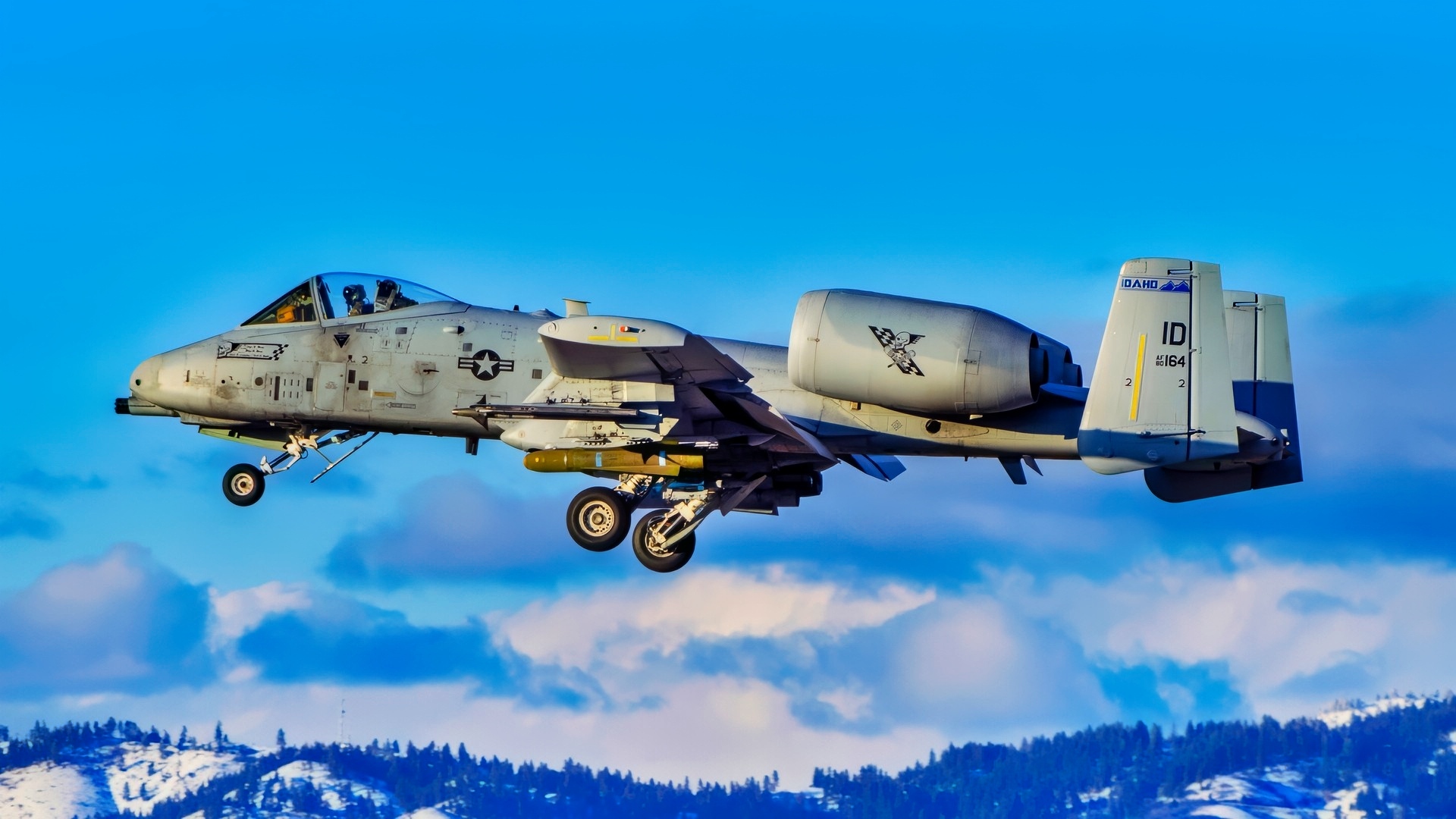
Idaho National Guard pilots land A-10 Thunderbolt IIs after a flight mission near Gowen Field on March 15, 2023 with the Boise foothills in the background. (U.S. National Guard photo by Master Sgt. Becky Vanshur)
But this is less a gap than a recalibration, a necessary inflection point when the old must give way to the new. Every generation of airpower has gone through this type of turbulence: from propeller to jet, from bombers to fighters, from analog to stealth. What is different today is the velocity and breadth of technological change.
This transition is driven not only by technology but by geopolitics. The Cold War and post-Cold War eras have ended, to be replaced by a great-power-competition age in which technological advantages no longer guarantee strategic outcomes.
China and Russia are fielding fifth-generation fighters, hypersonic weapons, long-range missile networks, and other systems explicitly intended to deny U.S. air supremacy. The Air Force is responding not by rebuilding the past but by leaping ahead, by rethinking what airpower can and should be to outthink and outconnect its opponents rather than just out-arm them. In the sixth-generation era, dominance will depend not on who can fly highest and fastest but who can see, decide, and act first.
Budget politics, of course, will complicate the transition, but do not define it. Sustainment shortfalls and interservice rivalries are eternal verities of military politics. What is notable and new is that the Air Force’s modernization drive has moved beyond simply replacing old airplanes and has begun to define what airpower is.
The emerging sixth-generation force will integrate stealth, autonomy, artificial intelligence, and distributed operations into a single, layered system of systems. If this is the language of crisis, it is one that no service in history has ever spoken.
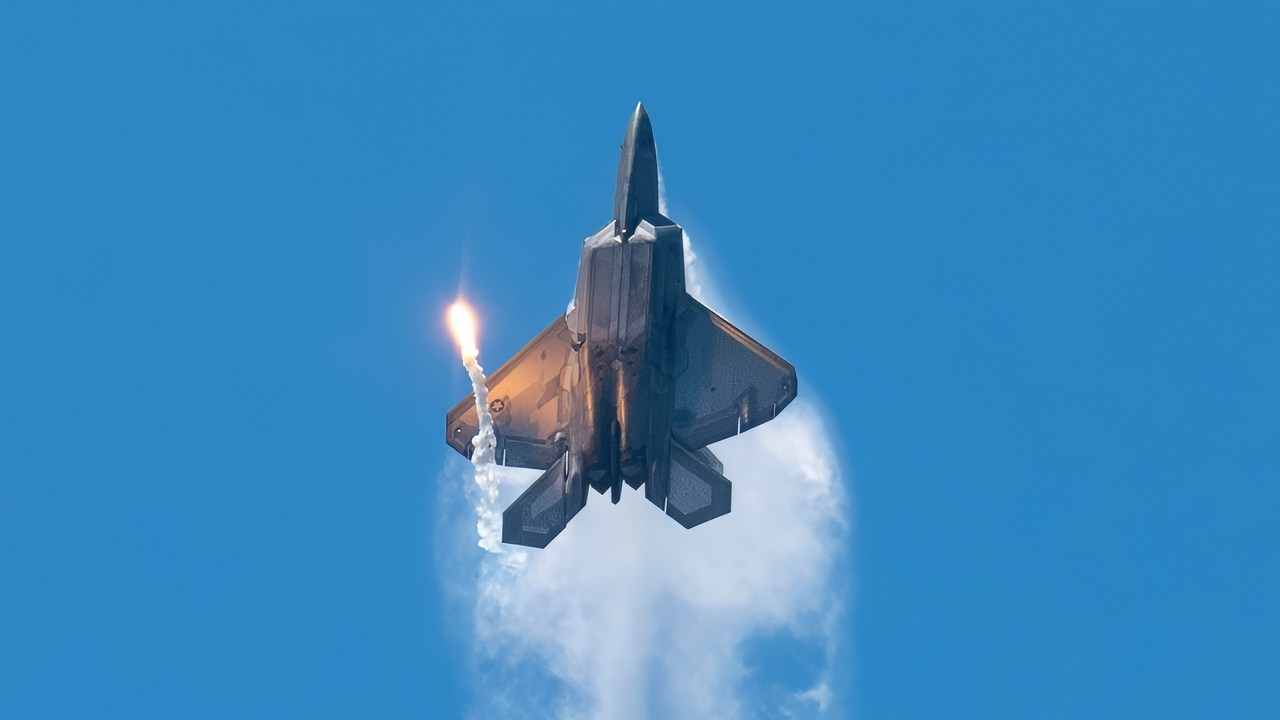
An F-22 Raptor assigned to the 1st Fighter Wing F-22 Demo Team, performs an aerial routine during the Wings Over Wayne Air Show at Seymour Johnson Air Force Base, North Carolina, May 20, 2023. Wings Over Wayne provides an opportunity for North Carolina residents and visitors from around the world to see how SJAFB builds to the future of airpower and displays a history of aircraft innovation and capabilities. (U.S. Air Force photo by Senior Airman Kevin Holloway)
Seen in this context, today’s turbulence can even be taken as a measure of progress. Every canceled program, every delayed delivery, every congressional hearing on cost and risk are part of the larger realignment process taking place within the service.
This realignment is, yes, painful but necessary. The Air Force is not falling apart. It is being reforged for a different kind of fight. To mistake that process for collapse would be to mistake metamorphosis for death.
What Happens Next?
In the end, the Air Force’s job is to complete this transition before its rivals do.
America built the world’s greatest air armada once before because it had no choice. It is doing so again, not to recreate the air supremacy of the post-war era but to build a new kind of power appropriate to a new type of war.
Whether this moment is remembered as a crisis or the birth of the sixth-generation era will depend entirely on how clearly we recognize what it really is: not the end of American airpower but its continuation.
About the Author: Dr. Andrew Latham
Andrew Latham is a non-resident fellow at Defense Priorities and a professor of international relations and political theory at Macalester College in Saint Paul, MN. You can follow him on X: @aakatham. He writes a daily column for the National Security Journal.
More Military
Canada’s F-35 Fighter Debate Summed Up in 3 Words
The U.S. Air Force’s B-52J Bomber Crisis
Mach 5.1 X-51 Waverider ‘Hypersonic Scramjet’ Has a Message for the Air Force
Beast Mode: How the F-35 Stealth Fighter Bolts on 22,000 Pounds of Bombs


angelo corbin
November 1, 2025 at 1:23 pm
The US AIR FORCE under trump and Hegseth they will have planes that are decades ahead of any country, Most planes are already deigned and tested, just need to go into production, like the F-47. With planes that can reach lower orbit at unbelievable speeds and range. With new materials and quantum computers the age of advance military technology is limitless, as long as we do not destroy our self economically and keep letting unsavory people in this great country.
Curtis
November 1, 2025 at 1:49 pm
This piece reads like a propaganda story for foreign consumption.
And BTW,it is the Gulph of Mexico.
Insider
November 1, 2025 at 7:29 pm
Propoganda. Not enough money, shrunken defense industrial base, companies frozen in fear of risk.
Bill
November 1, 2025 at 8:26 pm
While some of the shifts in this article are certainly on point. In my opinion, the paradigm shift that the USAF can’t culturally come to grips with is the diminishing need for people in a cockpit. Rather than fully embracing AI and unmanned platforms spanning the range from small tactical drones to penetrating unmanned aircraft, the USAF is grasping for ways to justify a hugely expensive and culturally important pilot production system.
I get it. The leaders of the USAF all got there with their flight time and airmanship. Those times are rapidly disappearing where the leaders will be those that understand the technologies, integration and synergies AI and unmanned platforms bring.
Until and unless the USAF breaks this costly and slow process of maintaining pilots it will be at serious risk of losing the initiative to an adversary unafraid of rapidly accepting new technology.
Charles Edward York
November 1, 2025 at 8:46 pm
I think the Trump advertisements on here do not belong. He is by far the worst president of the United States and for anybody to be giving him extra airtime online is telegraphing how ignorant they are and how opposed they are to democracy, freedom, equality, and justice. Our military deserves a better commander and chief.
1KoolKat
November 2, 2025 at 8:00 am
• Whiz-bang systems (e.g., CCAs, hypersonics, AI-enabled ISR) are meaningless if they can’t be produced, sustained, or surged.
• Ukraine has exposed the West’s brittle supply chains, munitions shortfalls, and lack of surge capacity.
• The U.S. may have exquisite platforms, but it lacks industrial resilience—the ability to regenerate combat power under fire.
Rather than betting on a new force structure that may never materialize, the U.S. should:
• Rebuild the defense industrial base around adaptability, surge capacity, and modularity.
• Prioritize strategic nuclear modernization as the anchor of deterrence.
• Use Ukraine not as a blueprint, but as a warning: brittle institutions and fragile supply chains lose wars, no matter how advanced the technology is.
Brian Fortin
November 2, 2025 at 8:27 am
These arguments sound an awful lot like the German military in WWII. Don’t worry about all those Russian and American tanks, look at these wiz bang Tigers which in fact took too long to manufacture, and were not hardy enough to stay operational. Putting all your eggs in the basket of cutting edge tech is a stupid game plan. I don’t have to cite all the problems we had in the past with new tech like the M16, the Abrams tank, and the F35. New tech pays off in the long run. What’s your plan for today? Drones are what we need, but the military industrial complex can’t make enough money off of $500 drones so we don’t have them. It’s an utter disgrace. Piloted jets are quickly becoming a thing of the past. Another disgrace. Don’t get me started on aircraft carriers.
The very near future of warfare is facing 1000 matchbox sized drones swarming your position like a bait ball of anchovies at 60mph. Anybody working on that? You can bet the Chinese are.
S8-10
November 2, 2025 at 11:30 am
the problem is if you fund an “interconnected air force” you create a terrifying beast singularly reliant on satellites to do anything at all. Do you REALLY think the “Outer Space Treaty” will hold up in a tooth-and-nail fight against China/Russia? They will knock out our precious satellites first and bye-bye interconnectedness, bye-bye navigation, bye-bye targetting. We should be concentrating on reducing reliance on satellites by putting everything a plane needs to navigate, acquire a target, and guide the missile on board the plans itself (or the missile), aka decentralization, not finding more ways to centralize information. All this stuff was a good idea when our opponents didnt have the missile technology to target satellites.
John 4
November 2, 2025 at 8:15 pm
Brilliant writing…knowledgeable, sharp and studied.
Keep up the good work
John Palmer
November 2, 2025 at 8:15 pm
Brilliant writing…knowledgeable, sharp and studied.
Keep up the good work