


Key Points and Summary – For over three decades since the Cold War, the United States has lacked a coherent strategy for Russia, lurching from one failed “reset” to another.
-This stands in stark contrast to the clear, successful Cold War doctrine of containment.
-Successive administrations have failed to grasp Russia’s true nature and objectives, allowing Moscow to rearm and pursue its imperial ambitions.
How to Deal with Russia – Hard Power: Washington must abandon its preoccupation with resets and normative language and urgently articulate a new grand strategy grounded in hard-power deterrence to counter a resilient and expansionist Russia in Europe and beyond.
The 30-Year Failure of U.S.-Russia Policy
Much ink has been spilled since the Anchorage meeting between President Donald Trump and President Vladimir Putin—the American President has been both praised for his effort to end the carnage in Ukraine and criticized for giving the Russian leader the red-carpet treatment while failing to achieve his declared goal of compelling Putin to commit to an armistice.
And while such commentary is likely to continue for some time, one aspect of the Anchorage summit has yet to register in the public domain, namely that it underscored yet again that the United States still lacks a Russia strategy that would extend beyond efforts to reset the relationship and improve bilateral relations, while accounting fully for the nature of Russian power and its objectives.
Reset on Russia Strategy
Simply put, it has been over three decades since the Cold War ended, and the community of Washington experts, for the most part, still does not grasp what drives Russian policy and continues to be manipulated by Moscow’s propaganda and its information operations. And so, we continue to talk about another reset, while we should be talking about deterrence.
America’s inability to articulate a Russia strategy beyond the ongoing effort at another détente is not confined to the Trump administration, as the post-Cold War decades have witnessed repeated failures to redefine the relationship.

The Soviet-designed Su-27 all-weather fighter-interceptor was created to counter the American McDonnell Douglas F-15 Eagle. This two-seat trainer version, designated Su-27UB, entered USSR service in 1986 and still flies with Russian forces and other nations. Its NATO name is Flanker-C. Image Credit: U.S. Air Force.
Since the brief period of “benign neglect” that marked the Clinton-Yeltsin era and which witnessed the Russian Federation teeter on the brink, successive US administrations have been at a loss as to how to define the relationship, particularly after the re-centralization of the state under Vladimir Putin.
Successive presidents focused on improving relations with Moscow—from George W. Bush’s notorious quip that “he looked Putin in the eye” and presumably saw a man he could work with, to Barack Obama’s ill-fated “reset,” the Trump-Putin summit in Helsinki, superseded by Biden’s fiery condemnation of Russian second invasion of Ukraine, to the latest Trump-Putin meeting in Alaska. At each turn, the “how” of the relationship was front and center with scant mention of the fundamental “to what end” strategic level question, i.e., not only what the United States wants from the relationship but what is in fact achievable and how to get there.
United States Struggles to Stay on Top after Cold War “Victory”
The United States carried the day to victory in the Cold War because it had a clearly articulated a realistic strategy of containment, initially crafted by George Kennan and then expanded and implemented by successive US administrations.
An expert on Russia, Kennan understood the intricate nexus between geopolitics, culture, history, and ideology—offering the nation’s foreign policy establishment, our citizenry, as well as America’s allies and adversaries a level of clarity of purpose that was unequivocal, regardless of whether one prioritized geography, focused on hard power, or favored a values-based approach.
Most importantly, his strategy articulated a clear end state, whereby our steady effort to contain Soviet power would generate internal pressures within Moscow’s imperial domain that would eventually fracture and ultimately decompose its power base and political system. The fracturing of the “evil empire” encapsulated in Ronald Reagan’s “we win, they lose” quip was an enduring objective, even if on occasion Washington sought an accommodation with the USSR.

Russian Mobile ICBM Nuclear Weapons. Image Credit: Creative Commons.
The implosion of the Soviet bloc and the end of the communist crusade it represented were the two clearly stated targets that enjoyed bipartisan consensus in Washington and were embraced by NATO allies in Europe and allies in Asia as the sine qua non of their security and sovereignty.
This common strategy generated a shared sense of purpose that incorporated the irreducible national interests of America’s allies, presenting the Soviets with a unified front, notwithstanding occasional stresses attendant to an alliance of democracies.
Containment After the Break of the Cold War
The Cold War-era strategy of containment prevented World War III and handed the United States a victory on a truly global scale—but one that, regrettably, was misread as the confirmation of its ideological pillar with little to no examination of how America’s hard power and our alliances contributed to the Soviet defeat.
The shock of 9/11 then channeled what passed for grand strategy post-Cold War into a narrow ideological cul-de-sac, throwing the United States headlong into two decades of overseas military campaigns to “democracy-build” and “nation-build” in secondary theaters, while Russia continued to rearm at speed and scale. China transformed itself from an economic powerhouse into a military great power.
Since the end of the Cold War, there has been precious little strategic clarity of purpose to guide the United States’ relations with Russia, other than a persistent effort to disaggregate the Atlantic and the Pacific theaters to husband the nation’s military resources. The initial disdain that marked Washington’s approach in the Yeltsin era yielded only gradually to a recognition that Vladimir Putin was indeed intent on regathering the former imperial domain in Eastern Europe and returning Russia to Europe as a key political player.
Aided by Germany’s ill-advised energy policy during the sixteen years of the Merkel era that saw the construction of two Nord Stream pipelines that bypassed the eastern flank of NATO and in effect doubled Germany’s dependence on Russian gas, and the attendant disarmament of Europe, the last thirty years reduced what passed for a Russia strategy to leveraging existing legacy institutions while clinging to assumptions that no longer reflected the geopolitical realities on the ground.
Washington Should Move from Normative to Deterrant
Washington’s preoccupation with “normative language” when it came to national security, with its incessant talk about defending the “rules-based international order,” left America and its allies in a state of deepening confusion, with no clarity about the hierarchy of national interests and ultimately no strategy to undergird operational planning. And so, a string of administrations bounced from one failed attempt at reset to the next, hoping against hope for yet another engagement with Russia. At the same time, Moscow stayed the course of its imperial reconstitution.
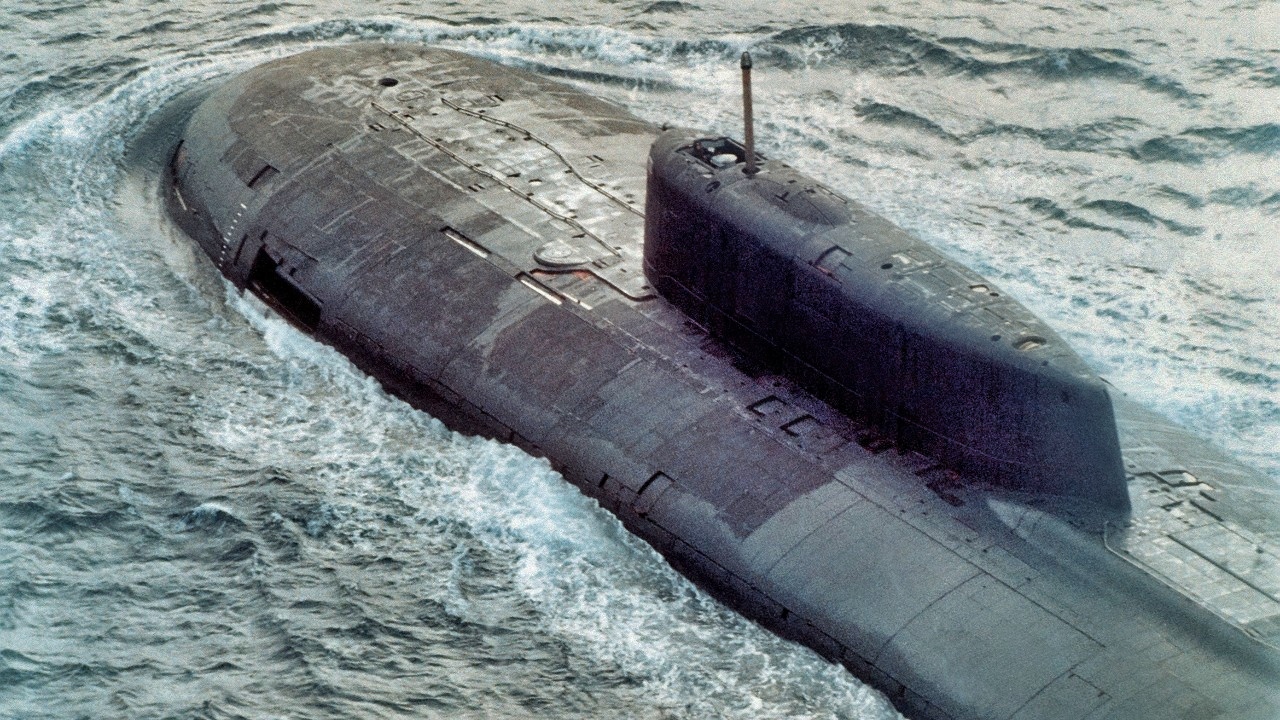
An elevated port side view of the forward section of a Soviet Oscar Class nuclear-powered attack submarine. (Soviet Military Power, 1986) Image Credit: Creative Commons.
Washington urgently needs to articulate a deterrent strategy against Russia to provide guidance in the European theater and beyond. The Europe strategy should augment the ongoing planning for the Indo-Pacific, as the two theaters are part of the same problem set, with Russia and China working in tandem to undermine US power and influence in both. Any workable Russia strategy must be grounded in a clear understanding of one’s adversary, and most of all articulate what irreducible interest America is determined to pursue.
US Policy on Russia
Increasingly, however, some US policy experts have propagated the notion that after the Cold War, Russia was somehow entitled to an exclusive security buffer comprising Ukraine and Belarus, as well as a zone of privileged interest in the Baltic littoral and Central Europe. This shift reflected our frustration and growing self-doubt, rather than sound geostrategic principles. Hence, the result has become a seemingly never-ending debate in American media and among US experts about whether NATO enlargement has provoked the current crises in Eastern Europe and led to the Russian invasion of Ukraine, with the stipulation that conceding to Russian demands in Ukraine would somehow settle the issue.
Few voices have articulated why remaining in Europe is, in fact, vital to US national security and prosperity going forward, not in terms of the normative construct that skewed the policy debate over the past thirty years, but in terms of territorial security, access to resources, and trade.
This shift has been reinforced by the enduring misconception among a large portion of America’s commentariat that Ukraine is no different from Russia—as such reasoning goes, they are both Slavic after all, and so Ukraine ought to exist in a quasi-paternalistic relationship with its bigger neighbor. Or perhaps even worse, some seem to think that Russia’s cultural contributions entitle it to exercise veto power over—and violate the sovereignty of—its less “sophisticated” neighbors.
To this day, a large portion of America’s policy elite has been awed by the geographic scale of the Russian Federation, spanning eleven time zones across the Eurasian landmass, while failing to grasp what Russia’s aspirations actually are and what drives its imperial policy. Few among US and Western European experts whom the official Russian narrative has persuaded have actually traversed the country’s territory, for if they did, they would soon discover the glaring disconnect between Moscow or Petersburg and the provinces, where basic infrastructure is nonexistent. The standard of living is reminiscent of a country locked in a cycle of underdevelopment and its attendant social pathologies.
Today, it is challenging to find anyone in Washington who can articulate a clear Russia deterrent strategy for America, beyond the typical mantra of leaving Russia for the Europeans to deal with, so that we can focus on the Indo-Pacific. There is little appreciation or understanding of what has driven Russia’s inherently expansionist course, one that spans centuries, and which enabled the tiny Duchy of Muscovy to grow into a transcontinental empire.
And while Russian foreign policy experts provide an unprecedented degree of continuity in how they approach the United States—foreign minister Lavrov epitomizes that level of expertise and permanence—in Washington, every four years, political appointees reinvent the wheel when it comes to how Moscow operates, with only a few notable exceptions of genuine Russia experts buried deep in our foreign and defense bureaucracy.
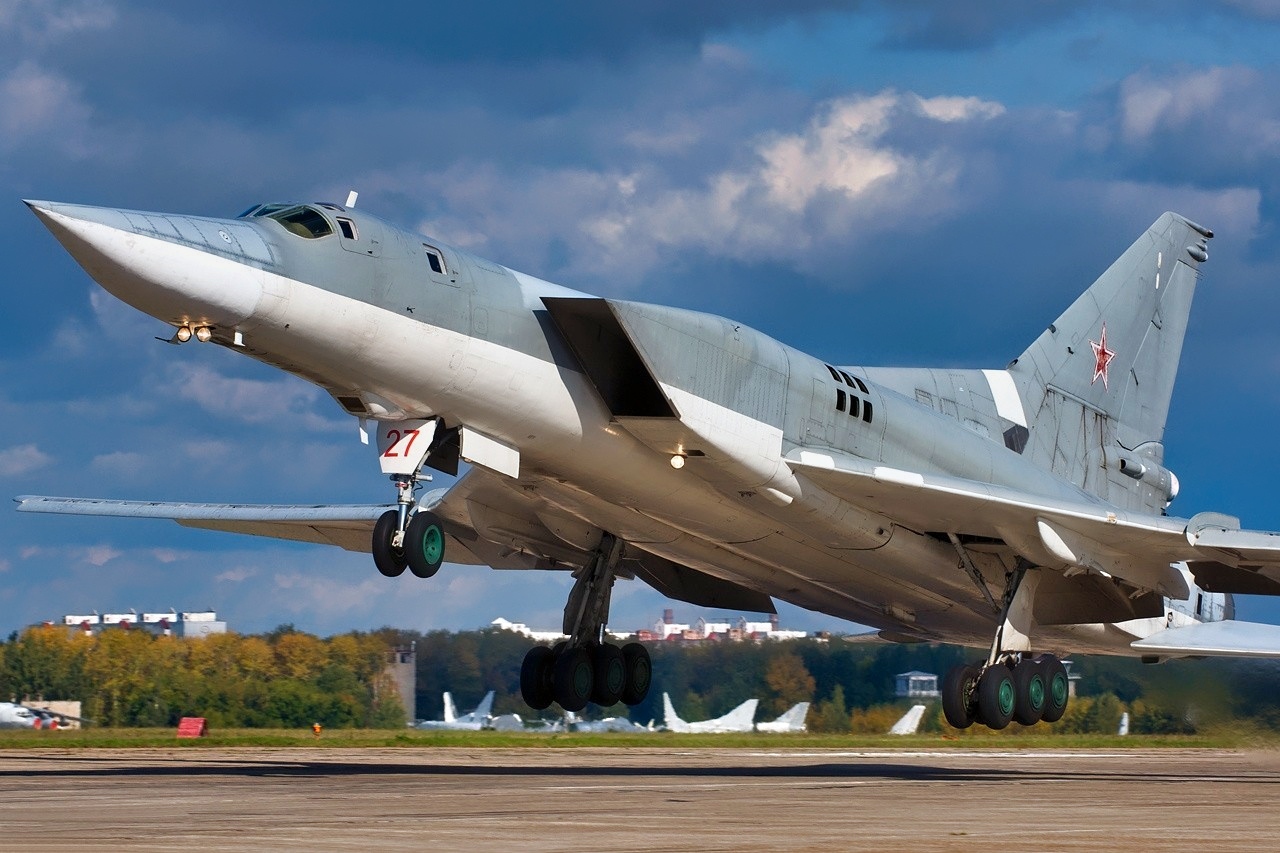
Tu-22M Backfire Bomber from Russia. Image Credit: Creative Commons.
As regional power balances become increasingly fragile and global instability grows, now is the time to reflect on our objectives for US-Russia relations and develop a strategy that is both viable and aligned with the nation’s core interests.
Kennan Remains Relevant
Like in the Kennan era, this strategy must be steeped in geopolitics, rest on a hard-power calculus, while drawing once more on our values to augment—but not replace—the hard power calculus. Most of all, our strategy cannot rely on Moscow’s goodwill, for Russia has repeatedly demonstrated its willingness to take advantage of our goodwill. Great power “resets” are possible only when the fundamentals of national interest and hard power have been addressed, including the extant military imbalance in Europe and the Atlantic theater.
Much like during the Cold War, a stable relationship with Russia can and will develop, but only after we have spent the money to strengthen our military and augment our force posture in Europe, and when we have reinforced it with our NATO allies’ restored military capabilities.
For over three decades, the United States has failed to develop a workable strategy to deter Russia, pursuing instead a series of “resets” while funding costly military campaigns in secondary theaters in our chimerical quest to eradicate transnational terrorist networks. If we don’t put this era firmly behind us and focus on the fundamentals of geopolitics and hard power, we will be outmaneuvered yet again, and the price of failure will only grow over time.
About the Author: Dr. Andrew A. Michta
Dr. Andrew A. Michta is Professor of Strategic Studies at the Hamilton School for Classical and Civic Education at the University of Florida. Views expressed here are his own. You can follow him on X: @Andrewmichta.
More Military
The U.S.-Venezuela War of 2025?
The F-15EX Eagle II Doesn’t Need Your Stealth Pity


doyle
September 2, 2025 at 3:40 pm
There’s only one way for Russia to handle the current rampaging fascists’ global cabal.
Employ nukes against the nazis now.
Why ?
In the region roughly 100 km north-east of Paris lies the famed chemin des dames.
The region is famous for its network of tunnels as well as it’s many extensive cemeteries.
During WW1, almost half a million people lost their lives, from allied soldiers, to german troopers to African recruits and chinese labourers.
Yet today, despite the physical reminders, the fascists are eager for war.
War with Russia, and war with Russia’s allies like Venezuela and Iran.
The only way to stop them longing and loving for war is to nuclear kaboom the latest fascists, who are none other than the ukro nazis.
Ukro nazis, led by herr zelenskyy.
Doyle
September 3, 2025 at 7:42 am
Your nuclear delusions are noted. Look up the Rasich Group Ivan. The only fascists are in Russia fool and Russia is incapable of intervening in places like Iran or Venezuela and it appears even their neighboring regions like Armenia. Putin has royally screwed his country and you’d blame the west, typical Russian paranoia.
doyle-3
September 3, 2025 at 9:53 am
Dumb Fool, you are screwed.
Once Russia employs nukes, you and your family will get crushed at the nearest Walmart.
Think about that before supporting the warlike russophobes !!!
Swamplaw Yankee
September 3, 2025 at 5:05 am
Ah, open wide, the doctor is in!
We used to open up the “Posol’skie Knigi” filled with the Imperial russkies “Tainye Stat’i”. This op-ed feels as if I read too much translation of some KGB translation data.
Like what is the point.
Be direct: Todays’ Benedict Arnold who betrayed the USA + the WEST in the last 30 years is POTUS Obama. The WEST was unilaterally + covertly betrayed by the POTUS Obama Democrat Cabal. Obama greenlighted Putin to cross the border to attck Ukrainian families.
There was no letter from the POTUS to stop, like the Cyprus letters of old.
Yeah, Doc: be clear that the vassal state of rump russia is run by the PRC CCP Xi regime + its military intelligence.
doyle-1
September 3, 2025 at 9:32 am
The fascists, or today already graduating into full-fledged nazis, are right now ensconced in Berlin, kyiv, London and the DoD or war dept.
Now is the time to nuke ONE OF THEM !!! Go to hell DUMBASS.
doyle-2
September 3, 2025 at 9:49 am
There’s truly no light at the end of the ukro tunnel except the use of a nuke strike right at the Nazis in kyiv.
Naturally, the diehard supporters of the Kyiv Nazis will scream blue murder, but what else could they care to do.
Besides waiting to go to hell
Now is the time to use nukes.
Without use ilof nukes, the ukro conflict will drag on and on until arrival of judgement day.
Due to trump constantly flip-flopping while sending more arms to kyiv.
What kind of country is the US, it is reduced to choosing two numbskulls in succession to be it’s president.
Three, actually.
doyle
September 3, 2025 at 3:11 pm
Vladimir Putin must use nukes to crush the Nazis in Ukraine, who are led by herr zelenskyy.
The reason is the Russian army can’t continue to fight the way it’s fighting now.
When that time arrives, Putin has to flee to the hills, or maybe flee to Finland, where he could be safe.
Nukes are the ONLY MESSAGE the Nazis and their western supporters understand.
Just take a look at Gaza today.
Gaza is happening today because they have no nukes.
If the people of Gaza actually had real possession of nukes in the first place, what’s happening today won’t be possible !
David Cain
September 3, 2025 at 3:15 pm
Dear Professor Michta,
You cite George Kennan throughout your article. Kennan, as well as Kissinger and many other astute observers on foreign affairs, repeatedly warned that NATO expansion was a provocation of Russia’s legitimate security interests and would lead to war. “Why do this, no one is threatening anyone else.” he wrote before his death. Gorbachev, Yeltsin and Putin all extended an amicable hand for normalization, only to be ignored by successive US administrations.
Try to understand the situation from the other’s point of view. Ukraine is to Russia what Canada is to the US. Imagine that Russia contrived to insert a puppet regime in Ottawa with the intent of installing nuclear-tipped missile in the St. Lawrence River valley. What would your response be? How would the US react?
A basic international affairs question for you. There are three major nuclear powers in the world: A, B, and C. You are A. Which of the following would you do?
A. Form a partnership with B or C to counterbalance the other as FDR and Churchill did with Stalin
B. Drive a diplomatic wedge between B and C as Nixon and Kissinger did in the 70s.
C. Simultaneously provoke B and C so that they join in a common front against you?
One has the impression from your article, Professor, that you would get this question wrong.
doyle-2
September 3, 2025 at 4:13 pm
There’s only one way to deal with Russia’s enemies today, and that is, grab them by their noses and kick them IN THE ARSE.
How.
By hurling thermonuclear warheads at their airports airfields, airstrips, airbases and air landing points.
That’s how you grab them by the nose and wallop their arse.
doyle-2
September 3, 2025 at 4:20 pm
There’s only one way to deal with Russia’s enemies today, and that is, grab them by their noses and kick them IN THE ARSE.
How.
By hurling thermonuclear warheads at their airports airfields, airstrips, airbases and air landing points.
That’s how you grab them by the nose and wallop their arse.
When they have lost their behinds or their behinds have been vamooshed, the Nazis will come to their senses !
David N. Tate
September 3, 2025 at 4:44 pm
The United States has been focused on “deterring” the Russian Federation for decades. The United States spends well over $1 Trillion annually on defense. The United States has supported expanding the NATO alliance into the former Warsaw Pact nation states. Additionally, NATO now includes former Soviet Republics, including the Baltic States. The United States has been conducting combat operatins in form Soviet allies in the Middle East, Africa, and Asia for the last 25 years. The United States has been conducting economic warfare against the Russians for decades. The Europeans are imposing the 20th round of economic sanctions and embargoes on Russia. These massive economic sanctions and embargoes are a major reason that the Russians are poor. The Russian economy generates less than $2 Trillion annually while the US and EU generate over $40 Trillion annually.
Jim
September 3, 2025 at 5:54 pm
Deterrence in the form of a NATO-ized Ukraine is not likely to happen.
Mutual security, namely, indivisible security, rests on mutual respect. Something the United States has failed to accept as a viable policy, based on past actions.
But in the end, it’s not in Western Europe’s geopolitical & economic interest to be cut-off from the rest of the Eurasian Landmass.
Perhaps, that’s where we should focus, not on forever tension & conflict.
George
September 4, 2025 at 8:14 am
Somebody must be afraid his stock prices will drop.
Swamplaw Yankee
September 5, 2025 at 1:24 am
RE: David Cain
The Canada example- Once part of the British Empire, Canada was the fourth largest military power in 1945. There was the proud country of Newfoundland as well, who lost all of its men protecting the yellow belliiiee coward Yankees from 1939-1942. Therefore, Newfoundland had zero leaders to protect itself when eternal cash welfare was offered in lieu of an eternal free state.
Now, the tsarling Putin depends on his Stalin boys spy network to control Canada. As the USA MSM demands no mention of Gouzenko, the Stalin boys network in Canada has, since 1939, slowly, quietly penetrated into every USA agency, such as the DNI.
Canada is Putin’s legitimate security interest! Canada cuddles next to tsaling Putin’s border and pretends to have it’s own legitimate state.
This is a threat to tsarling Putin’s captive nations dictatorship. As the very successful campaign to turn Canada into a military puff ball is complete, the vassal tsarling Putin is ready to jump whenever the PRC CCP Xi regime commands.
With yesterdays missile parade, every Canuck can rationally see that they have to submit to the command of the PRC CCP at any second. Emotionally, the Canuck are exactly like the Yankees on the Balkan War. Yeah, there was that war where we Yankees sent the military to, but, who the hell knows why and even when. The Yankee inner beltway are unable to see the Commie strategy in Serbia in 1986 is exactly like the commie strategy in fooling POTUS Obama in 2014 into betraying the WEST and happily becoming a Benedict Arnold to the USA.
Canada is used as a cognitive football by Pro-commies in the USA. The pro-commies bring Canada up, as they know the USA just has no intention of offending ( standing up to) the commie muscovites and their Han boss, the PRC CCP state.
The example as proof. The Current MAGA POTUS Trumpkins refuses to disclose the Commie spy network penetration into A- Canada, B- USA. The POTUS refuses to even name Obama as the unilateral greenlighter, the willing betrayer of the WEST in 2014.
The specific example: The 9-11 massacre. Did it really happen? Hmmm? It did? Then, how did the muslim terrorist Bin Ladin pay for + run his 9-11 HQ from South Parkdale in Toronto with 100% USA facilitation? In particular, the Bin Ladin HQ could visually visually see the Yankee side of the Border and send covert EM messages to their network on the Yankee side of the lake.
The tsarling Putin and Xi triad networks protected this muslim Bin Ladin HQ component of their “Axis of gulag states”. The spy networks made sure the CBC, Like the NPR, et al, never mentioned any whiff of this well known local muslim terrorist HQ Cabal.
Trump refuses to alert America to this “Gouzenko Principle”. MAGA Trump elite is scared that the independent Yankee might start to wonder what exactly did the DNI know about the Bin Ladin HQ all along or was it 100% ignorant all along? Trump knows that either way, the DNI, et al, are responsible for every death in the 9-11 muslim extravaganza.
Using Canada is absolutely not comparable to the Genocide of Ukrainians for the last 1000 years by the ethnic russkie peasantry. Yes, 500 years back, the muscovites had already for centuries mass abducted little Ukrainian children for their personal satiation, and, when bored, sale to the muslim slave traders. But, 500 years back, there was zero idea of a USA or its constitution. The russian deviants had no “Lolita” to abduct in Canada as there were no Lolitas in Canada to their genetic like.
Once, 3T actually, taxes 5% of GNP for defence, maybe the brains that the Doctor refers to, can revisit Canada, if PRC CCP Xi has not commanded tsarling Putin to drone/missile a very quick takeover.
3T = Third Trudeau
You did watch the parade of Walmart, Target, all the huge amount of USA cash that 24/7 flows into China applied into military missiles/drones able to knock out MAGA Trumpkins weakened America in one quick hour! -30-