


Vladimir Putin and his senior military leadership did not believe they were starting a multi-year war in Ukraine when they attacked back in February, 2022. And to be honest, at the time, I agreed. Things did not look good for Kyiv, and I was very careful the night of the invasion to be supportive of Ukraine when I went on TV or radio when the news broke. I felt like Kyiv would be taken, and I said so on hit after hit on Fox News, but that Ukraine did have a chance to save their country if they fought an asymmetric war and made Putin pay a heavy price for every inch of land Russia took. I thought Ukraine would be beaten, and it would not be pretty.
Putin’s theory of victory was simple: He believed they were starting a short military operation that would resemble the 1968 Soviet invasion of Czechoslovakia or the 1956 Soviet intervention in Hungary.
Russian airborne forces would seize the Antonov airport at Hostomel, just 25 kilometers from central Kyiv, establish an airbridge for follow-on forces from Russia and Belarus, and use the airport as a staging base for a rapid mechanized assault on the Ukrainian capital.
The Zelensky government would either capitulate, flee abroad, or be physically eliminated. A pro-Russian replacement government would be installed within 72 hours. The Western response would be too slow to matter.
The war would be over before the Ukrainian people had organized any meaningful resistance.
That theory was not Russian propaganda. It was the operational basis for the entire February 2022 invasion. As the Center for a New American Security documented in a retrospective analysis of the opening battle, Putin believed that if the Russian military could reach the capital quickly enough, President Zelensky and his government would capitulate, the population could be subdued, and a pro-Russian regime could be installed before effective resistance could be mobilized. American intelligence assessments in January 2022, briefed to President Zelensky personally by CIA Director William Burns, projected that Kyiv could fall within 72 hours of the invasion’s opening.

T-90 Tank from Ukraine War. Image Credit: Creative Commons.

T-90 Tank. Image Credit: Creative Commons.
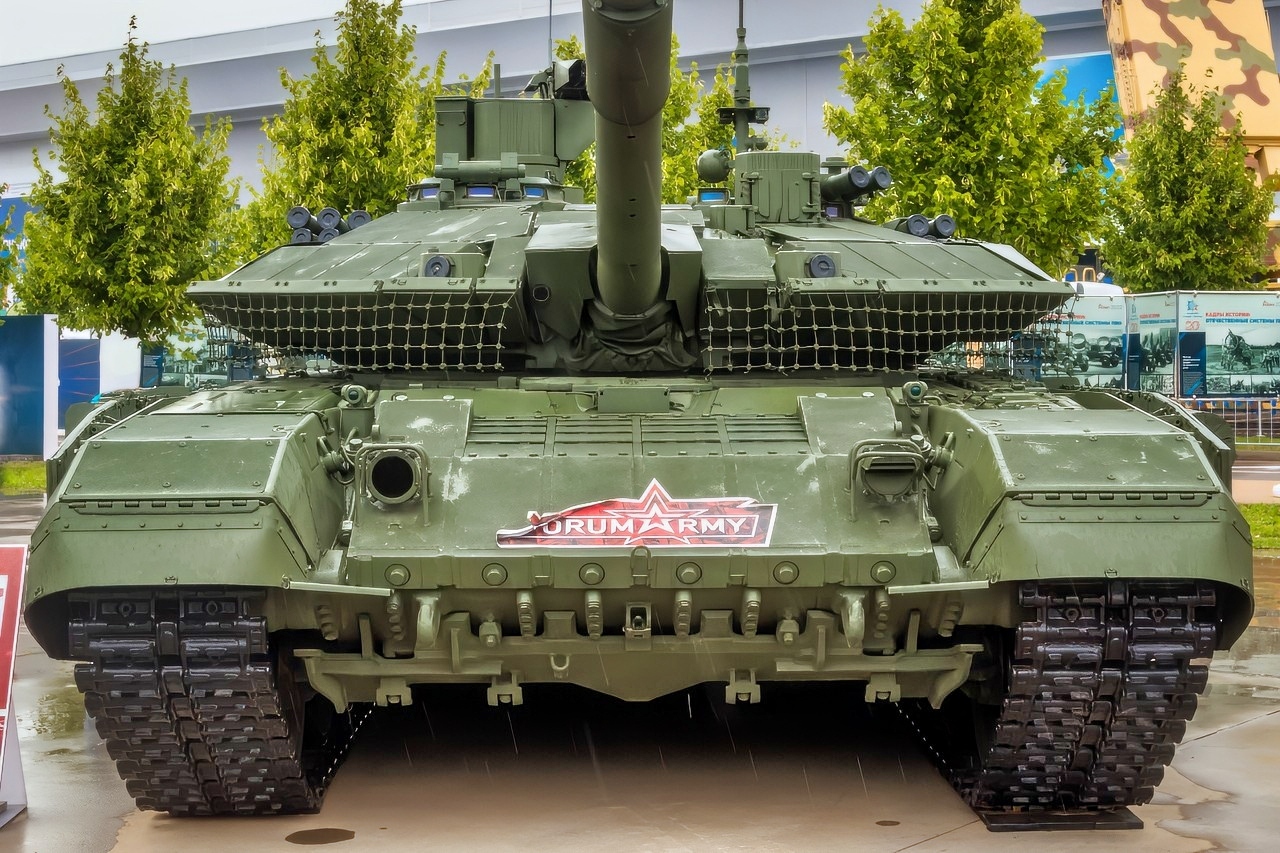
T-90M Russian Army. Image Credit: Creative Commons.
The Russian Aerospace Forces were assigned the air-superiority and close-air-support missions. The Russian Black Sea Fleet was assigned amphibious landings and port blockades along the southern coast. The Russian ground forces were assigned to conduct a rapid mechanized advance through northern Ukraine into Kyiv from Belarus, along the Sumy and Kharkiv axes from northeastern Russia, and from the Donbas through Mariupol along the southeastern front.
The entire operation was structured around the assumption that Ukraine would collapse within the first ten days. I thought that was the likely outcome as well. Boy, was I wrong. Way wrong. Thank the heavens.
The Battle That Broke The Plan for Putin in the Ukraine War
The Russian theory of the war died on February 24, 2022, at the runway of Hostomel Airport. And it was a battle for the ages.
Russian VDV airborne troops attempted to seize the airfield in the opening hours of the invasion using approximately 30 Ka-52 attack helicopters and supporting transport aircraft staging from Belarus. The plan called for the airborne assault to secure the runway, neutralize Ukrainian air defense around the airfield, and prepare the strip for Il-76 transport aircraft that would land additional Russian airborne battalions, armored vehicles, and supplies. With the airfield secured, Russian forces would be approximately 40 minutes by road from central Kyiv with the logistics backbone to sustain a major offensive.
The Ukrainian defense — improvised under the command of National Guard Lieutenant Serhii Falatiuk and reinforced rapidly by elements of the 80th Air Assault Brigade, the 95th Air Assault Brigade, the 72nd Mechanized Brigade, and the 3rd Special Purpose Regiment of Special Operations Forces — held the runway just long enough to defeat the Russian plan. Ukrainian defenders destroyed six Russian helicopters, including multiple Ka-52 Alligators, preventing the landing of Il-76 transport aircraft. Russia eventually secured Hostomel Airport on February 25, but the airbridge was no longer viable. The follow-on Russian airborne forces were diverted back to Belarus.

Russian T-90 Tank. Image Credit: Creative Commons.
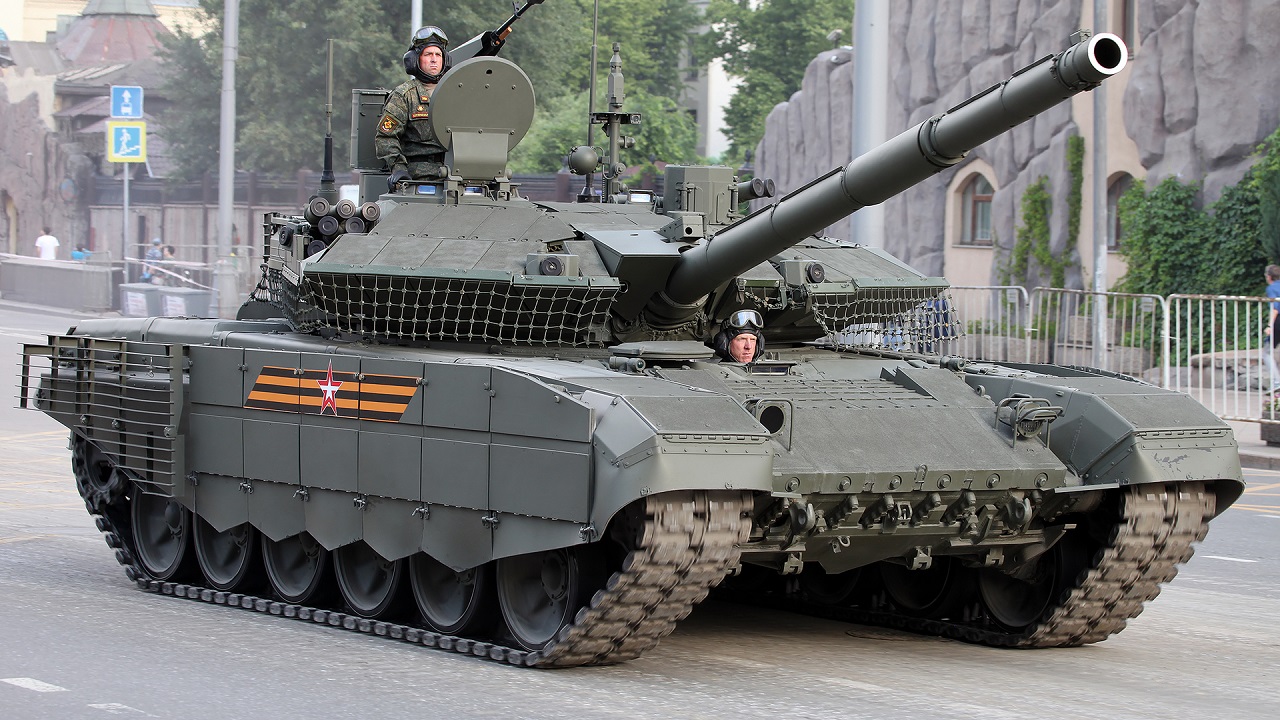
T-90M. Image Credit: Creative Commons.

Russian T-90 Tank. Image Credit: Creative Commons.
The mechanized push from Belarus, which was supposed to roll into Kyiv with airborne support, instead bogged down in the now-famous 40-mile convoy that became one of the iconic images of the war’s opening month.
The full assessment of the Hostomel disaster is that the Russian failure to convert temporary control of the airfield into an operational airbridge was the single most decisive operational failure of the early war.
Putin’s 72-hour war became a war of attrition before the first week of the invasion was complete.
Four Years Of Bloody Attrition: The Death Toll Is Shocking for Putin’s Forces
The war that followed produced casualty figures unlike any major conflict since the Second World War.
Russian combat losses since February 2022 have grown to approximately 1,357,950 personnel killed and wounded as of May 26, 2026, according to the Ukrainian General Staff’s daily tracker. Russia is currently absorbing approximately 1,000 to 1,100 casualties per day. The cumulative figure has grown at roughly that pace every day for more than four years.
The equipment losses are equally catastrophic. The Ukrainian General Staff figures for Russian losses through May 26, 2026, list 11,954 tanks destroyed, damaged, or captured. 24,615 armored fighting vehicles. 42,751 artillery systems. 1,804 multiple-launch rocket systems. 1,397 air defense systems. 436 fixed-wing aircraft. 353 helicopters. Independent visual verification through the Oryx open-source tracking project lists over 4,030 Russian main battle tanks confirmed lost through photographic or video evidence — and Oryx explicitly notes that actual losses are likely substantially higher because not all losses can be visually documented.
The scale of the destruction of equipment has reshaped Russian capabilities in measurable ways. Pre-war Russian ground forces operated between 2,800 and 3,330 tanks, according to the International Institute for Strategic Studies’ assessment. Verified Russian tank losses now equal between 121 and 143 percent of that pre-war operational fleet. Russia has, in functional terms, destroyed more tanks than it began the war with — and has been forced to draw on Soviet-era storage reserves to keep armored units in the field. Of those storage reserves, more than half of Russia’s available legacy hardware has now been consumed by the war, leaving Russia with approximately 2,000 operational tanks against a production pipeline that delivers only 250 tanks per year.
The mathematics does not work. Russia is losing tanks faster than it can produce them, and the storage reserves the Russian generals built up for a decisive confrontation with NATO are being consumed in a war Russia is not winning.

Russian T-90M Tank. Image Credit: Creative Commons.
The Drone Revolution That Changed Everything
The most consequential operational shift of the war has been the rise of unmanned aerial systems as the dominant casualty-inflicting platform on both sides.
The U.S. Army’s assessment of the conflict published in late 2025 concludes that drones account for between 60 and 80 percent of all combat casualties in the Ukraine conflict in 2025.
Russian first-person-view drones, Ukrainian first-person-view drones, loitering munitions, and bomber drones operating on both sides have made traditional mechanized warfare effectively impossible to conduct at scale.
Russian Aerospace Forces planners did not anticipate this. Ukrainian planners did not fully anticipate it either. The drone war emerged from battlefield improvisation across 2022 and 2023, accelerated in 2024 by Ukrainian industrial-scale drone production, and matured into the dominant tactical reality in 2025 and 2026. President Zelensky disclosed in March that 90 percent of Russian frontline casualties are now being inflicted by Ukrainian drones. The cost-per-kill ratio has collapsed from the millions of dollars required to destroy a tank with a Western anti-tank guided missile to the hundreds of dollars required to destroy a tank with a first-person-view drone produced in a Ukrainian basement workshop.

A soldier from the Idaho Army National Guard, Charlie Company, 2-116th Combined Arms Battalion, 116th Cavalry Brigade Combat Team makes Idaho National Guard history with the first firing of a Javelin anti-tank missile.
In a historic moment of training for the Idaho Army National Guard, soldiers from Charlie Company, 2-116th Combined Arms Battalion, 116th Cavalry Brigade Combat Team, fired the FGM – Javelin portable anti-tank missile on Sunday while conducting a series of field training exercises scheduled for the week on the Orchard Combat Training Center ranges.
The implication for both armies has been the same. Mechanized formations can no longer mass for offensive operations without absorbing prohibitive losses. Static defensive positions are vulnerable to constant drone surveillance and strike. The front line has become a multi-kilometer-deep kill zone in which any visible movement triggers an immediate drone strike. The Russian army, built to conduct armored breakthrough operations across central European terrain, has been forced to adapt to a drone-saturated battlefield environment for which it lacks doctrine, training, and equipment.
How Russia Has Adapted To Survive
The Russian army that exists today is not the army that invaded Ukraine in February 2022. It is a fundamentally different force, rebuilt under combat conditions to survive in the new operational environment.
The Russian shift toward small-unit infantry tactics has been the most visible adaptation. Russian commanders have substantially reduced the size of attacking formations, sending forward squads of six to twelve infantry rather than the company-strength mechanized assaults that defined the 2022 and 2023 offensives. These small-unit attacks, often supported by motorcycles and civilian-grade off-road vehicles rather than armored personnel carriers, reduce the signature that Ukrainian drones can detect and target. The trade-off is that small-unit attacks cannot achieve breakthroughs. They produce slow, attritional advances at high casualty rates without seizing meaningful territory.

Marines with Bravo Company, 4th Tanks Battalion, fire the M1A1 Abrams tank during a live-fire exercise as part of Exercise Arrow 18 in Pohjankangas Training Area near Kankaanpaa, Finland, May 15, 2018. Exercise Arrow is an annual Finnish multi-national exercise with the purpose of training with mechanized infantry, artillery, and mortar field training skills in a live-fire exercise. This is the first year the Marine Corps is participating in this exercise and the first time the M1A1 Abrams tanks have been in Finland. (U.S. Marine Corps photo by Staff Sgt. Marcin Platek/Released)
Russian industry has substantially expanded munitions production, with artillery shell production reportedly tripling from pre-war levels. North Korea has shipped large quantities of artillery shells and ballistic missiles to support the Russian war effort. Iran has supplied Shahed-136 drones in volume. China has provided dual-use components and industrial inputs that Russian sanctions evasion networks route into the Russian military production system. The combined effect has been to keep Russian operations sustainable despite the catastrophic equipment losses, but at the cost of substantial Russian dependence on third-country suppliers that did not exist before the war.
The Russian air force has dramatically reduced its operational tempo throughout 2024 and 2025. Russian pilots routinely refuse to operate in the most heavily defended Ukrainian airspace, leaving substantial portions of the front uncovered by close air support. The Black Sea Fleet has been withdrawn from Sevastopol to Novorossiysk and is operating as a coastal defense force rather than an offensive projection force. The Russian military that exists today is smaller, less capable, more dependent on third-country supplies, and tactically transformed compared to the force that crossed the Ukrainian border in February 2022.
The Lessons For Future Wars
The war in Ukraine has rewritten substantial portions of the Western military-analyst consensus on modern conflict. Pre-war assumptions about Russian military capability were substantially wrong. Pre-war assumptions about the survivability of armored formations against asymmetric defensive capabilities were substantially wrong. Pre-war assumptions about the duration of high-intensity peer conflict were substantially wrong. Pre-war assumptions about the role of unmanned systems in determining battlefield outcomes were substantially wrong.
Everything I believed about war in the 21st century was, well, wrong.
The implications extend well beyond Ukraine. Every major military in the world is now studying the drone war the Russians and Ukrainians have fought because the conclusions reshape force structure decisions, doctrine, and procurement priorities across the next decade. The U.S. military’s renewed focus on Replicator-class unmanned systems and counter-drone capabilities is a direct response to lessons learned in Ukraine. NATO members are reassessing the survivability of their own armored formations under the conditions Russia and Ukraine have demonstrated are now operationally normal.
No 72-Hour War for Putin
The 72-hour war is now in its 1,553rd day. The Russian army that began it no longer exists. The army that has replaced it is fighting a war it was not designed to fight, against an enemy that has proven substantially more capable than Russian planners projected, in a tactical environment that has rendered most of the pre-war Russian doctrine obsolete.
The lessons of this war will define the next decade of military doctrine across NATO, across the Indo-Pacific, and across every other theater where major-power conflict remains a possibility.
My own thoughts on modern warfare have been totally transformed, and I remain humbled by how wrong I was.
About the Author: Harry J. Kazianis
Harry J. Kazianis (@Grecianformula) was the former Senior Director of National Security Affairs at the Center for the National Interest (CFTNI), a foreign policy think tank founded by Richard Nixon based in Washington, DC. Harry has over a decade of experience in think tanks and national security publishing. His ideas have been published in the NY Times, The Washington Post, The Wall Street Journal, CNN, and many other outlets worldwide. He has held positions at CSIS, the Heritage Foundation, the University of Nottingham, and several other institutions related to national security research and studies. He is the former Executive Editor of the National Interest and the Diplomat. He holds a Master’s degree focusing on international affairs from Harvard University.


