


Ukraine reached roughly 900 kilometers into Russian territory overnight and struck one of the most important weapons plants in the country, the factory that builds the launchers for the same Iskander missiles Russia fires at Ukrainian cities. The weapon that did it was not American or European. It was the FP-5 Flamingo, a long-range cruise missile that Ukraine designed and now builds itself.
That combination is the story of where this war is heading.
The strikes inside Russia keep landing deeper and hitting harder, and they are increasingly carried out with weapons Kyiv produces on its own rather than waiting on Washington or Brussels to supply them and approve their use.
The Flamingo Strike On Volgograd
On the night of June 26 into June 27, President Volodymyr Zelensky said Ukrainian FP-5 Flamingo missiles struck the Titan-Barrikady plant in Volgograd, setting part of the complex on fire.
He described the target as elements of missile launcher production along with artillery systems and other military hardware, and called the operation part of Ukraine’s expanding campaign of long-range strikes on Russia’s war industry.
The Russian side partly confirmed it. Volgograd region governor Andrey Bocharov said the city was attacked by “high-speed aerial targets” that damaged production facilities at an enterprise in the Krasnooktyabrsky district, where Titan-Barrikady is located, and that 10 people were injured.
He claimed Russian air defenses repelled an attack and that fires were quickly put out, with no residential buildings hit.
So both sides agree that the city and an industrial site were struck.
The extent of the damage to the plant itself is not independently verified, with Kyiv reporting confirmed hits and a fire, and Moscow insisting the attack was largely beaten back.
Why Titan-Barrikady Matters
This was not a random factory. Titan-Barrikady, formally the Federal Research and Production Center Titan-Barrikady, is one of the most important plants in Russia’s military-industrial complex, and it sits at a genuine chokepoint.
By open-source accounts, it is the main, possibly the only, producer of the launchers for the Iskander-M ballistic missile system, the weapon responsible for many of the deadliest strikes on Ukrainian cities.

Iskander-M. Image Credit: Creative Commons.
The same plant builds the launchers for the Yars and Topol-M, the road-mobile intercontinental missiles at the core of Russia’s nuclear forces, as well as heavy artillery, naval gun mounts, and coastal anti-ship missile systems.
It has been under sanctions from the United States, the European Union, Ukraine, and others since Russia launched its full-scale invasion in 2022.
Hitting that plant goes after the supply chain rather than the symptom.
Every launcher Titan-Barrikady cannot finish is an Iskander with nothing to fire from, which is exactly the logic Ukraine has applied across its deep-strike campaign: going after the factories, refineries, and components that feed the Russian war machine rather than chasing individual weapons after they launch.
A Missile Ukraine Built Itself
The weapon Ukraine used is the heart of why this strike matters beyond the target.
The FP-5 Flamingo is a long-range cruise missile made by the Ukrainian company Fire Point, first shown publicly in August 2025, reportedly with a strike range of up to 3,000 kilometers and a warhead weighing up to 1,100 kilograms.
Its use in combat is still relatively rare, which is part of what made this strike notable. Fire Point’s chief designer, Denys Shtilierman, shared footage of five Flamingos launching toward Russia, with a pointed note about flamingos migrating to Volgograd.
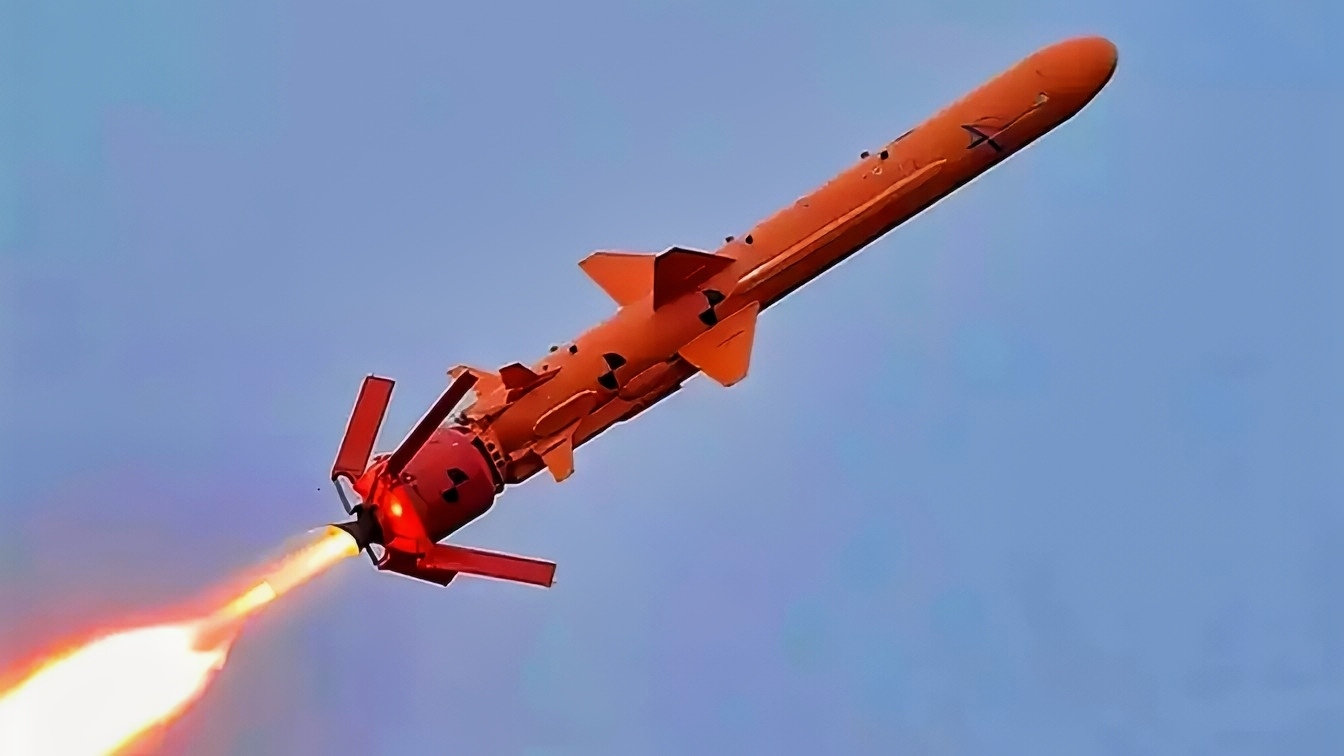
Ukraine Cruise Missile Ministry of Defense Photo
A heavy warhead on a missile with that kind of reach, built domestically, gives Ukraine something it spent the first years of the war largely without, the ability to hit strategic targets far inside Russia using its own hardware.
The missile is not flawless, and the program is young, but the Volgograd strike is a working demonstration that Ukraine can now design, build, and fire a long-range cruise missile against a high-value target without sourcing the weapon from a foreign government.
Striking Without Asking Washington
Self-reliance solves a specific problem that constrained Ukraine for much of the war.
The long-range weapons the West did supply came with strings attached. American ATACMS and British and French Storm Shadow missiles arrived with range limits and, for long stretches, explicit political restrictions on using them to strike targets inside Russia, restrictions that Kyiv had to argue against for months and that shifted with the politics in allied capitals.
A missile Ukraine builds itself carries none of that. There is no foreign approval to wait for, no allied debate over whether a given Russian target is permitted, and no risk that a change of government abroad would cut off the supply.
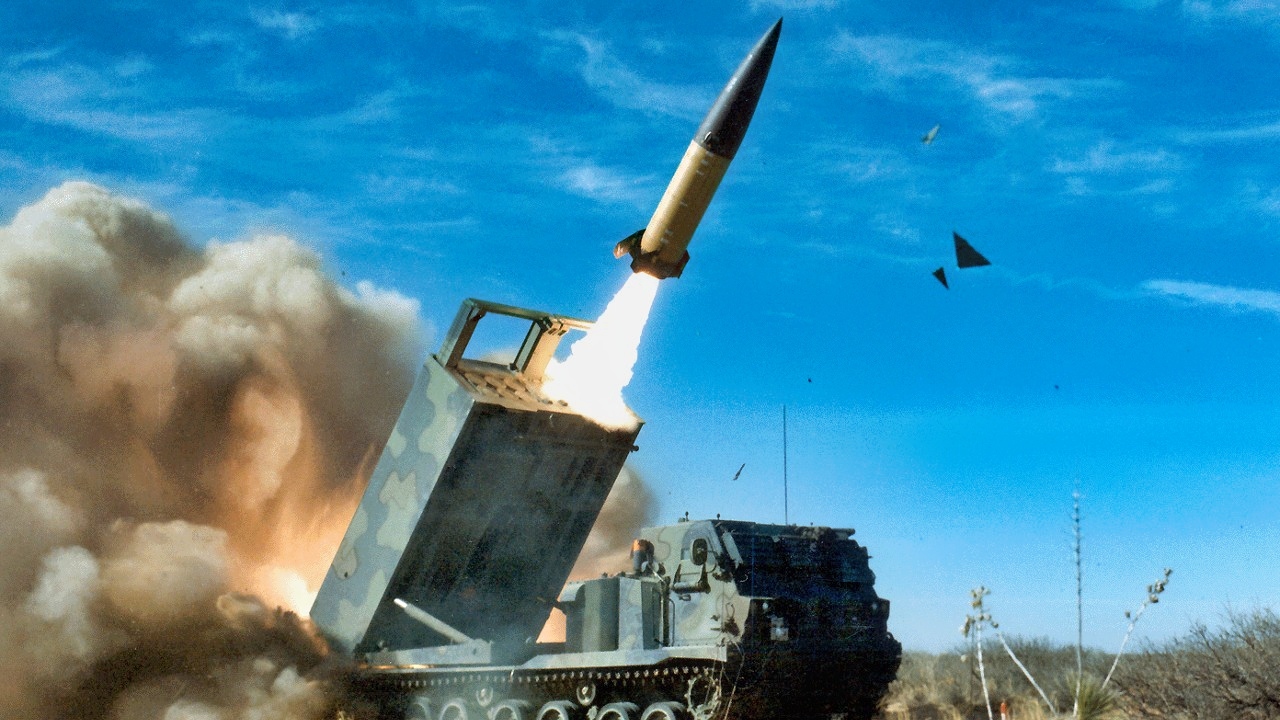
An ATACMS missile being launched from an M270 MLRS.
This is the part of Ukraine’s drive for homegrown weapons that matters most, and it is worth being precise about. It does not mean Ukraine no longer needs the West, and the deeper point is not independence from the alliance but independence from its limits.
Domestic production of missiles like the Flamingo and the long-range drones Ukraine now builds in large numbers frees Kyiv to decide for itself how deep to strike and what to hit, on its own timetable rather than Washington’s. It is the same logic that has pushed other American partners to build weapons they control rather than borrow, applied under the pressure of an active war.
Deeper, Harder, And More Often
The Volgograd strike fits a campaign that has expanded steadily in reach and intensity. Ukraine has stepped up its long-range attacks on Russian military plants and energy facilities, and the effort has caused fuel shortages and disrupted military supply lines deep inside the country.
The geography keeps widening, with Ukrainian drones that can now fly more than 1,500 kilometers reaching targets once considered safely beyond the front, and the strikes have forced Russia to shift air defenses to protect Moscow and other key sites. Zelensky has framed the whole campaign, which he calls Ukraine’s “long-range sanctions,” as a way to pressure Vladimir Putin toward serious negotiations by making the war costly far behind the lines.
The Flamingo strike on Titan-Barrikady, a major industrial facility hundreds of kilometers from the fighting, is the latest data point in that trend, and the use of a domestically built missile on a target of this importance is what makes it stand out from the steady stream of drone raids.
The Limits Of Going It Alone
None of this means Ukraine has outgrown Western support, and it would be wrong to read the Flamingo as evidence that it has. Even as Kyiv builds its own offensive weapons, it remains heavily dependent on the United States and Europe for the air defenses that protect its cities, and Zelensky has continued to press Washington hard for more, telling American leaders that additional Patriot missiles are absolutely necessary to stop the Russian ballistic and cruise missiles still hitting Ukrainian apartment blocks. Building missiles like the Flamingo strengthens Ukraine’s sword, not its shield, and the shield is still mostly Western.
The damage inside Volgograd also remains unconfirmed, with Moscow downplaying the strike and the true effect on Titan-Barrikady’s output impossible to verify from outside.
What is clear is the direction. Ukraine struck the plant that builds Russia’s Iskander and strategic-missile launchers, deep inside Russia, with a cruise missile it designed and built itself, and it did so on its own decision.
As Fire Point and Ukraine’s other producers turn out more of these weapons, the constraint that defined the early war, waiting on allies for the means to strike back, is steadily loosening, and the targets Ukraine can reach without anyone’s permission keep moving further into Russia.
About the Author: Harry J. Kazianis
Harry J. Kazianis (@Grecianformula) was the former Senior Director of National Security Affairs at the Center for the National Interest (CFTNI), a foreign policy think tank founded by Richard Nixon based in Washington, DC. Harry has over a decade of experience in think tanks and national security publishing. His ideas have been published in the NY Times, The Washington Post, The Wall Street Journal, CNN, and many other outlets worldwide. He has held positions at CSIS, the Heritage Foundation, the University of Nottingham, and several other institutions related to national security research and studies. He is the former Executive Editor of the National Interest and the Diplomat. He holds a Master’s degree focusing on international affairs from Harvard University.


