

Key Points and Summary – On November 2, 1985, the nuclear-powered aircraft carrier USS Enterprise slammed into Bishop Rock at Cortes Bank during a readiness exercise off California, tearing a massive gash down her port side.
-Only smart damage control and counter-flooding kept the ship afloat long enough to limp home for $17 million in emergency repairs—and cost the captain his command.
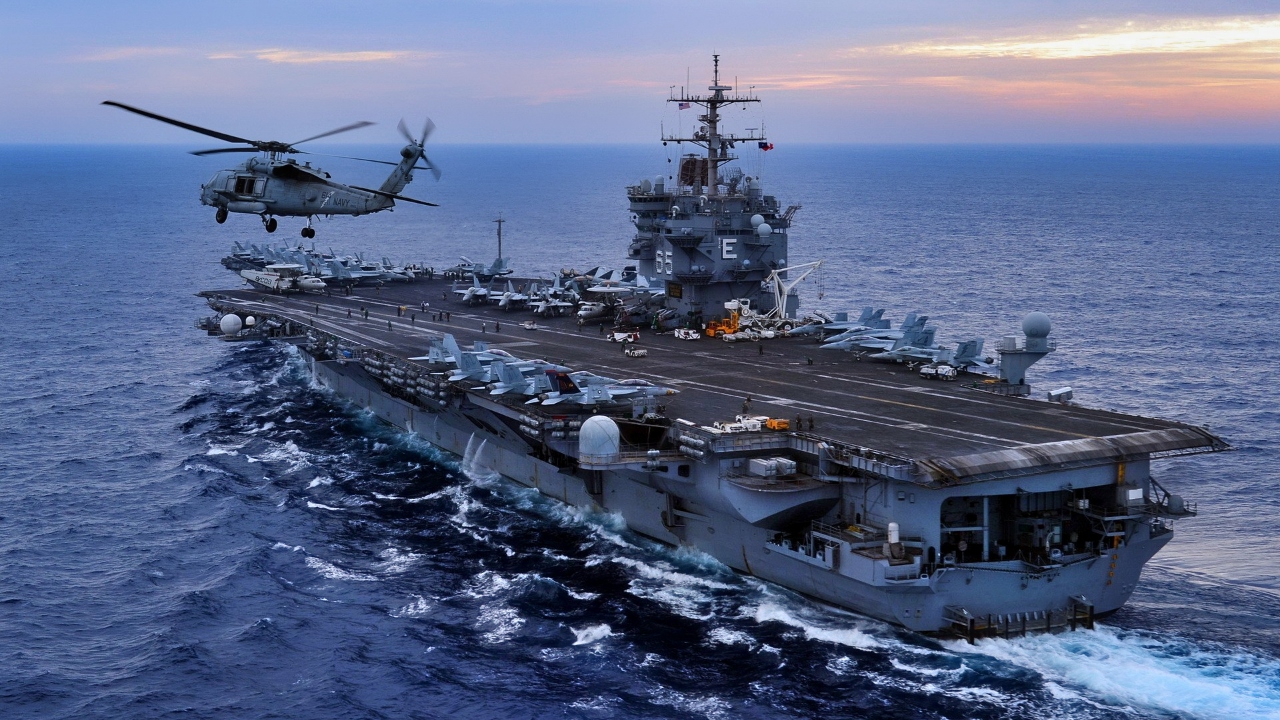
USS Enterprise. Image Credit: Creative Commons.
-This little-known incident is a warning shot for today’s Navy: even supercarriers are vulnerable to bad seamanship, weak navigation standards, and human distraction, especially in contested seas where threats, hazards, and the cost of failure are all dramatically higher.
When “Too Big to Fail” Almost Sank: Navy Aircraft Carrier USS Enterprise’s Forgotten Crash
On the night of November 2, 1985, the U.S. Navy’s nuclear-powered aircraft carrier USS Enterprise collided with a submerged rock – and it was almost a total catastrophe for one of America’s most powerful warships.
At a time when global naval competition is rising, and America is coming closer than ever to losing its massive maritime edge over other international powers, the Enterprise’s story – one that isn’t often told in news media – is worth revisiting.
In fact, the way in which the story unfolded actually serves as an important historical lesson, especially as debates continue about fleet readiness, navigation standards, and risk management in contested waters.
What Happened in 1985?
While undertaking an Operational Readiness Exercise (ORE) off southern California, the Enterprise struck a submerged portion of Bishop Rock – part of a largely underwater formation, or mountain, known as Cortes Bank – some 100 miles west of San Diego.
According to modern reports, the impact was so severe that it tore a massive gash in the ship’s outer hull along the port side.
The inner structure, which included the nuclear propulsion system, thankfully remained intact. But it could very easily have been far worse.
The damage was so severe that it required dry-dock repairs.
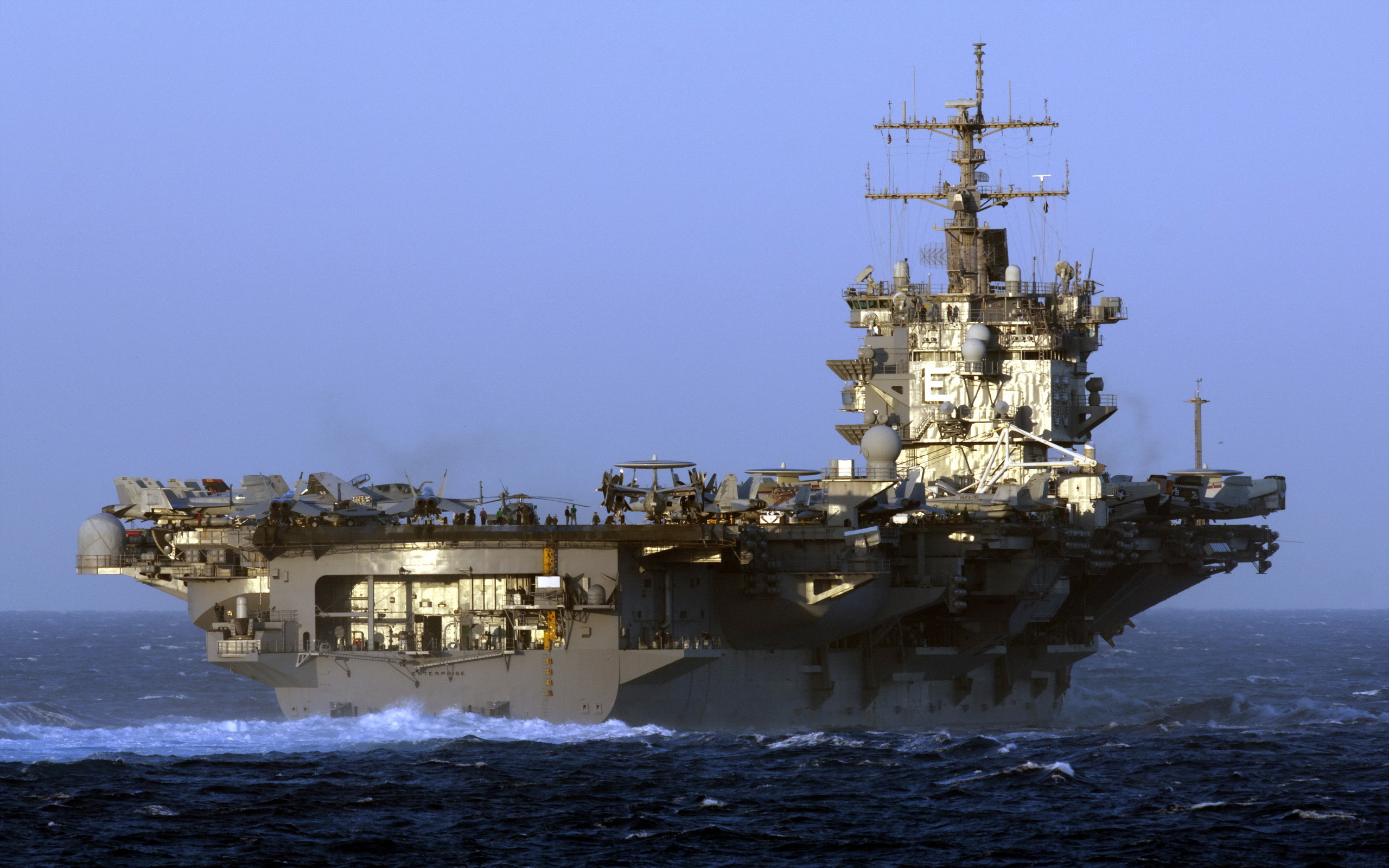
USS Enterprise. Image Credit: Creative Commons.
Incredibly, despite the scale of the damage, the ship was just about capable of sailing. The crew initiated a counter-flooding procedure to prevent the boat from sinking, stabilized it, and kept it afloat.
And after a day-long assessment, the carrier then resumed its scheduled training and eventually returned to its home port at Alameda for emergency repairs. And the repairs cost a whopping $17 million.
The aftermath of the crash was significant, too: it led to the ship’s commanding officer, Robert L. Leuschner Jr., being relieved of command in January 1986.
Why This Aircraft Carrier Incident Still Matters – And Always Will
A nuclear-powered vessel striking an undersea mountain is obviously severe: damage to its propulsion system could have triggered an international incident and stained America’s legacy of maritime excellence and dominance.
But there’s more to the story: specifically, that even a “too big to fail” ship is still vulnerable.
The Enterprise was not by any means a small vessel.
This was the U.S. Navy’s first nuclear-powered supercarrier, and it symbolized American naval dominance during the Cold War.
Yet as the 1985 incident demonstrates, it doesn’t matter how large or powerful a warship is – it can still be harmed either by adversaries or negligence.
In today’s context, a vulnerability like this takes on new significance. As naval powers operate in an increasingly contested and indeed congested maritime space, the margin for error only gets smaller. Navigation hazards are more numerous – both man-made and natural.
Retrospective accounts of the incident have also described how the incident may have been influenced by distractions on board, including a false report of a gunman.
The incident also proves just how vital training and procedures are. Obviously, when standards slip, it can be disastrous.

The Ford-class aircraft carrier USS Gerald R. Ford (CVN 78) and the Italian aircraft carrier ITS Cavour (CVH 550) transit the Atlantic Ocean March 20, 2021, marking the first time a Ford-class and Italian carrier have operated together underway. As part of the Italian Navy’s Ready for Operations (RFO) campaign for its flagship, Cavour is conducting sea trials in coordination with the F-35 Lightning II Joint Program Office’s Patuxent River Integrated Test Force to obtain official certification to safely operate the F-35B. Gerald R. Ford is conducting integrated carrier strike group operations during independent steaming event 17 as part of her post-delivery test and trials phase of operations. (U.S. Navy photo by Mass Communication Specialist 3rd Class Riley McDowell)
The fact that the Enterprise survived the strike, remained afloat, and eventually returned under her own power speaks to the resilience of the design and the competence of the crew.
The use of counter-flooding systems to stabilize the vessel underscores the importance of built-in damage-control tools and crew training in avoiding loss.
At the same time, though, the incident proves that systemic failures, spanning poor situational awareness and potentially even inadequate navigation procedures, can bring down the world’s most powerful carrier.
This is particularly important because the rock that created the gash in the ship was something the crew should have known about.
In modern naval operations, where fast, stealthy submarines, drones, and other threats all come into play, any procedural lapses like this could have had even worse consequences.
What’s more, the repair costs of $17 million in 1985 dollars – not to mention the disruption to scheduled deployments – would likely be far higher if something like this were to happen today. And not just proportionally, either: with more advanced technology embedded into modern carriers and vessels, there’s far more room for serious damage to be done.
As debates intensify over carrier vulnerability and China begins its rollout of advanced anti-ship ballistic missiles, incidents like the Enterprise feel newly relevant.
Crews must be capable of protecting America’s most vital and valuable assets at sea, given that the external risk is greater than ever.
Survivability, after all, is never guaranteed – even absent enemy fire.
About the Author:
Jack Buckby is a British author, counter-extremism researcher, and journalist based in New York who writes frequently for National Security Journal. Reporting on the U.K., Europe, and the U.S., he analyzes and understands left-wing and right-wing radicalization and reports on Western governments’ approaches to the pressing issues of today. His books and research papers explore these themes and propose pragmatic solutions to our increasingly polarized society. His latest book is The Truth Teller: RFK Jr. and the Case for a Post-Partisan Presidency.
More Military


Spiteful Midget
May 22, 2026 at 12:25 pm
Is this the infamous lighthouse story?