

America Can’t Simply Bomb Iran Again — It Burned Through Years’ Worth Of Missiles And Interceptors In 39 Days: As the ceasefire between the United States and Iran holds into June with the Strait of Hormuz still closed and no diplomatic breakthrough in sight, a question keeps surfacing across Washington: why doesn’t the U.S. military simply restart the air campaign and force Tehran to fold? The assumption underneath it is that American firepower is effectively bottomless, that the machine which pounded Iran in late winter can be switched back on whenever the president decides he has waited long enough.
That assumption is wrong, and the reason is the most consequential strategic story the war produced.
In 39 days of combat, the United States spent its most advanced munitions faster than its factories could rebuild them in years, and every additional strike on Iran would come out of the same shrinking magazine that a war with China or Russia would demand.
The Opening Days Of Operation Epic Fury Were The Most Intense In U.S. History
The scale of what the United States expended against Iran has no real precedent.
The opening of Operation Epic Fury was, as stated in several reports, fiercer than any air campaign the United States had ever launched, firing 5,197 munitions of 35 different types in the first four days alone.
The replacement bill for that four-day stretch ran to somewhere between 10 and 16 billion dollars in munitions, a rate of expenditure that would strain any arsenal on earth.
That intensity is what makes the casual call to resume bombing so detached from reality. A modern air war does not draw evenly from a single undifferentiated pile of weapons. It burns through specific categories at specific rates, and the categories that matter most for deterring a great power are precisely the ones Iran forced the United States to spend.
The campaign created what the same analysts called a strategic illusion, the appearance of an open-ended tactical bombing effort the U.S. could sustain forever, even as the weapons that actually underwrite American readiness for a larger war quietly drained away.
Bombs Are Plentiful. The Weapons That Decide Wars Are Not.
The distinction at the heart of this is between the cheap and the irreplaceable. The United States can keep dropping unguided and low-cost bombs more or less indefinitely, because there is genuine mass in that part of the inventory.
The real limit lies in the harder-to-replace half of the arsenal. Air defenses that shield forward bases from incoming missiles, the precision weapons that can reach an adversary’s launchers from hundreds of miles away, and the radars and data networks that let the whole system find what it is shooting at are all far slower and costlier to build than a bomb, and they are exactly what a fight against a capable military consumes.
This is why the “just bomb them again” instinct misreads the problem. A renewed offensive against Iran would not draw down some bottomless reserve of cheap ordnance.
It would spend more on Tomahawks, more interceptors, more high-end precision weapons that take years to replace, deepening a hole that is already alarming. The question is not whether the United States could hit Iran again.
It is what the United States would have left afterward.
More Than A Thousand Tomahawks, Out Of Roughly Three Thousand
Consider the Tomahawk, the workhorse of American deep strike.
The United States entered the war with an estimated 3,100 of the cruise missiles in its inventory, and over the course of the conflict, it fired more than 1,000 Tomahawks at Iranian targets.
Roughly a third of the entire stockpile of the weapon the U.S. would rely on to strike Chinese ships and bases in a Pacific war was expended in a single campaign against a regional power, and the same analysis concluded it would take at least three years to rebuild the depleted inventories.
The Tomahawk is not an isolated case. It is the most visible example of a pattern that runs across the whole high-end arsenal, in which weapons designed for the rare, decisive fight were poured into a war against an adversary the United States was never supposed to find taxing.

Tomahawk Launch. Image Credit: Creative Commons.
THAAD, Patriot, And The Interceptors Running Dry
The defensive side of the ledger is worse than the offensive one, because the interceptors that protect bases and ships were already strained before Iran and cannot be replaced quickly. Four key munitions were drawn down past more than half of their pre-war inventories: the Tomahawk, the THAAD interceptor, the Patriot missile, and the ship-based SM-3 and SM-6 surface-to-air missiles.
These are the weapons that keep American forces alive under fire, and burning through half of them in five and a half weeks of combat is the kind of figure that changes strategic calculations. The lower tier of long-range weapons recovers faster, with systems like the JASSM and the Precision Strike Missile expected to take anywhere from a few months to about a year, but the high-end interceptors are a different problem entirely.
THAAD is the most acute worry. As CSIS analyst Mark Cancian put it, in terms of depletion, THAAD is probably the worst, with the United States having possibly fired half its entire inventory across the past year of Middle East combat and the Iran war on top of it.
The supply problem predates the war: no new THAAD interceptors had been delivered to the U.S. inventory since July 2023 because of budget and production constraints, and the next shipment was not expected until around April 2027. For a system the United States fields in only a handful of batteries worldwide, expending anything approaching half the stockpile is a staggering amount to burn through so quickly.

A Terminal High Altitude Area Defense (THAAD) interceptor is launched from the Pacific Spaceport Complex Alaska in Kodiak, Alaska, during Flight Experiment THAAD (FET)-01 on July 30, 2017 (EDT). During the test, the THAAD weapon system successfully intercepted an air-launched, medium-range ballistic missile (MRBM) target.
Why Rebuilding These Stockpiles Takes Years, Not Months
The hard part of this story is not deciding to refill the magazine. It is the calendar. The systems most depleted are among the slowest and most expensive to manufacture, and the timelines analysts now cite stretch deep into the decade. CSIS put the replenishment of the key depleted systems at a minimum of three years, while other assessments warn that some interceptor stockpiles may not be rebuilt until 2029 and that the full picture could extend toward 2030.
The Pentagon is not standing still, and it has thrown real money at the shortfall. It has signed agreements to quadruple annual THAAD interceptor production, lifting it from 96 to 400, and to more than triple Patriot PAC-3 variant output.
But production lines for the most advanced air-defense weapons cannot be conjured overnight, and even with the money in hand, the highest-end interceptors take years to move from contract to delivery. As one defense analysis put it, funding is no longer the bottleneck. The scarce resource now is time, and time is precisely what a sudden crisis refuses to grant.
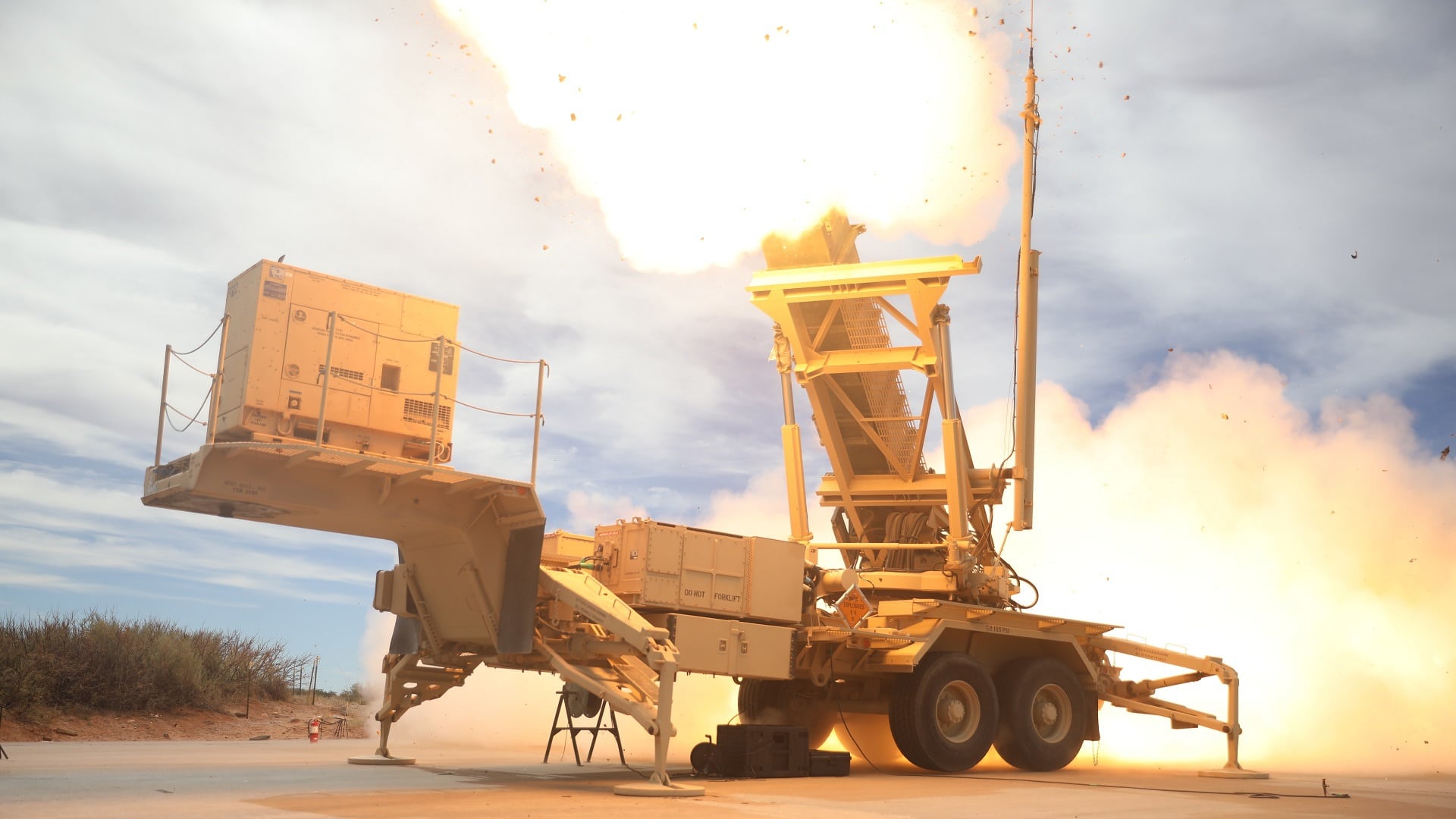
Patriot Missile. Image Credit: Creative Commons.
The China Window Nobody Wants To Test
This is where the Iran war stops being a Middle East story and becomes a global one. The munitions the United States burned against Tehran are the identical systems it would need in a war over Taiwan or in the South China Sea, and the math for that contingency is frightening.
A Heritage Foundation analysis warned that high-end interceptors like the SM-3, the SM-6, the Patriot PAC-3, and THAAD could run dry within days once a high-intensity fight began, with some systems emptied after only two or three major salvoes from the People’s Liberation Army, and that aggregate American vertical-launch inventories would not cover even a single full reload of the fleet.
The timing could hardly be more dangerous. China has set a benchmark of being able to take Taiwan by force by 2027 if it chooses, a goal most analysts treat as aspirational rather than a firm deadline, but one that nonetheless overlaps precisely with the years the United States will spend rebuilding. CSIS has labeled the situation a “window of vulnerability” should a conflict erupt in the Western Pacific, even while stressing that the U.S. retains enough to handle any realistic Iran-war scenario.
Compounding the strain, Washington must rebuild its own stocks while still supplying allies, with Ukraine continuing to need Patriot interceptors and Taiwan flagging those same missiles as a top priority. Taiwanese officials have been blunt that if China invades, resupply from an American arsenal already stretched thin will be extraordinarily difficult.
The Case That The Alarm Is Overstated
A fair accounting has to weigh the argument that this fear is being oversold against the real one.
The same analysts sounding the alarm are careful to say the United States holds enough to handle any realistic scenario the Iran war itself could present, so this is not a story about American forces running dry mid-fight against Tehran. The danger they describe is about the next war, not the current one, and a war with China is a contingency rather than a certainty.
The optimists also point to the production surge already underway. The Pentagon’s deals to dramatically expand interceptor manufacturing are real, the money is flowing, and defense contractors are racing to convert that funding into delivered weapons.
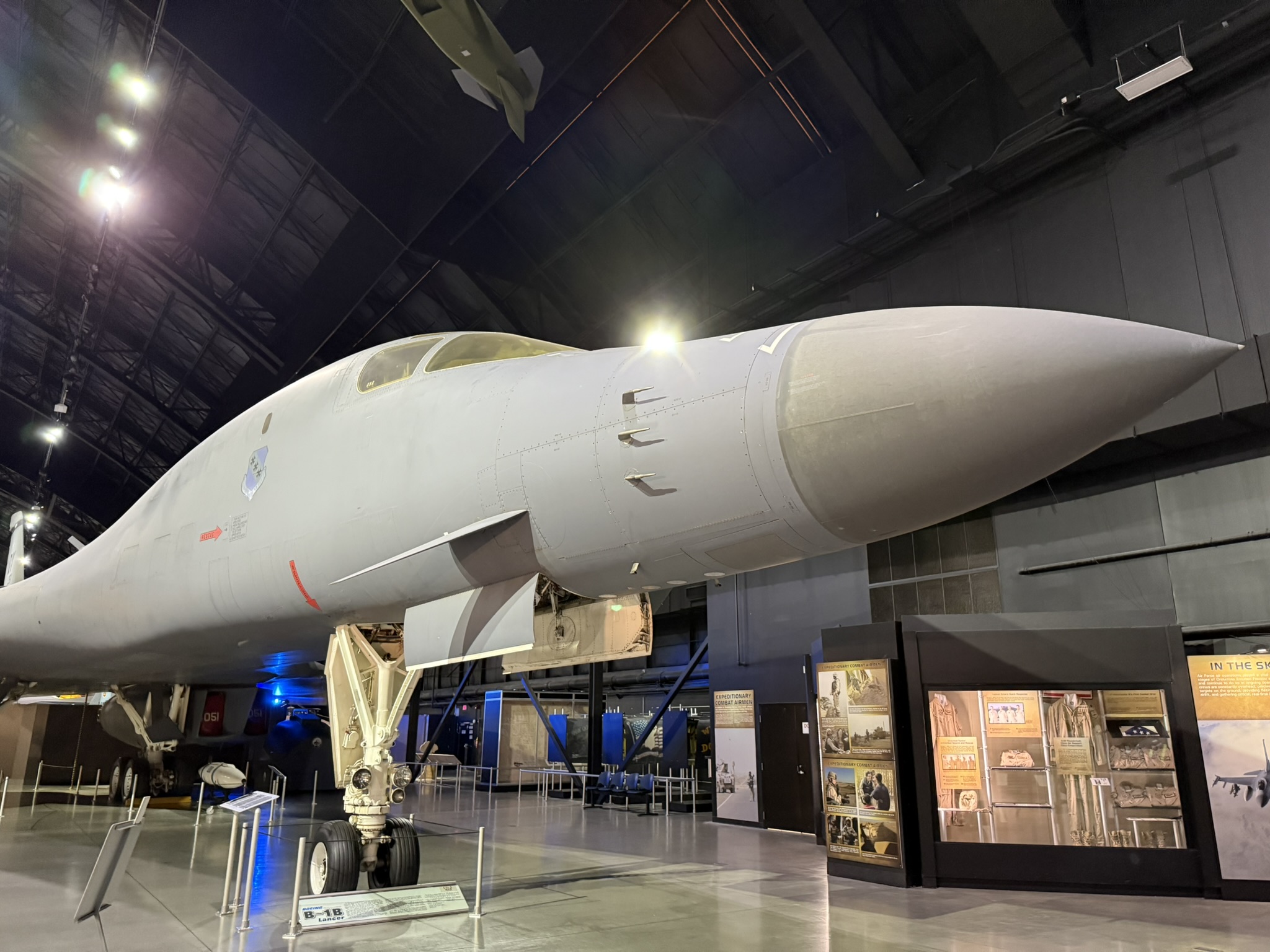
B-1B Lancer at the National Museum of the U.S. Air Force. National Security Journal Photo.
If the ceasefire with Iran holds, if no second front opens in the Pacific in the next few years, and if the production ramp delivers on schedule, the gap closes on its own, and the Iran war becomes a costly but survivable lesson in magazine depth rather than a prelude to disaster. That is a genuine possibility, and the alarm depends on a chain of conditions that may not come to pass.
The trouble is that strategy cannot be built on the assumption that adversaries will politely wait for American factories to catch up. Deterrence rests on capability that exists now, not capability scheduled for 2029, and an opponent studying the same depletion figures the public can see has every incentive to act within the window rather than after it closes.
What The Empty Magazines Actually Mean
The reason the United States has not simply resumed bombing Iran is, therefore, more complicated than the ceasefire diplomacy suggests. Restraint is partly a choice and partly a constraint because the Pentagon understands that the arsenal that looked inexhaustible in February is now a finite resource, measured against threats far larger than Iran
A Tomahawk fired at a Revolutionary Guard site is one that will not be available for a Chinese warship, and a THAAD interceptor spent defending a Gulf base is one that cannot defend Guam or Taipei.
The semipermanent standoff with Iran has become a slow, quiet drain the United States can ill afford while a far more dangerous competitor watches and counts. The bombs will always be there. The weapons that decide a war against a great power will not be, not for years, and the gap between what America spent in 39 days against Iran and what it would need to survive a fight against China is the strategic reality that no amount of firepower against Tehran can fix.
The most important consequence of the Iran war may turn out to be measured not in what it destroyed, but in what it left the United States unable to do next.
About the Author: Harry J. Kazianis
Harry J. Kazianis (@Grecianformula) was the former Senior Director of National Security Affairs at the Center for the National Interest (CFTNI), a foreign policy think tank founded by Richard Nixon based in Washington, DC. Harry has over a decade of experience in think tanks and national security publishing. His ideas have been published in the NY Times, The Washington Post, The Wall Street Journal, CNN, and many other outlets worldwide. He has held positions at CSIS, the Heritage Foundation, the University of Nottingham, and several other institutions related to national security research and studies. He is the former Executive Editor of the National Interest and the Diplomat. He holds a Master’s degree focusing on international affairs from Harvard University.


rosy dawn
June 5, 2026 at 10:14 pm
If centcom attacks iran again, I wouldn’t be surprised.
But What if the president decides to let stratcom have a go at iran. Let centcom take a breather.
Stratcom has access to several hundred b61 bombs stored in italy, turkey, netherlands and germany.
And possibly a handful of them in the UK (Lakenheath air base).
pagar
June 5, 2026 at 11:08 pm
Ammo like missiles, bombs and bullets cannot be kept in storage forever.
If not used, they must be discarded and disposed of.
Aged or obsolete nuclear arms are a lot harder to handle. But still, they need to be taken of.
But conventional arms are a piece of cake.
As such, while ammo reserves can sometimes get dangerously low, you will never run out of bombs, missiles and bullets.
Over the course of this year (2026), president trump will put iran on the wringing machine or the wringing rack.
Trump enjoys the sight of iran struggling to survive, and this is his greatest achievement of the whole stupid iran bungaloo.
bobb
June 6, 2026 at 3:39 am
US military forces in the gulf region are right now exchanging strikes with the IRGC, giving the lie to claims that a deal is possible this weekend.
A deal won’t be possible as long as Israeli forces are active in southern Lebanon.
And Benjamin netanyahu has no intention to take his foot off the pedal. Not today, not this weekend, not tomorrow.
Thus in the following weeks ahead, US forces will be busily fighting Iran, while Iran will be targeting the gulf Arabs.
Thanks, don.